Industry Application · Decision-Maker Perspective · Published: September 28, 2026
Table of Contents
Key Takeaways
- Water is roughly 90% of a typical carbonated soft drink (98% for sugar-free formulations), which makes process-water chemistry a product-quality variable — not a utilities afterthought [4]
- The hardness classes still anchor plant practice: soft water is 0–60 ppm as CaCO3 (0–3.5 grains per gallon), moderately hard is 60–120 ppm, and hard is 120–180 ppm. Cleaning chemistry and equipment protection are designed against those bands [2]
- Even 1–2 mm of scale on a heat exchanger measurably increases energy use, and hard water quietly degrades boilers, CIP effectiveness, ingredient quality and downstream RO membranes [3]
- Hygienic design rules travel into the water room: dead-leg criteria are quantified in hygienic-design guidance (the “2D” convention keeps any pocket or recess no longer than twice the pipe internal diameter), and 3-A Sanitary Standards remain the US benchmark for hygienic equipment [5]
- Consistency, not average performance, is the compliance metric. A softener that averages the right hardness but drifts batch to batch fails the audit even when the monthly report looks clean
- Replacement planning starts from incumbent footprints: modern softener valves are available that are compatible with Fleck® 5600/2510-style installations and designed to fit Clack® WS1-series tanks, letting plants upgrade controls without repiping the skid
Why Hardness Is a Board-Level Issue
Water moves through a food and beverage plant the way blood moves through a body. It is in the recipe, on the cleaning path, inside the boiler, and against every stainless surface. When the dissolved calcium and magnesium in that water run high, four cost centers bleed at once.
Product quality. In beverages, water is the product. A carbonated soft drink is about 90% water — 98% when sugar-free — so trace elements that would be irrelevant in a utility stream directly shape taste, appearance, foaming and physical stability [4]. Alkalinity is the classic offender: it shifts the acid balance that defines a drink’s flavor profile. Hardness-driven off-notes and haze show up in tea, coffee and dairy formulations long before any pipe shows scale.
Equipment and energy. Scale is a tax on every heated surface. Even 1–2 mm of mineral buildup on a heat exchanger measurably increases energy use, and hard water takes a specific toll on boiler and steam systems, CIP effectiveness, ingredient water quality and downstream RO membrane performance — each application with its own hardness tolerance and its own failure mode when that tolerance is exceeded [3]. For a plant running culinary steam that contacts product, boiler water chemistry is a food-safety question as much as an energy one.
Cleaning effectiveness. Cleaning chemistry is formulated against a water quality, not against water in general. Suppliers ask for the hardness and pH of the plant’s water first, because a detergent designed for soft water can redeposit minerals and soil as a white film (“re-deposit”) when run in hard water — leaving equipment visually clean and microbiologically compromised [2].
Compliance exposure. Auditors and customers increasingly ask not just whether the water was treated, but whether the treatment was verified, logged and repeatable. That shifts softening from a plumbing purchase to a quality-system component.
What the Water Must Do: Requirements by Use Point
The hardness classes that organize the industry’s thinking are simple and worth keeping on the wall: soft is 0–60 ppm as CaCO3, moderately hard is 60–120 ppm, hard is 120–180 ppm [2]. Against those bands, each use point in the plant carries its own demand profile.
| Water use point | What the process demands | Typical softening configuration |
|---|---|---|
| Ingredient / product water (beverages) | tight taste and alkalinity control; low hardness to protect flavor stability [4] | softening ahead of carbon filtration and RO; polish per formulation |
| Culinary steam / boiler feed | very low hardness to prevent scale on heat surfaces and protect steam quality [3] | high-capacity softening with metered regeneration; condensate monitoring |
| CIP final rinse | low hardness to avoid mineral re-deposit and film on cleaned surfaces [2] | soft water loop dedicated to rinse steps; hardness verified per cycle |
| RO pretreatment | reduced hardness to limit membrane scaling and cleaning frequency [3] | softening or antiscalant strategy sized to feed analysis |
| Cooling and utilities | moderate control to limit deposits and chemical overuse | softening where cycles of concentration justify it |
Two reading rules make the table operational. First, the demand column is written in the language the plant’s quality system already uses — taste panels, boiler logs, CIP validation — which is why softening decisions belong in the same room as quality decisions, not only in the maintenance plan. Second, the configuration column scales with load. A bottling line and a dairy concentrate operation may share a hardness target and still differ by an order of magnitude in regenerations per day.
Hygienic Design: What the Softening Skid Inherits
A softening skid is not a product-contact machine, but it sits inside a facility governed by hygienic-design logic, and modern auditors read it that way. The relevant frameworks are worth knowing by name. In Europe, EHEDG guidance focuses on where hygiene risk actually lives: any pocket or recess off the main flow path is hard to clean once it gets long, and the widely applied dead-leg convention caps such a pocket at no more than roughly twice the pipe internal diameter (the “2D” rule) [5]. In the United States, 3-A Sanitary Standards, published by 3-A SSI, remain the benchmark for hygienic equipment design in food and beverage [5]. Wetted materials are expected to meet FDA and EC 1935/2004 requirements and to resist the CIP chemicals they will see [5]. Food-grade valve specifications echo the same logic across the industry: crevice-free construction, full drainability, cleanable-in-place geometry, and surface finishes specified for the duty [6].
For the water room, the transferable principles are concrete. Piping should drain — no undrainable low points where treated water can stagnate. Dead legs should respect the same geometry discipline as the process line. Valve and fitting materials should match the chemical environment, including brine and regenerant waste. And the brine system itself deserves the respect usually reserved for dosing systems: contained, ventilated, and laid out so that regenerant waste cannot pool under product-adjacent equipment.
Valve Requirements: Materials, Drainage, and Regeneration Reliability
The control valve is where softening succeeds or fails, and decision-makers should hold it to four tests.
Materials for the duty. Valve bodies in lead-free brass deliver the strength and durability a commercial softener skid needs across years of service cycles, while valve internals — hydraulically balanced pistons, resilient seals — decide how the valve ages. A current example of the class: a lead-free brass softener valve rated for a continuous service flow of 250 GPM with 100 GPM backwash capability, able to backwash softener tanks up to 63 inches in diameter [7].
Regeneration reliability. The valve is the only part of the softener that moves on every cycle, so regeneration integrity is valve integrity. Fully adjustable multi-cycle control (service, backwash, brine and slow rinse, rapid rinse, refill) lets the plant tune brine and water use to its actual load rather than a default clock; metered or conductivity-triggered initiation ties regeneration to real throughput instead of calendar guesses. That is the difference between a softener that averages its hardness target and one that holds it.
Published performance. Procurement should not have to beg for hydraulic data. We publish the numbers other suppliers make you ask for — flow coefficients, pressure drop, backwash rates — because the specification table is where lifecycle cost is actually decided.
Footprint compatibility. Most plants inherit their softening trains: expansions and upgrades start from valve platforms already installed across the industry, including Fleck® 5600 and 2510 families and Clack® WS1-series systems. Replacement valves engineered to be compatible with those port patterns and designed to fit those tank connections let a plant modernize controls — metered regeneration, digital signaling — without repiping the skid. Drop-in compatible. Same port size, same flow, same footprint. For facilities groups standardizing across sites, Shanghai ChiMay supplies softener and softening-plus-filtration control valves with private-label options — your logo, your protocol, your packaging — at minimum order quantities that make single-site upgrades practical [7].
Consistency Management and Verification
Compliance is won on the days nothing happens. A practical consistency program for a food or beverage softening train has four elements:
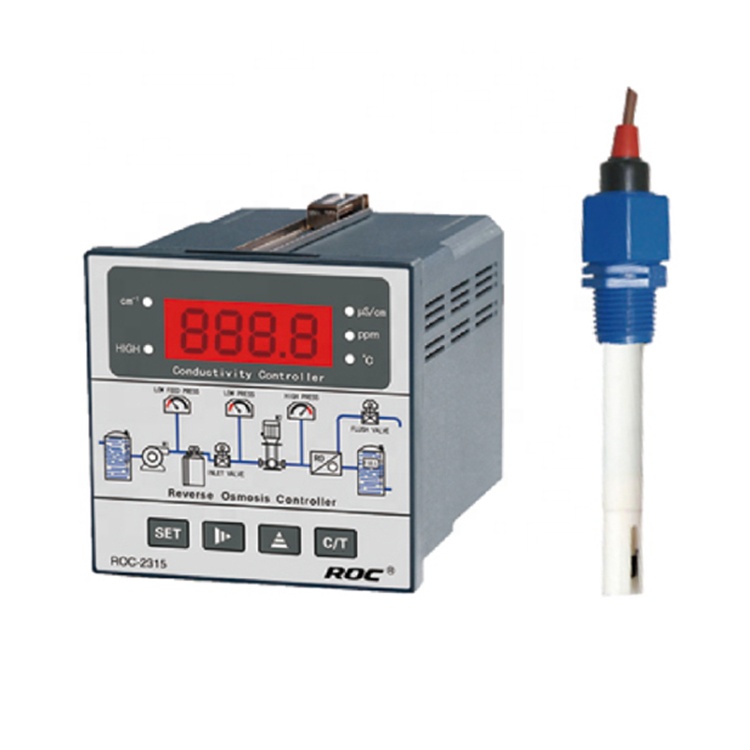
- Continuous or high-frequency outlet hardness verification. Conductivity-based softener control catches a spent resin bed in near real time; periodic titration confirms the calibration of that control.
- Regeneration logging. Every regeneration event — initiated, completed, brine draw verified — should be recorded automatically and reviewable by shift. Missed or incomplete regenerations are the leading indicator of every hardness excursion that follows.
- Alarm discipline on trends, not just limits. A softening train whose regenerations are drifting further apart is telling you its capacity story early. Trend alarms catch it before the product does.
- Documentation that survives the audit. Calibration certificates, material declarations and regeneration logs together form the evidence pack — documentation you can hand to your auditor rather than reconstruct under deadline.
None of this is exotic. It is the ordinary engineering of consistency: sensors that hold the target, valves that regenerate on evidence, and records that make the whole chain inspectable. Plants that run softening this way stop treating water as a variable to apologize for and start using it as a parameter they control.
References
- Agriculture.Institute — “Managing Water Hardness in Food Processing: Effects and Treatments” — scale in boilers, off-flavors, and hardness as a factor food processors cannot ignore — https://agriculture.institute/food-processing-and-engineering-i/managing-water-hardness-food-processing/
- Food Safety Magazine — “Choosing the Right Cleaning Tools” — water hardness as the first element in cleaning-chemical design; hardness classes (Soft 0–60 ppm as CaCO3, 0–3.5 gpg; Moderately hard 60–120; Hard 120–180) and re-deposit risk — https://www.food-safety.com/articles/1735-choosing-the-right-cleaning-tools
- Flier’s Quality Water — “Water Softening for Food Industry” — hardness impacts on boilers/steam, CIP, ingredient water, and RO membranes; 1–2 mm scale on a heat exchanger increases energy use — https://fliersqualitywater.com/industries/water-softening-for-food-industry/
- General Beverages — “Water for Carbonated Soft Drinks” — water ≈ 90% of a CSD (98% sugar-free); alkalinity and taste effects — http://generalbev.eu/water-for-carbonated-soft-drinks
- All Way Valves — “Valves in Food and Beverage Manufacturing: Hygienic Design and 3-A Standards” — dead-leg geometry convention for CIP-cleanable pockets, 3-A SSI as the US benchmark, FDA/EC 1935/2004 wetted-material requirements — https://allwayvalves.com/valves-in-food-and-beverage-manufacturing-hygienic-design-3-a-and-ehedg-standards/
- Vajra Industrial Solutions — “Food Grade Valves — 3-A Dairy, EHEDG, FDA & Hygienic Design Guide” — hygienic valve requirements: clean-in-place without disassembly, crevice-free design — https://www.vajravyuh.com/blog/valve-for-food-grade-service-3a-dairy
- Shanghai ChiMay — “3900 Control Valve” product page — lead-free brass softener valve, continuous service flow 250 GPM, backwash 100 GPM, softener tanks up to 63 in. diameter — https://chimaytech.com/product%20page/FCV-3900%20Control%20Valve.html
Fleck® is a registered trademark of Pentair. Clack® is a trademark of Clack Corporation. Autotrol® is a trademark of Pentair. Shanghai ChiMay is not affiliated with, endorsed by, or sponsored by any of these companies. References to third-party brands are made solely to indicate compatibility with the original equipment.
About the author: Written by the Shanghai ChiMay Technical Editorial Team — the engineers behind Shanghai ChiMay’s softener and softening-and-filtration control valves, working daily with commercial and industrial water-treatment OEMs and system integrators on softening trains for food, beverage, and facility applications.