Key Takeaways
- EPA published its draft Contaminant Candidate List 6 (CCL 6) on April 2, 2026. It contains 75 chemicals, 4 chemical groups (disinfection byproducts, microplastics, PFAS, pharmaceuticals) and 9 microbes. Microplastics appear as a group on a CCL for the first time (EPA, April 2026).
- A Columbia/Rutgers team using stimulated Raman scattering microscopy measured roughly 240,000 plastic particles per litre in bottled water; about 90% were nanoplastics that earlier methods could not see (PNAS, January 2024).
- PEER’s analysis of the CCL programme points out that not one of the 200-plus chemicals placed on the list since 1998 is regulated today — a reminder of how long the road from listing to an enforceable standard is (PEER, September 2026).
- Microplastics are not on the EU drinking water watch list yet, but the Commission adopted a harmonised measurement methodology in March 2024 (Delegated Decision (EU) 2024/1441), which tells you the analytical groundwork is being laid.
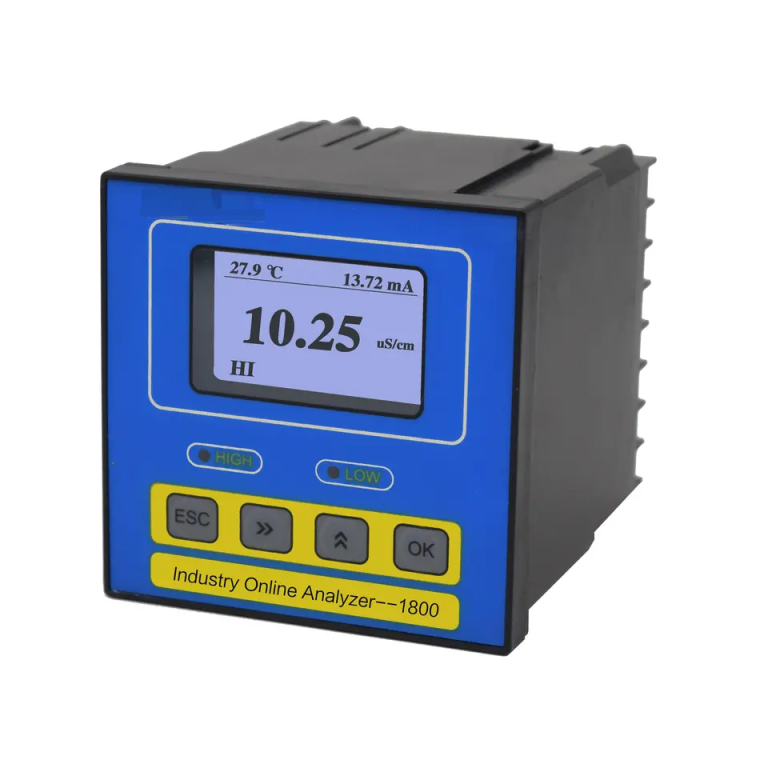
- Shanghai ChiMay’s inline sensors — turbidity, conductivity and multi-parameter water quality — give utilities the continuous baseline data they will want on hand if microplastic and pharmaceutical monitoring requirements arrive.
Table of Contents
The Regulatory Signal: CCL 6 and What It Means
When EPA published draft CCL 6 in April 2026, it widened the pool of contaminants utilities may eventually have to monitor. Microplastics appeared as a candidate group for the first time, alongside PFAS, pharmaceuticals and disinfection byproducts. The draft also carried human health reference values for 374 pharmaceutical compounds found in drinking water sources.
The path from CCL listing to an enforceable limit is long and mostly uphill. PEER (Public Employees for Environmental Responsibility) reviewed the programme’s history and found that none of the 200-plus chemicals EPA has listed since the first CCL in 1998 is regulated today. EPA expects to sign the final CCL 6 by November 17, 2026; after that comes the regulatory determination process under the Safe Drinking Water Act.
For utilities, though, the practical signal arrives well before any rule does. Microplastics and pharmaceuticals showing up on CCL 6 tells water systems that these contaminants are on the radar, and that baseline data collected now will be useful whatever the formal timeline turns out to be.
The Measurement Challenge
Detecting microplastics in drinking water is genuinely hard. The Columbia/Rutgers work found roughly 240,000 plastic particles per litre in bottled water using stimulated Raman scattering microscopy — a research-grade technique, not something you bolt onto a treatment plant. Most of the particles were nanoplastics, below the reach of conventional detection.
So the useful question for a utility isn’t “how do I measure microplastics?” It is: what can inline sensors measure today that tells me something about the particle and chemical environment where microplastics and pharmaceuticals travel?
Three parameter groups answer that question.
Turbidity. Microplastics are particulate. An inline turbidity sensor can’t identify plastic, but it tracks total particulate load — the environment in which microplastics move. Shifts in turbidity patterns can flag changes in particle loading that coincide with transport events.
Conductivity. Pharmaceutical compounds show up as dissolved ions or organic molecules and shift the water’s ionic composition. Conductivity won’t name a compound, but it follows changes in overall dissolved content — useful at plants that are already watching for emerging contaminants.
Multi-parameter monitoring. Measuring pH, ORP, conductivity and temperature together gives you a fuller water quality picture and a better basis for trend analysis across contaminant categories. The Shanghai ChiMay 4-in-1 Multi-Parameter Sensor puts those four measurements in one compact unit, which keeps the installation footprint down and the data streams correlated.
How Shanghai ChiMay Inline Sensors Support CCL 6 Preparation
For utilities that want monitoring infrastructure in place before requirements land, Shanghai ChiMay’s inline range covers the fundamentals:
| Parameter | Shanghai ChiMay Product | Role in CCL 6 Preparation |
|---|---|---|
| Turbidity | Online Turbidity Tester | Particle load monitoring correlated with microplastic transport |
| Conductivity | In-Line Conductivity Meter | Dissolved composition tracking for pharmaceutical trend analysis |
| pH/ORP/EC/Temp | 4-in-1 Multi-Parameter Sensor | Integrated water quality assessment for multi-contaminant evaluation |
| Residual Chlorine | Residual Chlorine Transmitter | Disinfection chemistry monitoring affecting pharmaceutical degradation |
These sensors are not a substitute for laboratory methods that identify specific microplastics or pharmaceuticals. What they provide is the continuous record of water quality that tells a utility when and where a contaminant transport event is happening — and therefore when to pull a targeted sample for the lab.
The Proactive Utility Strategy
Utilities that install inline monitoring now, before CCL 6 monitoring becomes mandatory, come out ahead in a few concrete ways:
Baseline establishment. Continuous data collected before a requirement exists gives you a baseline to measure future change against. When a rule does arrive, you are demonstrating trends rather than starting from zero.
Operational insight. Even without species-level identification, continuous monitoring exposes patterns — seasonal swings, storm responses, process changes — that make day-to-day water quality management better.
Regulatory readiness. Utilities with monitoring infrastructure already running can show regulators that preparation started early.
One more data point on where state-level pressure is heading: New Jersey Attorney General Jennifer Davenport led a comment letter urging EPA to add microplastics to UCMR 6, joined by 12 other attorneys general — 13 in total. Utilities in states with active contaminant monitoring programmes have the strongest reason to think about inline deployment now.
The Timeline Reality
Given the CCL programme’s record — no chemical listed since 1998 is regulated today — and a final CCL 6 expected around November 2026, most utilities are unlikely to face mandatory microplastic or pharmaceutical monitoring in the next few years. The direction of travel, though, is clear. The regulatory perimeter keeps widening, and the analytical capability to detect these contaminants keeps improving.
Shanghai ChiMay’s inline sensors give utilities the measurement foundation for that widening perimeter — not by detecting microplastics or pharmaceuticals directly, but by putting in place the water quality monitoring infrastructure that any future requirement will build on.
Sources: EPA draft CCL 6 (April 2, 2026); PEER analysis (September 3, 2026); Columbia/Rutgers, PNAS (January 2024); New Jersey Office of the Attorney General (September 1, 2026); Commission Delegated Decision (EU) 2024/1441 (March 11, 2024).