The industrial water sector is in the middle of a durable shift: electrochemical technologies are maturing, artificial intelligence is being wired into treatment control, and circular economy principles are reshaping how operators treat and value their wastewater. This analysis examines the developments most likely to reshape industrial water management through 2030.
Table of Contents
Market Evolution and Growth Drivers
Technology Adoption Trends
Electrochemical water treatment technologies have moved from niche applications to mainstream treatment options across industrial sectors. Independent market analyses consistently project the global electrochemical water treatment market to keep expanding at a high-single-digit to double-digit annual growth rate through 2030, driven by expanding applications, improving economics, and tightening discharge regulations. Treat the specific dollar figures in any individual forecast with caution—assumptions differ widely between research houses—but the direction of the curve is not in dispute.
Geographic distribution of electrochemical treatment deployment reflects both industrial base distribution and regulatory stringency. Chinese organizations account for a large and growing share of patent activity in electrochemical water treatment, reflecting Asia-Pacific strength in technology development. European adoption continues to accelerate under tightening discharge regulation.
Industry-Specific Adoption
Petroleum and petrochemical sectors have adopted electrochemical treatment for produced water management and refinery effluent polishing. As the technology has matured, treatment costs for oil-containing wastewater have declined steadily, making electrochemical approaches competitive with conventional methods on more streams than they were five years ago.
Semiconductor and electronics manufacturing represent fast-growing application areas, with electrochemical treatment addressing the unique challenges of ultra-pure water systems and wastewater containing hydrofluoric acid and organic solvents. Growth in these segments runs well ahead of the overall market.
Mining and battery manufacturing sectors are emerging as significant adopters as electric vehicle production drives demand for lithium and other critical minerals. Electrochemical processes enable both water treatment and resource recovery, aligning with circular economy objectives.
Technological Advances Reshaping Treatment
Electrode Material Innovation
Electrode technology continues advancing, with new materials improving efficiency, selectivity, and lifespan. Boron-doped diamond (BDD) electrodes have moved from laboratory curiosities to commercial products, enabling high oxidation potentials for recalcitrant contaminant destruction. Mixed metal oxide (MMO) anodes offer improved cost-performance for moderate-oxidation applications.
Nanomaterial-enhanced electrodes including graphene composites and metal-organic framework (MOF) coatings show promise for selective pollutant removal. These advanced materials could enable targeted treatment strategies addressing specific contaminants without affecting matrix constituents.
Shanghai ChiMay electrode technologies incorporate recent material advances while maintaining reliability standards essential for industrial applications. Continuous development ensures product offerings remain competitive as technology evolves.
Membrane Electrochemistry Integration
Hybrid systems combining electrochemical and membrane processes offer enhanced treatment capabilities. Electrochemical membrane reactors integrate electrode reactions with membrane separation, enabling continuous treatment without intermediate stages. Capacitive deionization provides energy-efficient desalination for brackish water streams.
These integrated approaches align well with zero liquid discharge (ZLD) objectives, achieving high water recovery while minimizing chemical consumption. As membrane costs continue declining, hybrid electrochemical-membrane systems will become increasingly competitive.
Artificial Intelligence and Process Optimization
AI-Driven Treatment Control
Machine learning is changing how electrochemical treatment systems are operated. Published studies on AI models predicting optimal operating conditions from wastewater characteristics routinely report very high goodness-of-fit; the practical takeaway is not any single accuracy figure but that models now track process behavior closely enough to act on.
Neural networks trained on historical operating data identify patterns invisible to conventional analysis. These models predict treatment requirements based on upstream process conditions, enabling preemptive parameter adjustments before wastewater reaches treatment systems.
Adaptive control strategies continuously refine operating setpoints based on real-time performance feedback. This self-tuning capability maintains treatment quality despite influent variations that would defeat fixed-setpoint controllers.
Digital Twin Implementation
Digital twin technology creates virtual replicas of physical treatment systems, enabling simulation-based optimization without disrupting actual operations. Operators test parameter changes virtually before implementation, identifying optimal strategies without experimental risk.
Digital twins support training applications, allowing operators to experience unusual scenarios without endangering actual treatment performance. Remote monitoring platforms serving industrial customers increasingly incorporate digital twin capabilities alongside their core analytics.
Monitoring Technology Evolution
Sensor Technology Advances
Water quality monitoring sensors continue advancing in accuracy, reliability, and intelligence. Solid-state sensors eliminate reference junction problems that challenge traditional glass electrodes. Optical sensing technologies enable non-contact measurements that resist fouling in challenging matrices.
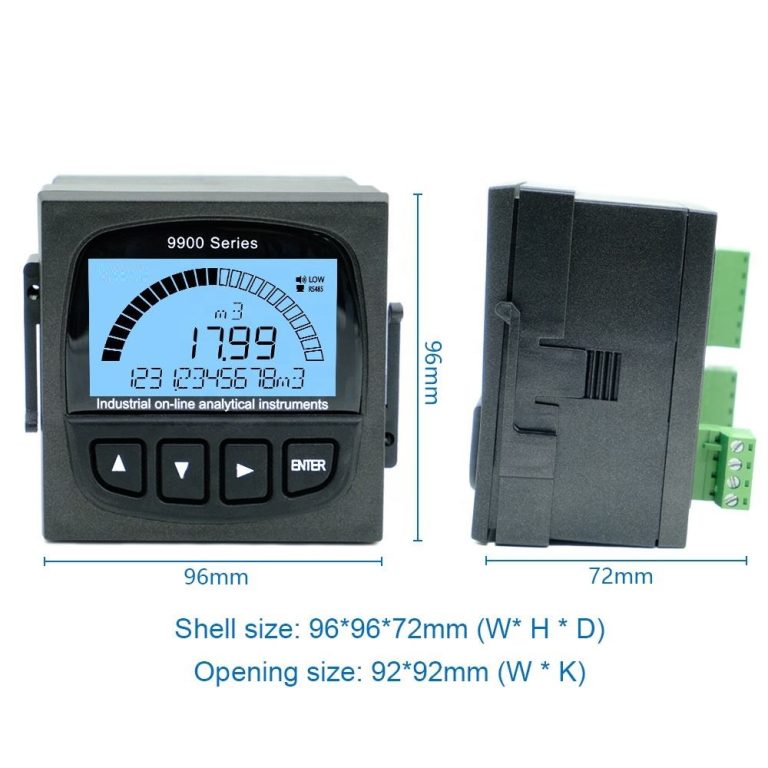
Multi-parameter sensor platforms provide comprehensive water quality data from single installations. Shanghai ChiMay integrated monitoring systems combine pH, conductivity, dissolved oxygen, and ORP measurements in unified housings that simplify installation while providing correlated data streams.
IoT and Cloud Integration
Internet of Things (IoT) connectivity transforms water monitoring from isolated measurement to networked intelligence. Cloud-based platforms aggregate data from distributed sensors, enabling enterprise-wide visibility and cross-facility benchmarking. Remote monitoring adoption has grown quickly in recent years as facilities optimize staffing while maintaining operational awareness.
Edge computing brings intelligence closer to measurement points, enabling local data processing and autonomous response. Sensor systems increasingly incorporate onboard analytics that identify anomalies, predict failures, and optimize measurement intervals based on process dynamics.
Regulatory and Economic Factors
Tightening Discharge Standards
Regulatory pressure continues to intensify across global markets. In Europe, the recast Urban Wastewater Treatment Directive (EU) 2024/3019 introduced quaternary treatment for micropollutants at large plants on a phased schedule—starting with 20% of the load by 2033 for plants above 150,000 p.e.—and 2026 amendments to the Water Framework and Groundwater Directives that entered into force in May 2026 tighten water quality protection further. In the United States, EPA continues to tighten PFAS-related controls, including effluent limitations guidelines work for PFAS manufacturers under the Clean Water Act framework, and electrochemical oxidation is among the destruction technologies being evaluated for those streams.
China’s industrial water efficiency policy sets the tone in Asia: the Implementation Plan for Industrial Wastewater Recycling (six ministries, December 2021) targets a water reuse rate above 94% for large industrial enterprises by 2025, which effectively mandates advanced treatment and recycling for many facilities. Similar ambitions in India, Southeast Asia, and the Middle East create global demand for electrochemical and membrane technologies.
Economic Factors
Treatment economics continue improving as technology matures and scale increases. Electrochemical treatment costs in petroleum applications have declined steadily in recent years, while membrane costs have followed the learning curves established in desalination markets. These improvements expand the range of applications where electrochemical treatment offers favorable economics.
Energy costs represent the primary variable expense for electrochemical systems. Falling renewable electricity costs enhance electrochemical treatment economics, with facilities increasingly powered by solar and wind installations. Time-of-use electricity rate structures enable shifting electrochemical treatment to low-cost periods, further improving economics.
Circular Economy Integration
Water-Energy Nexus
Industrial water management increasingly addresses the water-energy nexus, recognizing that water treatment consumes energy while energy production requires water. Electrochemical treatment offers advantages in this context, replacing chemical consumption with electrical energy that can be sourced from renewables.
Integrated water-energy-carbon assessments guide technology selection and system design. Shanghai ChiMay lifecycle analysis tools support these evaluations, quantifying energy consumption, chemical requirements, and carbon emissions across treatment alternatives.
Resource Recovery
Circular economy principles transform wastewater from disposal burden to resource opportunity. Electrochemical processes enable selective recovery of valuable constituents including lithium, rare earth elements, and strategic metals. Brine management systems convert concentrated streams into saleable salt products.
Shanghai ChiMay monitoring solutions support resource recovery operations by providing precise process control that enables efficient extraction and purification. As recovery technologies mature, wastewater treatment facilities will increasingly function as resource extraction operations.
Outlook Through 2030
The industrial water sector will keep changing through 2030 as electrochemical technologies mature, AI integration deepens, and circular economy principles reshape treatment objectives. Developments worth planning for:
- AI moving from pilot projects to standard practice in treatment optimization
- Continued cost reductions expanding electrochemical treatment into applications previously considered uneconomical
- Regulatory frameworks adapting to electrochemical treatment as a standard compliance option
- Resource recovery becoming a standard treatment objective alongside pollution control
- Digital infrastructure enabling integrated water management across industrial facilities and municipal systems
Shanghai ChiMay continues to advance electrochemical water treatment through product development, application expertise, and customer partnership, so that customers benefit from monitoring and control solutions that keep pace with the technology.