Table of Contents
Introduction
Water treatment membrane technology has evolved dramatically over the past decade, transforming from a specialized niche into a cornerstone of global water management. The driving forces behind this transformation include intensifying freshwater scarcity, increasingly stringent discharge regulations, and sustained pressure to reduce industrial water footprints.
For professionals navigating this rapidly evolving landscape, understanding recent advances—and their practical implications—has become essential for making informed procurement decisions and maintaining competitive operations.
Market Dynamics and Growth Trajectory
Global Market Overview
The membrane technology market remains one of the most dynamic segments within environmental technology. According to Persistence Market Research:
- 2026 market valuation: $26.7 billion
- 2033 projected valuation: $51.0 billion
- Compound annual growth rate: 9.7%
- Primary growth drivers: Water scarcity, regulatory compliance, industrial water reuse
This expansion reflects accelerating adoption across municipal, industrial, and desalination applications worldwide.
Regional Variation
Market growth concentrates in regions facing acute water stress:
Asia-Pacific: Highest growth rates driven by industrial expansion and municipal infrastructure development in China, India, and Southeast Asia
Middle East: Strong demand for desalination technology supporting economic diversification away from hydrocarbon dependence
North America: Replacement and upgrade cycles in municipal systems alongside industrial water reuse initiatives
Europe: Regulatory-driven adoption with emphasis on phosphorus recovery and resource extraction from wastewater
Membrane Material Innovation
Covalent Organic Framework (COF) Membranes
COF membranes now sit at the frontier of separation technology. The landmark demonstration came from a Tianjin University-led team (with Nankai University collaborators), published in Nature Sustainability in 2022: a COF membrane for pervaporation desalination achieved a water flux of 267 kg·m⁻²·h⁻¹ on 3.5 wt% NaCl feed — reported as 4-10x conventional polymeric membranes — with a desalination rate of roughly 99.9%, while remaining stable over extended operation. In parallel, NYU Abu Dhabi researchers reported in the Journal of the American Chemical Society (2024) a microwave-mediated interfacial synthesis that produces crystalline free-standing COF membranes in minutes, with tunable wettability for oil, dye, and bacterial contaminant removal.
The precisely engineered pore structures of COF membranes enable size-exclusion separation at angstrom-level precision—capabilities that conventional polymer membranes cannot match. Note that these results remain laboratory-scale; commercial COF membrane products are not yet available.
Metal-Organic Framework (MOF) Mixed-Matrix Membranes
MOF incorporation into polymer matrices attacks the traditional permeability-selectivity tradeoff. Laboratory studies commonly report tens of percent higher water permeance at maintained or improved salt rejection, along with better fouling resistance and, in several systems, improved chemical stability. Performance varies with the specific MOF (ZIF-8, UiO-66, MIL-101 and their functionalized variants are the most-studied fillers), the polymer matrix, and the loading level, so treat published figures as directional until piloted on your own feed.
Ceramic Membrane Advancements
Ceramic membranes have traditionally offered superior thermal and chemical stability but lagged in cost competitiveness. Recent advances have narrowed this gap:
- Composite ceramic layers reduce material costs while maintaining performance
- Nanostructured surfaces improve hydrophilicity and fouling resistance
- Modular designs enable incremental capacity expansion
Ceramic membrane adoption continues to grow strongly as total cost of ownership improves.
Process Optimization Technologies
Digital Twin Simulation
Digital twin technology has emerged as a practical tool for membrane system optimization:
Implementation Benefits:
– Virtual membrane system modeling enables operational scenario testing
– Fouling progression prediction supports proactive maintenance scheduling
– Energy consumption optimization across varying feed conditions
– Training simulation for operators without risking actual system disruption
Operators using data-driven cleaning and fouling-prediction models typically report reduced cleaning chemical consumption and longer component life through optimized cleaning protocols — the magnitude depends on how poorly optimized the baseline regimen was.
AI-Enabled Predictive Maintenance
Machine learning algorithms analyzing operational data can predict membrane fouling before performance degradation:
Key Capabilities:
– Pattern recognition identifies fouling signatures in pressure differential data
– Cleaning optimization triggers interventions only when necessary
– Performance trending forecasts membrane replacement timing
– Anomaly detection identifies instrumentation issues before alarm thresholds
These AI capabilities reduce unplanned downtime while minimizing chemical consumption associated with preventive cleaning cycles.
Real-Time Monitoring Integration
Advanced monitoring technology provides the data foundation for system optimization:
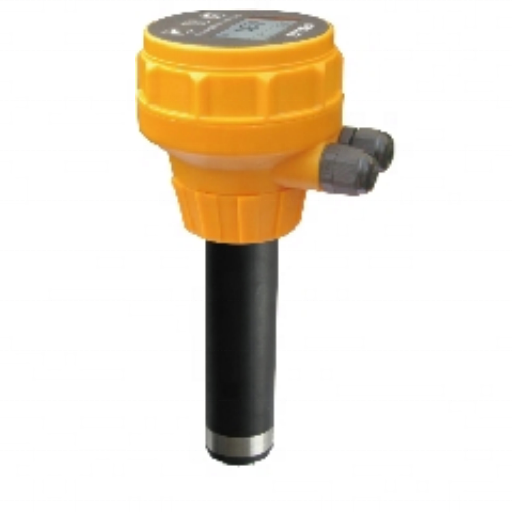
Shanghai ChiMay Online Turbidity Tester delivers continuous suspended solids measurement essential for pretreatment optimization and membrane integrity verification. Measurement ranges spanning 0-4000 NTU with accuracy to ±0.1 NTU ensure reliable performance assessment.
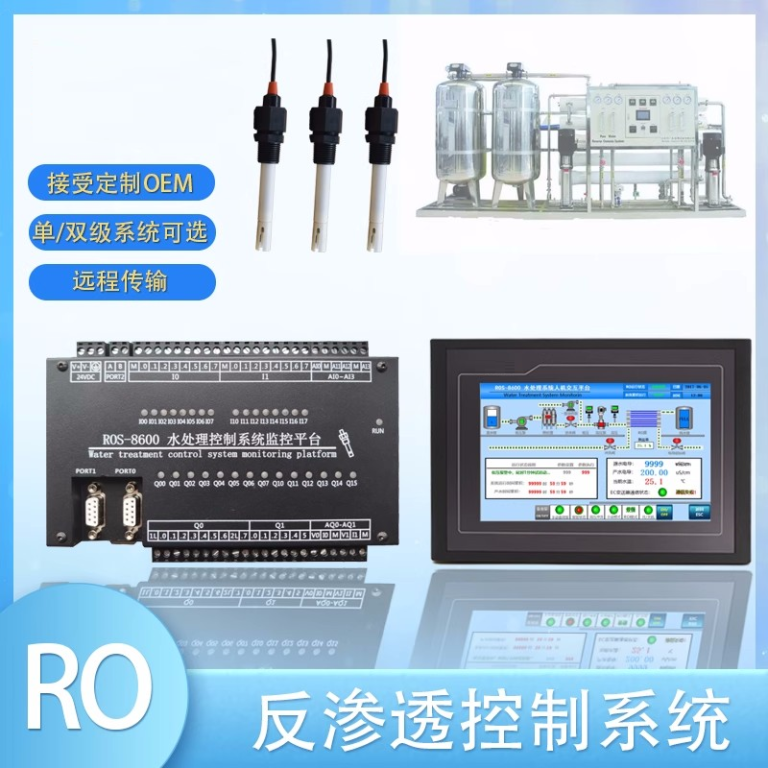
Shanghai ChiMay Conductivity Meters with four-electrode technology provide accurate ionic strength measurement across varying water matrices, enabling precise recovery optimization and permeate quality verification.
Shanghai ChiMay Multi-Parameter Sensors integrate pH, ORP, conductivity, and temperature in a single instrument, reducing installation complexity while providing comprehensive system health assessment.
Energy Efficiency Improvements
Historical Progress
Energy consumption in membrane water treatment has declined substantially over two decades:
- Early 2000s: 4.0-5.0 kWh/m³ typical for seawater RO
- Current conventional systems: 2.5-3.5 kWh/m³
- Best-in-class: In 2024, the DESALRO 2.0 pilot plant (DESAL+ Living Lab, Canary Islands) set a world-record specific energy consumption for a seawater desalination plant of 1.861 kWh/m³, breaking the 2.0 kWh/m³ barrier
- Improvement trajectory: roughly a halving of specific energy over two decades
Energy Recovery Devices
High-efficiency energy recovery devices (ERDs) capture pressure energy from concentrate streams, reducing net system energy requirements by 30-40% in typical installations:
- Isobaric ERDs: Fixed geometry, suitable for stable feed conditions
- Dual-work exchanger ERDs: Adjustable, adapting to varying feed salinity
- Boosters with ERDs: Integrated solutions for variable flow applications
Variable Frequency Drive Optimization
Adjustable speed pumps matched to actual demand—rather than fixed-speed operation at peak capacity—reduce energy consumption by 15-25% in variable load applications.
Fouling Control Innovations
Surface Modification Approaches
Membrane fouling remains the primary operational challenge in membrane water treatment. Recent advances in surface engineering address this issue:
Hydrophilic Surface Coatings:
– Graft polymerization of hydrophilic monomers
– Zwitterionic polymer brushes
– Polydopamine modification layers
These modifications create stable hydration layers that inhibit foulant adhesion and can substantially reduce cleaning frequency.
Antimicrobial Surface Technologies:
– Silver nanoparticle incorporation
– Copper ion release coatings
– Photocatalytic titanium dioxide surfaces
Antimicrobial functionality inhibits biofilm formation, addressing biological fouling that can rapidly degrade membrane performance.
Membrane Cleaning Optimization
Proper cleaning protocol development balances chemical consumption against membrane longevity:
Key Parameters:
– Cleaning agent selection matched to foulant type
– Concentration optimization preventing membrane damage
– Temperature control ensuring effective cleaning without degradation
– Flow velocity maintaining turbulence for mechanical foulant removal
Shanghai ChiMay Residual Chlorine Transmitters monitor chlorine-based cleaning solution concentrations, ensuring effective disinfection while preventing membrane damage from excessive exposure.
Regulatory Landscape Evolution
Discharge Standard Tightening
Regulatory frameworks increasingly mandate water reuse and resource recovery:
- European Union: The recast Urban Wastewater Treatment Directive (EU) 2024/3019 mandates quaternary treatment for large plants on a staged timetable (≥150,000 p.e.: 20% of load by 2033, 60% by 2039, 100% by 2045) and requires sludge and resource management that maximizes recovery of phosphorus and nitrogen, with a binding minimum reuse/recycling rate for phosphorus to be set by Commission delegated act by 2 January 2028
- United States: State-level recycled water mandates expanding beneficial use requirements
- China: Stricter industrial discharge limits driving wastewater treatment upgrades
- Middle East: Some national water reuse programs already reclaim the large majority of treated municipal wastewater, among the highest rates worldwide
These regulatory trends drive membrane technology adoption as conventional treatment proves insufficient for meeting new requirements.
Emerging Contaminant Concerns
Per- and polyfluoroalkyl substances (PFAS) represent an emerging treatment challenge:
- Under the 2024 US EPA drinking water rule, individual PFAS are regulated at parts-per-trillion levels (PFOA and PFOS at 4 ppt; PFHxS, PFNA, and GenX chemicals at 10 ppt), with a Hazard Index approach for mixtures
- Conventional treatment technologies are largely ineffective against these compounds
- Specialized membranes (nanofiltration and tight RO) showing promise
- Advanced oxidation and destructive technologies may provide complementary treatment
Membrane technology continues evolving to address these new contamination concerns.
Procurement Decision Framework
Technology Selection Criteria
When evaluating membrane technology options, procurement professionals should assess:
| Criterion | Weight | Evaluation Approach |
|---|---|---|
| Performance specifications | 25% | Pilot testing under actual conditions |
| Total cost of ownership | 25% | 10-15 year lifecycle analysis |
| Supplier track record | 20% | Reference installations, industry reputation |
| Service and support | 15% | Local representation, response time guarantees |
| Integration capability | 15% | Compatibility with existing systems |
Pilot Testing Recommendations
Full-scale membrane system investments warrant pilot testing to verify performance:
- Duration: Minimum 3-6 months to capture seasonal variations
- Scale: Sufficient membrane area to represent full-scale hydraulics
- Monitoring: Comprehensive data collection enabling detailed analysis
- Economic validation: Operating cost verification against projections
Shanghai ChiMay instrumentation provides the monitoring foundation for meaningful pilot evaluation, with online analyzers capturing system performance data throughout testing periods.
Future Technology Trajectory
Near-Term Developments
Anticipated advances include:
- Commercial COF and MOF-mixed-matrix membrane products entering the market for specialized applications as manufacturing scales
- AI integration standardization across major membrane system suppliers
- Improved fouling prediction through expanded sensor networks
Longer-Term Directions
Looking further ahead:
- Self-healing membranes incorporating responsive materials
- Solar-powered desalination leveraging membrane technology
- Resource recovery integration extracting value from wastewater streams
- Fully automated operation minimizing manual intervention requirements
Conclusion
Membrane technology continues advancing at a remarkable pace, offering water treatment professionals increasingly powerful tools for addressing water scarcity and environmental compliance challenges. From COF membranes sustaining fluxes hundreds of kilograms per square meter per hour at near-complete salt rejection, to AI-enabled predictive maintenance cutting cleaning chemical use, recent innovations deliver tangible operational benefits — most still at laboratory or early-commercial scale, which is precisely why pilot verification remains essential.
Shanghai ChiMay provides comprehensive online monitoring solutions that enable facilities to adopt these technological advances effectively. Real-time turbidity, conductivity, and multi-parameter data streams provide the foundation for optimization that maximizes membrane system value as the global market grows toward $51 billion by 2033.