If you have hypothyroidism, Hashimoto’s disease, or any thyroid condition, this article is for you. Emerging research suggests that water contamination with endocrine-disrupting compounds (EDCs) may be working against your treatment—even if you’re taking your medication correctly.
Table of Contents
The Thyroid-EDC Connection
Your thyroid gland controls metabolism through hormone production: T4 (thyroxine) and T3 (triiodothyronine). EDCs interfere with this process in several ways:
Hormone mimicry: Some compounds bind to thyroid hormone receptors, activating or blocking normal signaling.
Production disruption: EDCs interfere with thyroid hormone synthesis in the gland itself.
Transport interference: EDCs affect thyroid-binding proteins, changing how much “free” hormone circulates.
Conversion inhibition: Compounds block the T4-to-T3 conversion process in your liver and tissues.
Clearance acceleration: EDCs increase metabolism of thyroid hormones, reducing circulating levels.
Research findings:
– Large NHANES-based analyses have associated higher urinary BPA with altered thyroid hormone levels in U.S. adults and adolescents
– Animal studies consistently show triclosan lowering circulating T4
– Parabens show estrogenic activity affecting thyroid function
– Perchlorate blocks iodide uptake, disrupting hormone synthesis
The human evidence is associational, not proven cause and effect—but if you’re managing a thyroid condition, the direction of the evidence is not reassuring.
Where These Compounds Hide
In Your Water
Conventional wastewater treatment is a leaky filter for EDCs: some compounds are removed efficiently, others pass through largely untouched. What survives treatment enters rivers, lakes, and eventually drinking water supplies.
Sources include:
– Pharmaceutical residues: Birth control pills, antidepressants, anti-inflammatories
– Personal care products: Shampoos, lotions, cosmetics
– Cleaning agents: Triclosan in antibacterial soaps
– Pesticides: Herbicides and insecticides with hormonal activity
– Plastics: BPA, phthalates leaching from pipes and containers
In Your Food
Canned foods: BPA lining leaches into contents, especially with heat exposure.
Plastic food storage: Microwaving in plastic containers releases phthalates and BPA.
Fish consumption: Bioaccumulation concentrates persistent EDCs in fatty fish species.
Animal products: Meat, dairy, and eggs contain EDCs from animal feed and environment.
In Your Environment
Dust ingestion: House dust contains accumulated EDCs from consumer products.
Skin absorption: Direct contact with contaminated water or soils.
Inhalation: Volatile EDCs in indoor air.
Real-World Exposure Levels
CDC’s National Health and Nutrition Examination Survey (NHANES) data reveals:
– 93% of Americans have detectable BPA in their urine
– 75% have detectable triclosan metabolites
– More than half have detectable parabens
– Trendy “natural” products often contain untested EDC alternatives
Drinking water concentrations (typical range):
– BPA: 0.001-0.1 μg/L
– Triclosan: 0.01-0.5 μg/L
– Pharmaceuticals: 0.01-1 μg/L (mixture of compounds)
– Pesticides: 0.001-10 μg/L (location-dependent)
Comparison: Your medication dose is measured in micrograms (μg). You’re drinking or absorbing micrograms daily of EDCs—year after year.
How Treatment Plants Fail
Biological Treatment Limitations
Conventional activated sludge removes some EDCs through biodegradation. However:
Compound-specific removal: Efficiency ranges from 10-90% depending on compound and treatment conditions.
Transformation products: Partial degradation creates EDC metabolites sometimes more potent than parent compounds.
Sludge partitioning: 30-70% of EDCs partition to waste sludge, creating land application concerns.
Chemical Treatment Failures
Chlorination: May create transformation products (chlorinated phenols, etc.) with enhanced endocrine activity.
Ozonation: Effective for some EDCs but creates transformation products requiring additional treatment.
UV treatment: Limited direct photolysis of most EDCs without advanced oxidation enhancement.
Distribution System Contamination
Even perfect treatment leaves vulnerabilities:
– Pipe materials: Lead service lines, older plastic pipes
– Cross-connections: Contamination from non-potable sources
– Premise plumbing: Home water heaters, filters, softeners
What Monitoring Reveals
Standard Water Quality Parameters
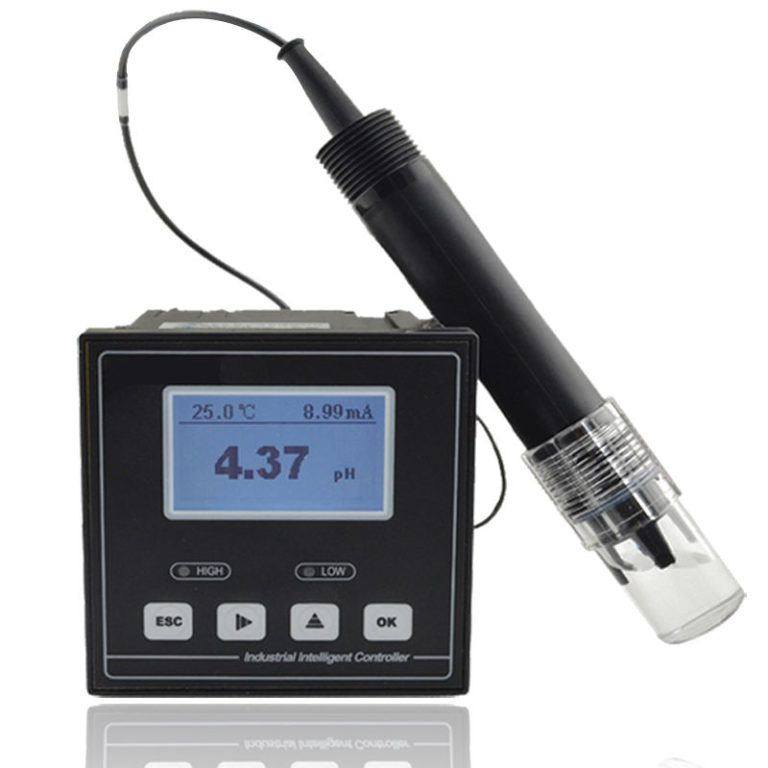
pH: Affects EDC speciation and removal efficiency; coagulation and disinfection chemistry both behave best near neutral pH.
Conductivity: Indicates dissolved ion content, including some EDC contribution.
Turbidity: Particle-bound EDCs correlate with suspended solids concentrations.
Chlorine residual: Affects transformation product formation in distribution.
Advanced Monitoring Approaches
Solid-phase extraction (SPE) followed by LC-MS/MS:
– Detection limits: 0.001-0.01 μg/L
– Compound coverage: 50-200 EDCs per analysis
– Cost: $200-500 per sample
– Turnaround: 1-2 weeks
Bioassays: Effect-directed analysis measuring estrogenic, thyroidogenic, or other activity:
– Advantages: Detects mixture effects, identifies unknown EDCs
– Limitations: No compound identification
– Applications: Screening, treatment verification
ChiMay Sensor Monitoring
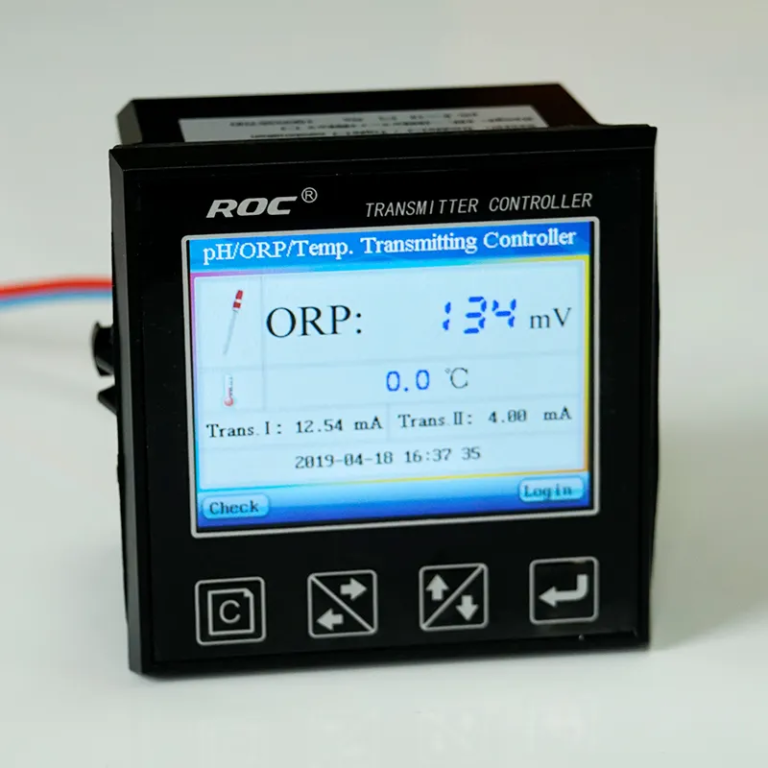
ChiMay inline water quality sensors provide continuous surveillance for EDC source identification:
– pH sensors track alkaline conditions favoring certain EDC transformations
– Conductivity sensors detect industrial discharge events
– Turbidity sensors monitor particle-bound transport pathways
These sensors cannot quantify individual EDCs. What they do well is flag the contamination events that justify sending samples to a laboratory.
Treatment Technologies That Actually Work
Activated Carbon
Granular activated carbon (GAC):
– EDC removal: 60-95% depending on compound
– Contact time: 10-20 minutes
– Regeneration: Thermal reactivation every 6-18 months
– Cost: $0.15-0.40/m³ operating cost
Powdered activated carbon (PAC):
– Dosage: 5-20 mg/L
– Application: Emergency treatment, small systems
– Cost: $0.05-0.15/m³ depending on dosage
Membrane Technology
Reverse osmosis (RO):
– EDC removal: >99% for most compounds
– Energy: 1.5-3 kWh/m³
– Limitations: High cost, concentrate disposal
– Applications: Point-of-use systems, high-value applications
Nanofiltration (NF):
– EDC removal: 80-99% for larger compounds
– Energy: 0.5-1.5 kWh/m³
– Selectivity: Size-based exclusion
Advanced Oxidation
Ozonation:
– EDC removal: 70-95% for many compounds
– Transformation products: Bromate formation risk requires attention
– Cost: $0.10-0.30/m³
UV/H₂O₂:
– EDC removal: 60-90% with hydroxyl radical oxidation
– Cost: $0.15-0.40/m³
Protecting Your Thyroid: Practical Steps
At Home
Water filtration:
– Activated carbon filters: Brita, Pur pitcher filters can cut a meaningful share of many EDCs
– RO systems: Provide >99% EDC removal; traditional units discharge several gallons of reject water per gallon of product, while modern high-efficiency units are close to 1:1
– Certification: Look for NSF/ANSI 42, 53, 58 (and 401, which covers trace pharmaceuticals and other incidental compounds)
Avoid plastic:
– Never microwave plastic: Use glass or ceramic instead
– Choose glass/stainless: For food storage and water bottles
– Check recycling numbers: #3, #6, #7 often contain EDCs
Hot water caution:
– Hot water accelerates leaching: Use cold water for drinking/cooking
– Flush first thing in morning: Run water 30 seconds before use
Dietary Choices
Reduce canned food: Choose fresh, frozen, or glass-packaged alternatives.
Organic when possible: Reduces pesticide EDC exposure.
Fatty fish limits: Choose lower-fat species; trim fat from conventionally-raised fish.
Shower filters: Ingestion is the bigger exposure route for most EDCs, but a shower filter reduces chlorine and some volatile compounds if that matters to you.
Supplement Considerations
Iodine status: Iodine deficiency exacerbates EDC thyroid effects. Consider testing if at risk.
Selenium: Supports T4-to-T3 conversion; a standard multivitamin or a modest supplement covers most needs—check with your doctor before dosing up.
Vitamin D: Deficiency associated with thyroid autoimmunity. Maintain adequate levels.
What Utilities Are Doing
Monitoring Programs
EPA UCMR 5: Requires nationwide monitoring for 29 PFAS compounds (plus lithium). Pharmaceuticals and most EDCs are not in it.
State programs: California, Washington, Massachusetts and a handful of others have established EDC or related monitoring requirements.
Utility action: A growing share of large utilities have run EDC screening surveys or added GAC, ozone, or membrane treatment—but most systems have done neither, and utility treatment decisions rarely move at the pace of the science.
The Bottom Line
EDCs represent a cumulative, chronic exposure challenge. No single action eliminates your risk—but layered protective strategies reduce your body burden.
Your water utility may or may not be actively monitoring and treating EDCs. Until comprehensive solutions are implemented, personal protection strategies are the part of the equation you control.
ChiMay inline water quality sensors provide the monitoring foundation for understanding your water supply. That intelligence—combined with appropriate home treatment and informed lifestyle choices—is what protecting your thyroid actually looks like in practice.
If you have a thyroid condition, the water coming from your tap may be working against your treatment. Understanding the risks and taking protective action puts you back in control.