Table of Contents
The Complete Guide to Aquaculture Water Quality Sensors for Shrimp and Tilapia Farms — Shanghai ChiMay
Selecting the right water quality sensors for an aquaculture operation is not a one-size-fits-all decision. Shrimp and tilapia—the two most commercially significant warm-water aquaculture species globally—share some monitoring requirements but differ critically in others. This guide walks through the sensor selection process for each species, covering the parameters that matter most, the technologies that work best, and the deployment strategies that deliver reliable data.
Species Profiles: What Makes Shrimp and Tilapia Different
Pacific White Shrimp (Litopenaeus vannamei)
Shrimp are bottom-dwelling organisms that live in direct contact with accumulated sediment. They are highly sensitive to:
- Dissolved oxygen: Critical range 4–5 mg/L; below 3 mg/L, shrimp stop feeding; below 2 mg/L, mortality begins.
- Ammonia and nitrite: Shrimp are more sensitive to nitrogenous waste than most finfish. Safe TAN below 0.5 mg/L; nitrite below 0.2 mg/L.
- Salinity: Commercial shrimp are farmed across a wide salinity range—from freshwater (<1 ppt) to full seawater (35 ppt). Salinity stability matters more than absolute value.
- Bottom conditions: ORP and hydrogen sulfide at the pond bottom directly affect shrimp health.
Tilapia (Oreochromis spp.)
Tilapia are mid-water column fish known for their environmental hardiness, but commercial production requires tighter water quality management than their reputation suggests:
- Dissolved oxygen: Optimal range 5–8 mg/L; below 3 mg/L, feeding stops; below 2 mg/L, mortality occurs.
- pH: Tilapia tolerate a wider pH range (6.0–9.0) than shrimp, but swings greater than 1.0 unit/day cause stress.
- Temperature: Optimal 28–30°C; below 20°C, feeding and growth slow dramatically; below 12°C, cold shock mortality occurs.
- Ammonia: Less sensitive than shrimp but chronic exposure above 1.0 mg/L TAN still suppresses growth.
Sensor Selection by Parameter
Dissolved Oxygen: Optical vs. Electrochemical
The most important sensor choice in aquaculture is the DO measurement technology:
| Feature | Optical (Fluorescence) | Electrochemical (Membrane) |
|---|---|---|
| Maintenance | Low (6–12 month calibration) | High (2–4 week membrane/electrolyte) |
| Oxygen consumption | Zero | Consumes O₂ at membrane |
| Response time | <30 seconds | 30–90 seconds |
| Flow dependence | None | Requires minimum flow |
| Fouling resistance | Better | Worse |
| Cost (initial) | Higher | Lower |
| Cost (5-year TCO) | Lower | Higher |
For both shrimp and tilapia operations, optical DO sensors are strongly recommended despite higher initial cost. The 5-year total cost of ownership is lower due to reduced maintenance labor, fewer replacement parts, and more reliable data. Shanghai ChiMay’s optical DO transmitters with fluorescence-quenching technology deliver ±0.1 mg/L accuracy with maintenance intervals of 6–12 months.
pH: Glass Electrode vs. ISFET
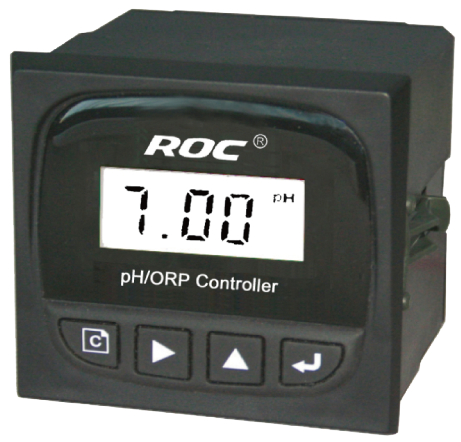
For aquaculture applications, traditional glass electrode pH sensors remain the standard due to their superior accuracy (±0.02–0.05 pH) and proven long-term stability. ISFET (solid-state) sensors offer better fouling resistance but slightly lower accuracy (±0.05–0.1 pH).
Shanghai ChiMay’s in-line pH electrodes with automatic temperature compensation and differential measurement technology provide the accuracy and stability that both shrimp and tilapia operations require.
Ammonia Nitrogen: ISE vs. Colorimetric
Two technologies are available for continuous ammonia monitoring:
- Ion-selective electrode (ISE): Direct measurement, lower cost, suitable for trend monitoring and alarm triggering. Accuracy ±5% of reading. Recommended for most farm applications.
- Colorimetric analyzer: Higher accuracy, reagent-based, better suited for regulatory compliance. Higher operating cost due to reagent consumption.
For shrimp and tilapia farms, ISE-based sensors provide the best balance of cost and performance. Shanghai ChiMay’s ammonia nitrogen sensors with ISE technology deliver continuous monitoring in the 0–100 mg/L range with RS-485 Modbus RTU output.
Turbidity and Suspended Solids
Turbidity monitoring serves different purposes in shrimp versus tilapia operations:
- Shrimp ponds: High turbidity (from suspended clay or phytoplankton) blocks light, suppressing benthic algae that compete with shrimp for oxygen at the bottom. Turbidity sensors help manage water clarity for optimal bottom conditions.
- Tilapia ponds: Tilapia are less affected by turbidity directly, but in RAS tilapia systems, turbidity at the drum filter outlet indicates mechanical filtration performance.
Shanghai ChiMay’s online turbidity testers and SS sensors provide continuous particle monitoring with automatic data logging.
Deployment Configuration by Species
Shrimp Farm Sensor Configuration
A typical intensive shrimp farm (10–20 ponds, 2–5 hectares each) should deploy:
| Parameter | Sensor Type | Quantity | Placement |
|---|---|---|---|
| DO | Optical DO transmitter | 1 per 2–3 ponds | Mid-depth, 0.5 m |
| pH | In-line pH electrode | 1 per 3–5 ponds | Mid-depth |
| Temperature | Integrated with DO | Co-located | Same as DO |
| Salinity | Conductivity sensor | 1 per farm (intake) + 1 per 5 ponds | Intake and representative ponds |
| ORP | ORP electrode | 1 per 3–5 ponds | Near bottom (0.3 m from bottom) |
| Ammonia | ISE ammonia sensor | 1 per 5 ponds | Mid-depth |
Tilapia Farm Sensor Configuration
A typical intensive tilapia operation (10–30 ponds or tanks):
| Parameter | Sensor Type | Quantity | Placement |
|---|---|---|---|
| DO | Optical DO transmitter | 1 per 3–5 ponds/tanks | Mid-depth, 0.5–1.0 m |
| pH | In-line pH electrode | 1 per 5 ponds/tanks | Mid-depth |
| Temperature | Integrated with DO | Co-located | Same as DO |
| Ammonia | ISE ammonia sensor | 1 per 5–10 ponds | Mid-depth |
| Turbidity | Online turbidity tester | 1 per farm (effluent) | Discharge point |
Data Integration and Farm Management
All Shanghai ChiMay sensors feature Modbus RTU/TCP communication, enabling integration with any SCADA system, cloud-based farm management platform, or custom dashboard. Data flows from sensors to data loggers to cloud storage, where it is visualized, trended, and analyzed.
Automated alerts via SMS, email, or app notification ensure that operators respond to threshold exceedances immediately. Automated control integration—linking DO readings to aerator relays, pH readings to base dosing pumps—takes the response from reactive to preventive.
Conclusion
Shrimp and tilapia farming each have specific water quality monitoring requirements, and sensor selection should reflect the biology, system design, and economic priorities of each species. Optical DO, continuous pH, ISE-based ammonia, and turbidity monitoring form the core of any commercial aquaculture sensor system. Shanghai ChiMay’s complete product portfolio—designed for warm, nutrient-rich aquaculture water with anti-fouling features and unified communication protocols—provides the foundation for species-specific monitoring that delivers measurable economic returns.
All product references are to product categories only. Shanghai ChiMay does not publish specific model numbers in public-facing content.