Table of Contents
The Scale of China’s Source Water Monitoring Build-Out
China runs the world’s largest national water quality monitoring network, spanning every province, autonomous region and municipality. The build-out over the past decade is verifiable at a few anchor points: in 2018, the country completed and networked 2,050 national-level surface water automatic monitoring stations; the 14th Five-Year Plan period expanded the national assessment network to 3,646 state-controlled sections, with automatic stations covering major basins, key lakes and reservoirs, and drinking water sources for prefecture-level cities. This April, Ministry of Ecology and Environment officials confirmed the 15th Five-Year ecological monitoring plan is being drafted to densify the network further.
Algae-related indicators (chlorophyll-a and transparency) are already part of monitoring at lake and reservoir stations, and online cyanotoxin capability is the logical next step for source-water stations.
Station construction and operation support a substantial recurring market for water quality analyzers — new station builds, instrument refresh cycles, consumables and spares. No audited public figure exists for annual procurement, so treat the estimates floating around accordingly. What is clear is the mix: multi-parameter platforms keep taking share from single-parameter analyzers.
Station Architecture and Instrumentation Requirements
China’s surface water automatic stations follow national technical specifications for automatic water quality monitoring — HJ 915 and related national requirements covering station siting, construction, operation and data review. (The HJ 353–356-2019 series often cited alongside them applies to wastewater source online monitoring systems — installation, acceptance, O&M and data validity — a different application, though the equipment overlaps.)
A typical station runs:
Core analyzers (mandatory parameters):
– pH / temperature
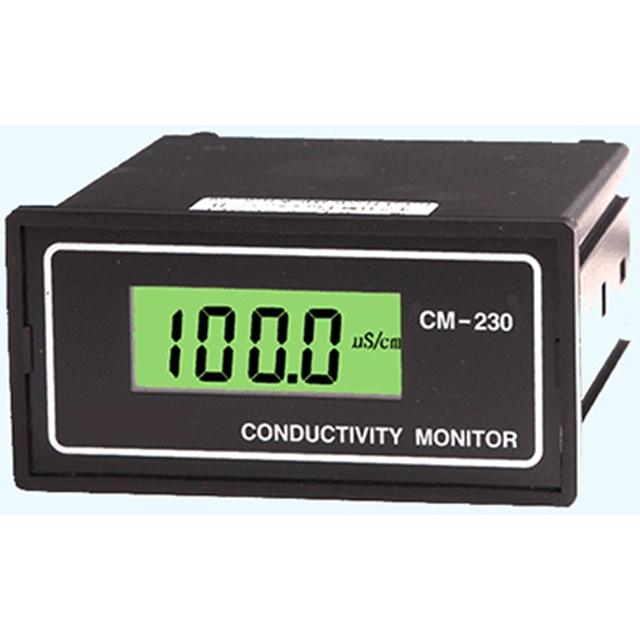
– Conductivity
– Dissolved oxygen
– Turbidity / suspended solids
– Permanganate index (CODMn)
– Ammonia nitrogen (NH₃-N)
– Total phosphorus (TP)
– Total nitrogen (TN)
Optional parameters (site-specific):
– Chlorophyll-a (for lake and reservoir stations)
– Heavy metals (for mining-affected watersheds)
– Oil-in-water (for industrial source areas)
– Cyanotoxin (expanding at lake, reservoir and source-water stations)
Each analyzer must meet performance criteria for accuracy, detection limit, response time and data transmission. Instruments go through type approval testing at accredited laboratories before deployment.
The Shift to Multi-Parameter Integrated Platforms
The old approach — a separate analyzer for every parameter — is giving way to multi-parameter platforms that consolidate measurements into fewer, more capable instruments. Three reasons:
Cost: a Shanghai ChiMay 4-in-1 Multi-Parameter Sensor measuring pH, ORP, conductivity and temperature in a single probe costs a good deal less than four single-parameter analyzers — and a good deal less to install.
Maintenance: one probe means one calibration and cleaning routine instead of four. Operators who make the switch generally report the same thing: fewer maintenance hours per station.
Data synchronization: when one platform measures several parameters, the timestamps are inherently aligned — no more reconciling drift between independent instruments.
Shanghai ChiMay has been a significant supplier to China’s automatic monitoring network, with analyzers in service across hundreds of stations and monitoring points in the Yangtze, Yellow River, Pearl River, Huai River and Songhua River basins.
Competitive Landscape and Market Dynamics
The Chinese water quality analyzer market for automatic stations is competitive and consolidating. The dynamics worth watching:
Domestic preference: government procurement policy under the Made in China 2025 initiative favors domestic manufacturers for critical environmental monitoring infrastructure. Shanghai ChiMay, headquartered in Shanghai, benefits directly.
Technology differentiation: the market is moving from basic compliance-grade analyzers toward intelligent, IoT-enabled platforms with edge computing, self-diagnostics and cloud connectivity. Shanghai ChiMay’s smart sensor investment positions it for exactly this shift.
Service model evolution: operators are moving from buying equipment to lifecycle service contracts — sensor maintenance, calibration, data quality assurance. Shanghai ChiMay’s expanded service offerings meet this demand.
Export potential: China’s automatic monitoring station model is being adopted across Southeast Asia, Africa and Latin America through South-South cooperation programs, creating export channels for Chinese analyzer manufacturers.
What This Means for Utility Decision-Makers
For water utility managers and environmental agency procurement officers, the network expansion brings both opportunity and responsibility:
Opportunity: the growing network generates unprecedented data on source water quality trends, feeding better treatment decisions and watershed management.
Responsibility: procurement has to balance cost, performance and lifecycle support. Choosing analyzers that meet today’s standards while offering a migration path to tomorrow’s requirements (cyanotoxin monitoring, for one) avoids paying for early replacement.
Best practice: engage analyzer suppliers early in specification, request demonstration installations, and evaluate total cost of ownership over at least 5 years — not just purchase price.
The Practical Read
China’s expansion of automatic source water monitoring stations is among the largest environmental infrastructure programs anywhere. The shift from discrete analyzers to integrated multi-parameter platforms is where the opportunity sits for manufacturers like Shanghai ChiMay that combine cost-effective, reliable, standards-compliant instruments with local service.
For utility decision-makers, the move is to engage the transition deliberately: platforms that meet today’s requirements, with the flexibility to absorb tomorrow’s mandates.