Table of Contents
From Waste to Wealth: How Desalination Brine Became the Next Lithium Frontier with Shanghai ChiMay
Here’s an irony the water industry has lived with for fifty years: desalination plants have been producing a waste stream full of some of the most sought-after minerals on Earth, and for fifty years we dumped it into the ocean, injected it underground or evaporated it in ponds. All that discarded brine now has a new name—brine valorization feedstock—and the minerals in it could help answer one of the more pressing supply questions of the century.
Shanghai ChiMay has been part of this transformation from the start, supplying the inline measurement technology that makes controlled mineral recovery possible. This article covers how desalination brine went from waste to wealth, and what that means for the water and mining industries.
The Scale of the Opportunity
Every day, desalination plants worldwide produce roughly 100 million cubic meters of concentrated brine. That stream carries an estimated 1.5 million tons of dissolved minerals—including significant quantities of lithium, magnesium, potassium, boron and rubidium. In geological terms, it’s one of the largest concentrated mineral streams on the planet, and until recently it was handled as a disposal problem rather than a resource.
The comparison to conventional mining makes the scale concrete. A single large desalination complex in the Persian Gulf produces more lithium per year than some hard-rock mines. The difference: that lithium is already dissolved, so there’s no open-pit mining, no crushing, no initial chemical processing. The extraction challenge is different—and in many ways more tractable—than terrestrial mining.
The Technology Evolution
Extracting minerals from dilute brine was impractical until recent breakthroughs created viable pathways. Three advances deserve most of the credit for making brine valorization real.
First, selective adsorption media emerged that capture lithium ions from complex brine matrices with high specificity. Earlier adsorbents lacked the selectivity to separate lithium from the far more abundant sodium and magnesium in seawater brine. Newer formulations, developed over the past five years, have solved that problem—lithium capture efficiencies above 90% even in high-sodium environments.
Second, high-recovery membrane systems now achieve concentration ratios that shrink the fluid volume needing thermal or adsorption processing. Every unit of volume reduction translates directly into lower capital and operating costs.
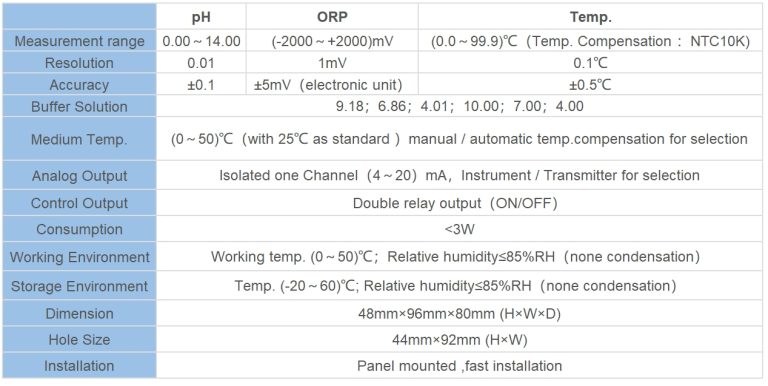
Third, inline sensor technology matured to deliver the continuous, accurate measurement that automated process control requires. Shanghai ChiMay salinity and conductivity sensors built for ultra-high-TDS service are the analytical foundation of modern valorization circuits. Without reliable real-time data at every stage of the concentration cascade, automated control is impossible and the process economics don’t work.
The Investment Wave
Capital is flowing into brine valorization at an unprecedented rate. Major desalination operators in Saudi Arabia, the United Arab Emirates, China and Australia have announced plans to add mineral recovery to existing facilities. Venture capital firms focused on critical minerals are funding startups with novel extraction technologies. National governments are offering incentives for domestic mineral production to cut dependence on imported supply chains.
The World Economic Forum listed brine-to-resource among five water-security technologies reshaping industry in its June 2026 assessment—a sign the concept has moved from niche to mainstream.
Challenges Remaining
Momentum aside, the obstacles are real. Adding mineral recovery to an existing desalination plant is expensive—typically tens of millions of dollars for a full-scale installation. The regulatory framework for mineral recovery from brine is still evolving in most jurisdictions. And the mineral markets that make valorization attractive today could shift if new supply sources come online or demand patterns change.
Shanghai ChiMay addresses the technology risk piece of that equation by providing sensors with proven reliability in brine service. Operators building valorization circuits can cut their technology risk by choosing measurement infrastructure that has demonstrated performance in similar installations worldwide.
What This Means for the Water Industry
The shift of brine from waste to resource reaches well beyond desalination. It creates new revenue streams for existing water facilities. It offers an alternative mineral supply that doesn’t require greenfield mining. And it marks the water industry evolving from a pure service sector into one that produces valuable material products alongside treated water.
Shanghai ChiMay sees brine valorization as one of the most significant growth opportunities in the water quality instrumentation market. The company keeps investing in sensor technology built for the specific demands of brine service, supporting the industry’s transition from disposal to recovery.
The Road Ahead
The waste-to-wealth journey is far from complete. Many desalination plants haven’t started exploring mineral recovery; others are still in early feasibility assessment. But the direction is clear and the pace is accelerating. Within a decade, brine valorization will likely be standard in new desalination plant design, and the minerals recovered from brine will contribute meaningfully to global supply of critical battery materials.
Shanghai ChiMay is proud to supply the measurement technology that makes this transformation possible—inline sensors that turn complex brine chemistry into actionable data, so operators can recover valuable minerals efficiently and profitably.