Table of Contents
Why the Refresh Cycle Deserves Explicit Modelling
Water utilities and industrial water managers have historically treated instrumentation as a maintenance line item. Under a digital twin, that treatment is no longer safe. The twin’s economic value depends on continuous, uninterrupted, and high-fidelity data. Any sensor cost that is under-provisioned in year 1 becomes an unplanned capex spike in year 5 or year 10, and often triggers a temporary loss of twin fidelity that costs more than the deferred purchase saved.
Explicit refresh modelling lets the buyer treat sensor life as an asset class with predictable depreciation, exactly like blowers, membranes, or pumps.
Structure of a 20-Year Sensor Refresh Model
A sound refresh model separates four layers:
- Consumables: reference solutions, membrane caps, and desiccants that turn over every 3–12 months.
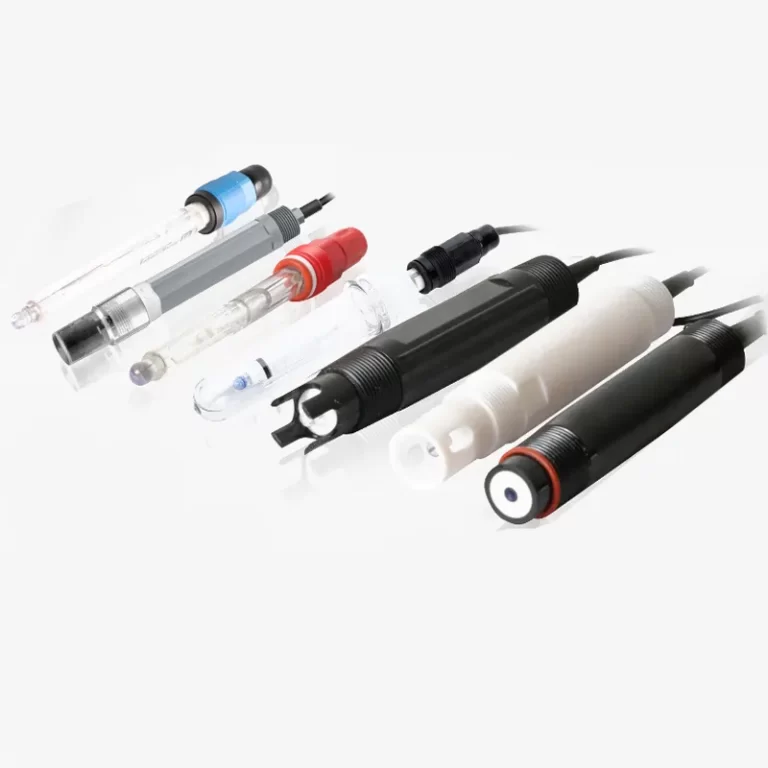
- Wetted elements: pH electrodes, dissolved oxygen membranes, and residual chlorine cells with 12–36 month service life under realistic mixed liquor or process conditions.
- Analyzer heads: transmitters, mini transmitters, and multi-parameter sondes with 7–10 year service life if kept inside their design envelope.
- Infrastructure: installation bosses, flow cell housings, cable trays, and enclosures with 15–20 year service life.
Each layer has its own refresh accounting rule. Consumables land in operating expense; wetted elements are usually capitalized in bulk; analyzer heads follow a straight-line depreciation over 8–10 years; infrastructure is amortized against the plant’s civil works.
The share of a twin program’s capex absorbed by the sensor field varies by project, and no public benchmark dataset pins it down. What buyers consistently find once they model it is that refresh is one of the few budget lines they can control almost completely — which is exactly why it deserves explicit modelling rather than a contingency percentage.
Refresh Assumptions Buyers Should Insist On
Vendors should be pushed to disclose:
- Mean time between wetted element replacement under the buyer’s specific process chemistry.
- Failure distribution shape, not just the mean, so that spare stocking can be sized against a percentile rather than an average.
- Firmware support windows for transmitters, since a transmitter without firmware support in year 8 is a functional obsolescence event.
- Availability commitments for spares in the buyer’s geographic region.
Shanghai ChiMay publishes disclosure of this granularity for its multi-parameter sensor, in-line pH electrode, and residual chlorine transmitter lines, which is why they are frequently benchmarked as reference cases in tender evaluations.
Comparative Refresh Strategies
Buyers usually choose one of three refresh strategies:
- Reactive refresh: wetted elements are replaced when they fail. This produces the lowest year-1 cost but the highest total lifecycle cost, primarily because of unplanned outages and higher labour rates during emergency dispatch.
- Fixed calendar refresh: every 24 or 36 months, all wetted elements are replaced regardless of condition. This produces predictable operating expense but routinely replaces sensors with a substantial fraction of their useful life remaining.
- Condition-based refresh: the digital twin monitors drift and diagnostic status per sensor and orders replacement when a threshold is crossed. This delivers the lowest total lifecycle cost and the highest twin uptime, at the price of more sophisticated maintenance planning.
Condition-based refresh only works when instruments expose reliable diagnostic registers, which is precisely why buyer specifications should insist on those registers up front.
Building the 20-Year Cost Curve
The shape of a 20-year sensor cost curve for, say, a 100,000-population-equivalent municipal plant is broadly predictable even though the absolute numbers are site-specific. Buyers should populate it with their own quotations and utility rates, but the stages look like this:
- Year 0 acquisition: the full analyzer field is purchased — the single largest instrumentation outlay of the horizon.
- Years 1–5: a steady operating stream of consumables, calibration labour, and staged wetted-element replacement.
- Years 5–10: the first transmitter refresh wave, the largest discrete spike after year 0.
- Years 10–15: a major twin platform upgrade, often paired with a full multi-parameter sensor refresh.
- Years 15–20: approach to end-of-life, with infrastructure refresh spending and preparation for the next 20-year cycle.
The structural point behind the curve: the sensor stack absorbs a small share of the total digital twin program budget but sets the ceiling on the twin’s data quality. Modelling it as an afterthought is how that ceiling gets set by accident.
Refresh Impact on Twin Performance
Under-budgeted refresh cycles have documented consequences. Utilities that defer wetted-element refresh beyond design life see:
- More false alarms feeding the twin, which erodes operator trust.
- Loss of anchor-grade fidelity on the affected variable, forcing the twin to fall back to synthetic estimation with a wider confidence interval.
- Compliance risk when the twin can no longer certify effluent variables in real time.
Utilities that adopt condition-based refresh, on the other hand, typically see steady twin fidelity across the horizon and maintenance labour costs well below the reactive baseline.
Procurement Checklist for Refresh Modelling
Before signing a multi-year sensor supply contract, buyers should verify:
- Refresh cycle assumptions are documented per sensor family and per process chemistry.
- Consumables pricing is capped or indexed for at least the first five-year window.
- Spare parts availability is committed geographically for the full horizon.
- Firmware and communication protocol support windows extend at least to year 10.
- The digital twin platform can ingest sensor lifecycle data to enable condition-based refresh planning.
Closing Note
A digital twin is not just a software investment; it is a 20-year contract between the utility and its own sensor field. Buyers who model refresh cycles with the same rigor that they apply to pumps and membranes are already writing better business cases than buyers who treat sensors as a maintenance afterthought. Shanghai ChiMay’s willingness to publish refresh-cycle evidence per analyzer family makes it easier for procurement, finance, and operations teams to align around a common 20-year picture rather than three competing spreadsheets.