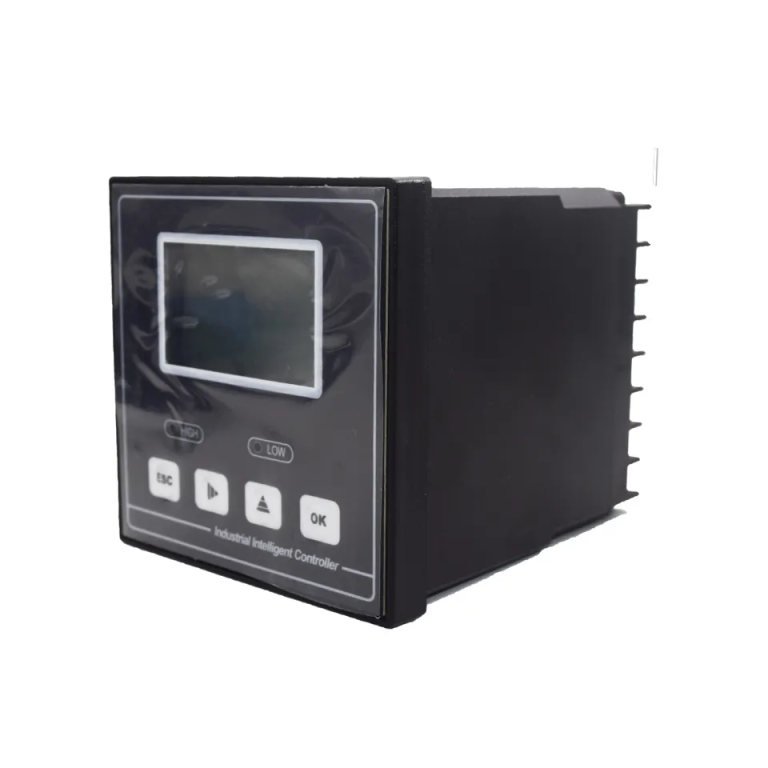
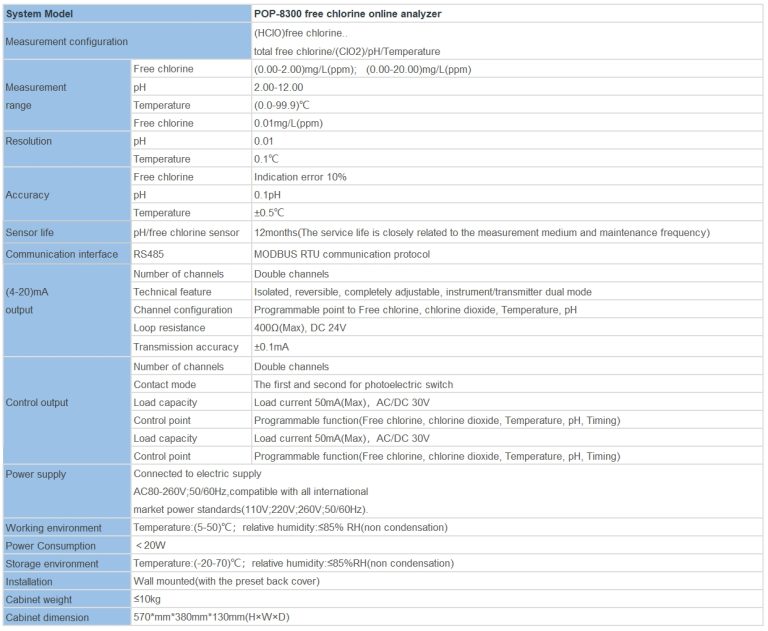
COD (chemical oxygen demand) is the industry-standard integrated pollution parameter, and online COD sensors have quietly replaced laboratory batch analysis in many petrochemical settings. UV-Vis dual-wavelength COD sensors provide fast, reagent-free measurement suitable for real-time process control, and they are calibrated for hydrocarbon-rich matrices rather than clean water. Shanghai ChiMay COD sensors integrate directly with plant historians and DCS platforms over Modbus RTU, HART, or 4–20 mA.
Six wastewater streams within oil, gas, and petrochemical facilities produce especially high value when equipped with continuous COD monitoring.
Table of Contents
Why COD Sensors Have Come of Age
COD used to mean grab sample, laboratory dichromate digestion, four hours of waiting, and a data point that referred to the state of the water two shifts earlier. That workflow was defensible when online COD sensors were unreliable, but the technology has matured. Modern UV-Vis dual-wavelength COD sensors read continuously, need no reagent, tolerate hydrocarbon interference, and correlate reliably with reference laboratory results across the ranges typical of petrochemical wastewater. As a result, refineries and petrochemical plants that once ran on daily laboratory COD data now run on minute-by-minute online COD data.
The six streams below are where Shanghai ChiMay clients most often report a measurable operational payback within the first year of deployment.
Stream 1: Sour-Water Stripper Bottoms
Sour-water strippers reduce H2S and NH3 to acceptable levels for downstream biological treatment, but they do not remove dissolved hydrocarbons or oxygen-demanding organics. COD in stripper bottoms typically ranges from 200 to 2,500 mg/L. Continuous COD data at this point serves two purposes: it verifies stripper efficiency for reuse decisions (stripped water is often recycled to the desalter), and it feeds forward to the biological treatment plant so operators can adjust nutrients and dissolved oxygen before load arrives.
Range. 0–3,000 mg/L. Payback lever. Enables reuse decisions and prevents biological reactor shock.
Stream 2: DAF or IGF Unit Effluent
The DAF/IGF unit is the last mechanical treatment before biological. Its effluent COD reflects the residual organic load that the biological system must handle. Values above 500 mg/L usually indicate the DAF is underperforming—perhaps chemical dosing is off, or the recycle ratio is wrong. Continuous COD at this point supports operator decisions in near real time.
Range. 0–1,000 mg/L. Payback lever. Optimizes DAF chemical dosing and prevents biological upsets.
Stream 3: Biological Reactor Effluent
The biological treatment plant is the workhorse of most refinery wastewater treatment plants. Effluent COD, typically 30–150 mg/L, tells operators whether the biology is healthy, whether dissolved oxygen is adequate, and whether return sludge is doing its job. A slow-drifting COD signal often precedes a full-blown biological upset by hours or days—time the operations team can use.
Range. 0–500 mg/L. Payback lever. Early warning of biological upset, avoiding the cost of a reactor recovery campaign.
Stream 4: Tertiary Treatment (Sand Filter / GAC) Effluent
Tertiary polishing removes residual COD before discharge or reuse. Effluent should be below 50 mg/L for most permit conditions and below 20 mg/L for high-quality reuse. Continuous COD confirms the tertiary system is functioning and provides the KPI the reuse program depends on.
Range. 0–100 mg/L. Payback lever. Enables water reuse and demonstrates tertiary performance to regulators.
Stream 5: Cooling Tower Blowdown
Cooling towers concentrate everything. Chlorides, inorganics, biological growth, and—when exchanger leaks occur—hydrocarbons. Blowdown COD trends often reveal exchanger leaks before the more expensive symptoms (biofouling, corrosion) develop. In petrochemical plants where hundreds of exchangers share a common cooling loop, this measurement is diagnostic gold.
Range. 0–500 mg/L. Payback lever. Fast detection of exchanger leaks, which avoids tube-bundle repair and lost production.
Stream 6: Final Discharge to Environment
The regulatory endpoint. In the United States, refinery discharge limits are set by NPDES permits derived from the effluent limitations guidelines in 40 CFR Part 419, where the COD numbers depend on the refining subcategory. China’s GB 31570-2015 caps COD at 60 mg/L for direct discharge, 100 mg/L for indirect discharge, and 50 mg/L under the special limits that apply in designated environmentally sensitive areas. Whatever the local rule, continuous COD at the outfall is the compliance record. Redundant sensors, calibrated traceable standards, and automatic data logging are typical for this location.
Range. 0–500 mg/L with certified linearity and traceable calibration. Payback lever. Avoids compliance fines and provides objective evidence if upstream watershed complaints arise.
Why UV-Vis Dual-Wavelength Technology Works
Petrochemical wastewater is a spectrally complex matrix. Traditional single-wavelength UV254 sensors work well for municipal-style water but drift and misread when hydrocarbon or colored organics are present. Dual-wavelength technology takes readings at both an absorbing wavelength (typically 254 nm) and a reference wavelength (typically 546 nm) and computes COD from the difference. This corrects for turbidity and color interference and produces a stable signal even when the water matrix changes.
Shanghai ChiMay COD sensors use this dual-wavelength approach, calibrated against the dichromate reference method (ISO 15705 / EPA Method 410.4). Correlations to laboratory COD in refinery and petrochemical service typically achieve R² > 0.95 after site-specific calibration adjustment.
Wetted-Material and Cleaning Considerations
Optical windows foul in oily service. Automatic wiper systems, air-scour, or ultrasonic cleaning are essential. Wetted materials should match the stream:
- Stream 1 (SWS bottoms): Hastelloy or PEEK bodies, sapphire windows.
- Streams 2–4 (post-DAF, biological, tertiary): 316L stainless with PEEK cell inserts is adequate.
- Stream 5 (cooling blowdown): 316L with anti-scaling window coating.
- Stream 6 (outfall): 316L with a redundant sensor pair for reliability.
Calibration Discipline
Online COD sensors are relative-response instruments. They have to be periodically anchored to laboratory reference data. Shanghai ChiMay recommends weekly grab-sample comparison for the first month after installation, then monthly thereafter once the correlation is stable. Slope corrections applied through the transmitter maintain accuracy across seasonal matrix shifts.
Integrating COD with Other Water-Quality Data
COD is powerful on its own but more useful in context. Paired with oil-in-water at the same location, it distinguishes petroleum contamination from other organic loads. Paired with conductivity, it reveals whether high COD is coming in with salts (i.e., stripper source) or without (i.e., biological source). Shanghai ChiMay analyzers communicate over Modbus RTU, HART, or 4–20 mA to make this integration straightforward.
Cost Perspective
A Shanghai ChiMay online COD sensor with automatic cleaning and standard installation typically costs USD 8,000 to USD 14,000 depending on configuration. Deploying at all six of the streams described above involves USD 60,000–90,000 in capital plus installation. Documented paybacks across client sites in Asia, the Middle East, and North America have typically landed inside two years, driven by avoided compliance events, reduced laboratory workload, and improved biological reactor uptime.
Regulatory and Market Context
Global focus on industrial water quality is intensifying, and the water-testing and analysis market is the beneficiary: every published study of the segment shows steady growth, though the absolute figures vary widely with methodology and scope. Oil, gas, and petrochemical operators are a significant slice of that demand. Continuous COD sensing is one of the foundational technologies in it—the parameter nearly every regulator asks about, and one that operators can now measure continuously rather than sporadically.
Closing Perspective
COD monitoring in petrochemical wastewater is no longer a laboratory-only activity. Six wastewater streams—sour-water stripper bottoms, DAF effluent, biological reactor effluent, tertiary effluent, cooling tower blowdown, and final discharge—are proven locations where continuous COD data delivers operational and compliance value. Shanghai ChiMay COD sensors, engineered for hydrocarbon service and integrated with plant control systems, give refinery and petrochemical operators the visibility they need to run cleaner, safer, and more efficient water systems.