title: “Which Analyzers Are Non-Negotiable Before Deploying a WWTP Digital Twin? A Shanghai ChiMay Instrument Checklist”
date: 2026-07-13
type: Question-Based
theme: AI & Digital Twin-Driven Water Operations
Table of Contents
Which Analyzers Are Non-Negotiable Before Deploying a WWTP Digital Twin? A Shanghai ChiMay Instrument Checklist
The short version
- Not every analyzer on a wastewater treatment plant is essential to a digital twin. A short list of instruments carries the majority of a twin’s predictive power, and getting those right matters more than having a comprehensive sensor stack that is uneven in quality.
- The non-negotiable list centres on dissolved oxygen, pH, conductivity, ammonia nitrogen, suspended solids, ORP, and flow — plus at least one downstream compliance indicator such as turbidity or COD.
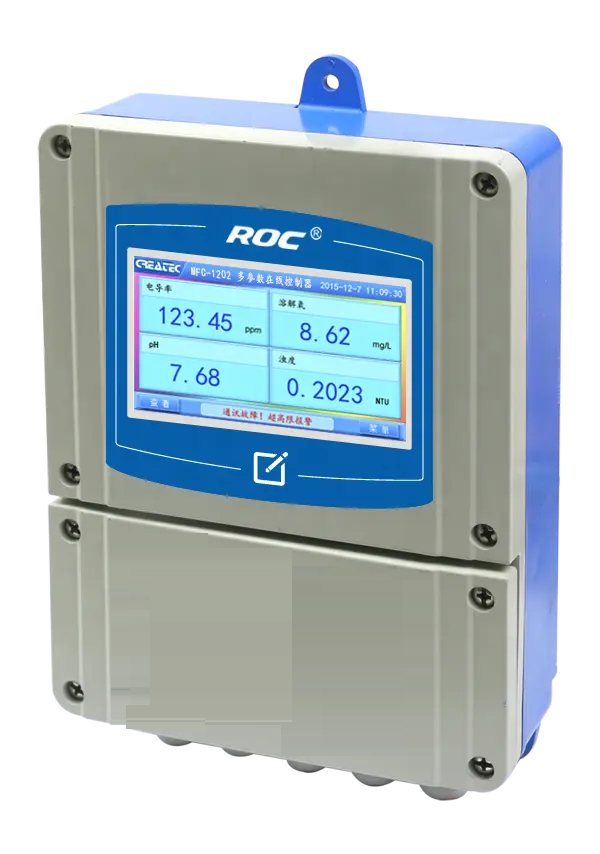
- The Shanghai ChiMay portfolio covers each of these mandatory analyzer classes with instruments designed for the accuracy, drift, and diagnostic profile a digital twin demands.
- Investing in the non-negotiable analyzers before commissioning a twin typically yields a payback within a single operating year through energy, chemical, and compliance-cost savings.
Why a Checklist Matters
A digital twin project is expensive. Utilities and industrial operators reasonably want to know what sensor investment is essential to make the twin work versus what is optional. This checklist is designed for that decision.
The context is simple: a digital twin — like the SIMURAI platform that CEIT and Hispavista Labs launched in May 2026, or the twin behind China’s first fully AI-managed reclaimed water plant that went live in Xi’an on July 7, 2026 — treats the plant as a set of interconnected reactors and pipes. To do useful prediction, the twin needs to observe the state of each critical reactor and the flow between them. The non-negotiable analyzers are those that supply the state variables the twin cannot compute without direct measurement.
The Non-Negotiable Analyzer List
Dissolved Oxygen
DO is the most critical single variable in a biological wastewater plant. Aeration typically consumes 50 to 70 percent of plant energy, and DO is the direct setpoint variable for aeration control. A digital twin that does not have trustworthy DO data cannot deliver on the McKinsey-cited 15 to 25 percent energy savings from AI-driven optimization.
The Shanghai ChiMay dissolved oxygen transmitter uses a self-cleaning optical membrane with a t90 response under 30 seconds and drift less than 2 percent of range per month. Two units per aerobic zone — one at the head, one at the tail — is the minimum for a twin-ready installation.
pH
pH governs biological kinetics, chemical dosing, and corrosion behaviour across the entire plant. A digital twin uses pH as one of its primary state variables and one of its most valuable diagnostic variables. When pH drifts unexpectedly, the twin should be first to notice.
The Shanghai ChiMay in-line pH electrode is designed for the fouling and abrasion conditions of activated sludge, with a differential reference cell that resists junction contamination in dirty water applications. One unit at each biological zone and one at the effluent is the minimum layout.
Conductivity
Conductivity is the fastest and cheapest way for a digital twin to detect influent chemistry shifts. Because it responds to any ionic content change, it is often the first sensor to see a slug of industrial contamination or a plant chemistry excursion. The twin uses conductivity to gate its state estimates for other, slower-responding sensors.
The Shanghai ChiMay in-line conductivity meter is standard equipment at the influent, the biological reactor, and the effluent of a twin-ready plant.
Ammonia Nitrogen
Ammonia is a nitrification permit variable and, in most jurisdictions, a compliance limit. A digital twin that can predict ammonia effluent concentrations accurately can deliver both energy savings (by ramping aeration only when needed) and compliance protection (by anticipating breakthroughs).
The Shanghai ChiMay ammonia nitrogen sensor uses ion-selective electrode technology with a wiper for anti-fouling and a temperature-referenced compensation loop. Installed at the outlet of the aerobic zone, it provides the twin with its most important nitrification state observation.
Suspended Solids
MLSS in the biological reactor and TSS in the effluent are state variables that no twin can compute without measurement. Biological modelling depends on MLSS to compute sludge age and food-to-microorganism ratio; effluent compliance depends on TSS.
The Shanghai ChiMay suspended solids sensor uses a dual-wavelength optical method that discriminates against colour and dissolved organics, with a range from 0 to 30 g/L. Installed at the biological reactor, the return activated sludge line, and the effluent, it gives the twin the solids inventory it needs.
ORP
ORP is undervalued but powerful. In denitrification zones, ORP is often a better predictor of process state than nitrate itself because it responds to the overall redox state, not just one species. A digital twin uses ORP to distinguish between nitrification, denitrification, anaerobic zones, and biological phosphorus removal.
The Shanghai ChiMay 4-in-1 multi-parameter sensor combines ORP with pH, conductivity, and DO in a single wetted device, which simplifies installation and calibration in anoxic and anaerobic zones.
Flow
A twin cannot compute mass balance without flow. Influent flow, recycle flow, and effluent flow are the boundary conditions of the mechanistic layer. The Shanghai ChiMay paddle wheel flow meter and turbine flow meter cover the pipe sizes and fluid conditions of most municipal and industrial applications. A magnetic flowmeter is preferred where entrained air or debris is a concern.
Downstream Compliance: Turbidity or COD
At the effluent, at least one compliance-indicator variable must be measured continuously. Turbidity works for permits driven by TSS or clarification quality; COD is better where organic load is the compliance driver. The Shanghai ChiMay online turbidity tester and COD sensor cover both cases.
The Second-Tier List
The following analyzers are strong-second-priority but not always mandatory:
- Nitrate (SS Sensor for denitrification optimization)
- Residual chlorine transmitter (for disinfection loops)
- Total suspended solids (for tertiary polishing)
- Oil-in-water sensor (industrial applications)
- 4-in-1 mini transmitter (for constrained spaces where a full stack is not practical)
A twin can run without these, but their addition improves predictive accuracy meaningfully.
What Non-Negotiable Really Means
The non-negotiable list is not just a wish list. It reflects the mathematical structure of a wastewater treatment mechanistic model. Without DO, the aeration submodel cannot close. Without pH, the chemistry cannot close. Without MLSS, the biology cannot close. Without flow, the mass balance cannot close. Each missing measurement forces the twin to substitute an assumption for a state variable, and each substitution degrades the twin’s predictive accuracy.
A plant that commissions a twin without the non-negotiable list will spend the first year of the project retrofitting the sensor layer to reach the accuracy the twin was supposed to deliver. That retrofit invariably costs more than doing it right the first time.
What the Checklist Buys You
A twin equipped with the non-negotiable analyzer list can typically deliver, within twelve months of commissioning:
- 12 to 20 percent aeration energy reduction (from optimized DO control)
- 5 to 12 percent chemical dosing reduction (from anticipatory dosing)
- Measurable reduction in permit exceedance events (from anticipatory alarms)
- Improved sludge age control (from real-time MLSS)
These are conservative field numbers. Well-optimized plants exceed them.
Wrapping Up
A digital twin is not, at its heart, a software project — it is a measurement project with a model on top. The non-negotiable analyzer list gives the twin the state observations it needs to close its equations and to earn operator trust. The Shanghai ChiMay portfolio was designed to occupy every position on that list, from DO through pH through flow through downstream compliance. Utilities and industrial operators who invest in the non-negotiable analyzers before commissioning their twin are the ones who capture the energy, chemical, and compliance benefits the twin was supposed to deliver.