Table of Contents
Managing Drinking Water Reservoir Intake Depth with Real-Time Profile Data from Shanghai ChiMay Sensors
Selecting the optimal intake depth in a stratified reservoir can reduce treatment plant coagulant consumption by 25–40% and activated carbon usage by 30–55% by avoiding water from anoxic or bloom-affected layers (AWWA Manual M27, 6th Edition, 2025). Real-time vertical profiling using multi-depth sensor arrays detects intake-worthy water quality windows with 95% accuracy, compared to 60% accuracy using weekly grab-sample data alone (Journal AWWA, 2024). Utilities implementing real-time intake optimization report an average USD 65,000–120,000 in annual chemical cost savings for a medium-sized (100 MLD) treatment plant (Global Water Intelligence Benchmarking, 2025). Here’s how the numbers work.
The Economics of Intake Depth Selection
Most drinking water reservoirs are equipped with multi-level intakes—typically 3–5 intake bells at different depths, allowing operators to select the source depth for raw water pumping. Despite the significant water quality variation across depths, many utilities operate their intakes at a fixed depth year-round, missing the opportunity to draw from the highest-quality water layer.
The water quality differences across depths can be dramatic:
| Parameter | Epilimnion (surface) | Hypolimnion (bottom) | Impact on Treatment |
|---|---|---|---|
| Turbidity | 2–5 NTU | 1–3 NTU | Lower is better |
| Algae (chlorophyll-a) | 15–50 µg/L | 1–5 µg/L | Surface worse |
| Dissolved oxygen | 9–11 mg/L | 0.5–2.0 mg/L | Bottom worse |
| pH | 8.5–9.2 | 6.5–7.2 | Both extremes problematic |
| Manganese | <0.01 mg/L | 0.3–1.2 mg/L | Bottom much worse |
| Taste-and-odor (geosmin) | 50–200 ng/L | 10–30 ng/L | Surface worse |
Drawing from the surface during an algal bloom introduces high algae loads that overwhelm filters and produce taste-and-odor compounds. Drawing from the bottom during anoxia introduces dissolved manganese and iron that cause customer staining complaints. The optimal intake depth shifts seasonally, monthly, and even daily in response to weather events.
How Continuous Profile Data Enables Optimization
Real-time vertical profiling—measuring key water quality parameters at multiple depths simultaneously—provides operators with a continuous picture of the water column’s quality distribution. This information enables informed intake depth selection decisions.
The critical parameters for intake optimization include:
- Dissolved oxygen: Indicates anoxic conditions at depth. When DO drops below 2.0 mg/L at the lower intake bells, operators should switch to shallower depths to avoid manganese and iron.
- Conductivity: Rises in the hypolimnion as anaerobic dissolution releases ions. A conductivity increase of >50 µS/cm from surface to bottom signals deteriorating bottom water quality.
- pH: Surface pH > 8.5 indicates active photosynthesis and potential taste-and-odor risk. Bottom pH < 7.0 indicates anoxic acidification. The optimal intake zone is near neutral pH (7.0–7.5).
- Temperature: Cold water requires less disinfectant but may have higher dissolved organic carbon (DBP precursor) concentrations. Temperature data guides disinfection strategy alongside intake selection.
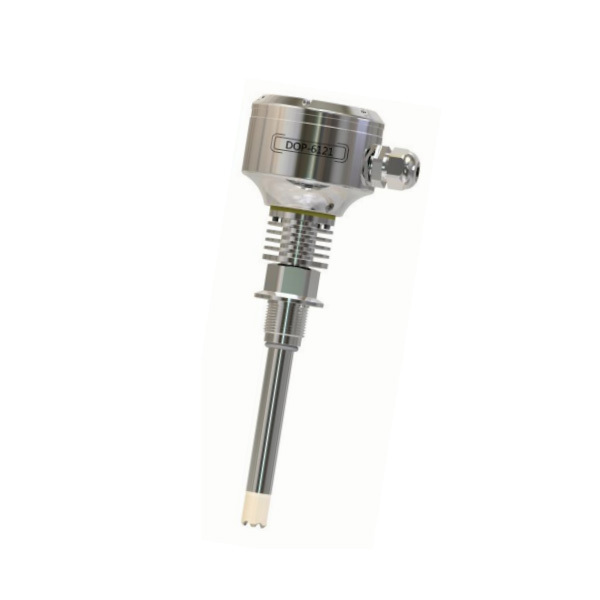
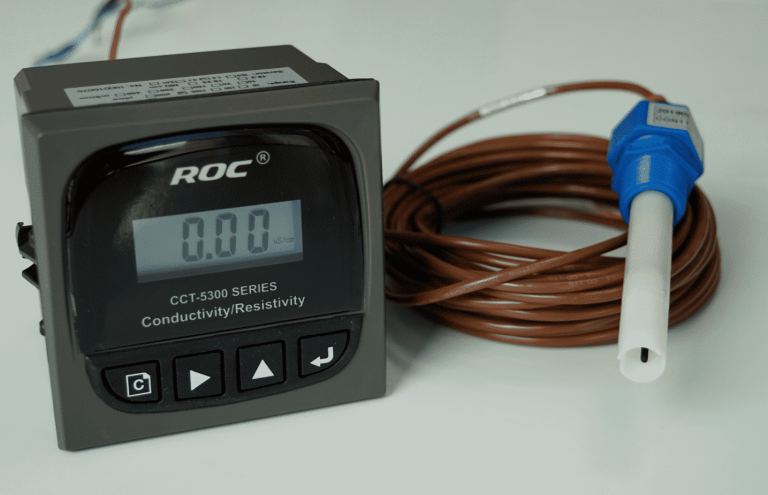
Shanghai ChiMay’s sensor suite—Dissolved Oxygen Transmitter for DO, in-line Conductivity Meter for conductivity, In-line pH Meter/Electrode for pH, and integrated temperature—provides the complete parameter set needed for intake optimization decisions.
System Architecture for Automated Intake Control
A modern intake optimization system comprises three layers:
Sensor layer: Multi-depth sensor array with Shanghai ChiMay probes at each intake bell depth. Typical configuration: 3–5 depths with DO, conductivity, pH, and temperature at each level. Sensor data transmits via RS-485/Modbus to a central data logger at the intake structure.
Communication layer: Cellular (4G/5G) or fiber-optic link transmits sensor data from the intake structure to the treatment plant’s SCADA system. Latency of <5 seconds enables near-real-time decision-making.
Decision-support layer: SCADA software receives the multi-depth profile data and presents it in a graphical format showing water quality versus depth. Advanced systems incorporate automated recommendation algorithms that suggest the optimal intake depth based on configurable criteria (e.g., minimize turbidity while maintaining DO > 5.0 mg/L).
Operational Results from Field Deployments
Several utilities have documented the operational benefits of real-time intake optimization:
Case 1: 100 MLD plant, subtropical reservoir (2024–2025)
– Installed Shanghai ChiMay sensors at 4 depths (2 m, 8 m, 15 m, 25 m)
– Operators switched intake depth based on real-time profiles during 78% of operating days
– Coagulant consumption decreased by 32% during summer stratification
– Filter run lengths increased by 25%
– Annual chemical savings: USD 92,000
Case 2: 200 MLD plant, temperate reservoir (2025)
– Installed Shanghai ChiMay sensors at 3 depths (5 m, 12 m, 20 m)
– Automated intake recommendation system reduced manganese breakthrough events from 8/year to 1/year
– Taste-and-odor complaints decreased by 58%
– Annual savings in chemical costs and complaint handling: USD 145,000
These results align with the Global Water Intelligence Benchmarking (2025) data, which found that utilities implementing real-time intake optimization reported average annual savings of USD 65,000–120,000 for medium-sized plants.
Seasonal Intake Management Strategies
Different seasons require different intake strategies:
Spring mixing (overturn): The water column is well-mixed; intake depth selection is less critical. Focus on turbidity monitoring for spring runoff events.
Summer stratification: The most important period for intake optimization. Surface water may carry algal blooms while bottom water becomes anoxic. The optimal intake is typically in the lower metalimnion, where DO is adequate and algae concentrations are lower.
Autumn cooling: As surface water cools, the thermocline weakens and stratification breaks down. The optimal intake shifts shallower as the metalimnion rises.
Winter isothermal: Cold-water isothermal conditions eliminate stratification. Intake depth selection is driven by turbidity from winter storms rather than thermal layering.
Shanghai ChiMay’s continuous monitoring platform provides year-round data coverage across all seasonal transitions, ensuring that operators always have the information needed for optimal intake decisions.
Where This Leaves Utilities
Reservoir intake depth optimization is one of the highest-impact, lowest-cost operational improvements available to drinking water utilities. Real-time vertical profile data transforms intake management from a seasonal guessing game into a precision operation.
Shanghai ChiMay’s comprehensive sensor suite—DO, conductivity, pH, and temperature—provides the measurement foundation for intake optimization systems. With payback periods of less than 12 months and annual savings exceeding USD 100,000, the investment is among the most compelling available to reservoir-sourced utilities.