Table of Contents
How to Prevent Membrane Fouling in Seawater RO? Shanghai ChiMay Strategies
关键要点:
– Membrane fouling causes 50-70% of all RO operational problems, with biofouling accounting for 45% of fouling incidents
– Effective pretreatment reduces cleaning frequency from weekly to quarterly, cutting maintenance costs by 60%
– SDI monitoring helps maintain feed water quality below SDI 5 threshold, preventing 80% of colloidal fouling
– Shanghai ChiMay’s comprehensive sensor solutions enable early fouling detection and pretreatment optimization
– Regular monitoring and maintenance can extend membrane lifespan to 5-7 years, versus 2-3 years with inadequate fouling control
– Fouling-related production losses can exceed $500,000 annually for medium-sized facilities
Introduction
Every reverse osmosis operator knows the dread of discovering membranes coated with slimy biofilms, chalky scale deposits, or suspended particle accumulations. Fouling remains the primary operational challenge in seawater desalination, accounting for the majority of system performance losses, emergency shutdowns, and premature membrane replacements. Yet fouling is not inevitable—with proper understanding and appropriate controls, even challenging feed waters can be processed reliably.
The economic stakes are substantial. The global desalination industry spends an estimated $1.5 billion annually on fouling remediation, including cleaning chemicals, lost production, and premature membrane replacement. This guide provides the knowledge and strategies needed to minimize fouling impacts and maximize membrane performance.
Understanding Fouling Mechanisms
Biological Fouling: The Invisible Threat
Biofouling represents the most challenging fouling type because biological organisms continuously enter the system from seawater. Bacteria, algae, and marine invertebrates colonize membrane surfaces, creating biofilms that reduce permeability, promote localized corrosion, and provide sites for other fouling types to accumulate.
The biology is relentless: a single bacterial cell can multiply to 10 million cells in 24 hours under favorable conditions. Once established, biofilms are extremely difficult to eradicate—antiseptic treatments kill surface organisms but often miss protected cells deeper in the biofilm matrix. Prevention through continuous biocide dosing and regular cleaning protocols provides the most effective control.
Biofilm formation typically progresses through several stages. Initial bacterial attachment occurs within hours of membrane exposure. Microcolonies develop within days. Mature biofilms with protective extracellular polymeric substances (EPS) establish within weeks. Once mature biofilms form, removal becomes progressively more difficult, requiring increasingly aggressive cleaning protocols.
Scaling: The Crystalline Menace
Seawater contains abundant calcium, magnesium, bicarbonate, and sulfate ions—the raw materials for scale formation. As water concentrates through the RO system, these ions approach saturation limits and precipitate as crystalline deposits on membrane surfaces. Calcium carbonate forms most readily, but calcium sulfate, barium sulfate, and silica scales also occur depending on feed water composition.
The Langelier Saturation Index (LSI) predicts carbonate scaling tendency—positive values indicate oversaturation and scaling potential. For seawater applications, maintaining LSI below 0 through acid dosing or antiscalant treatment typically prevents carbonate fouling. However, other scaling types require different prediction models and treatment approaches.
Scaling develops rapidly once precipitation begins. Crystal nuclei form on membrane surfaces within hours, growing into macroscopic deposits that restrict flow channels and reduce effective membrane area. Early detection through conductivity and pressure monitoring enables intervention before scaling becomes severe.
Colloidal and Particulate Fouling
Suspended particles—clay, silt, organic debris, and biological fragments—accumulate on membrane surfaces when feed water pretreatment fails. The Silt Density Index (SDI) test quantifies fouling potential from colloidal materials. Standard specifications require feed water SDI below 5, with values above 3 indicating excellent water quality.
Colloidal fouling often precedes biological fouling because particle deposits provide protected surfaces for bacterial attachment. Managing particulate fouling therefore addresses both immediate fouling and sets the stage for biological problems.
Particulate fouling manifests as gradual pressure increases as particles accumulate on membrane surfaces and within feed channels. Unlike scaling, which often shows distinct concentration polarization patterns, particulate fouling distributes more uniformly across membrane elements.
Prevention Strategies That Work
Comprehensive Pretreatment
Pretreatment design determines long-term fouling behavior more than any other factor. Effective pretreatment typically includes media filtration removing particles larger than 10-20 microns, cartridge filtration providing final polishing to 1-5 microns, UF/MF membranes achieving 0.01-0.1 micron filtration for critical applications, and chemical conditioning adjusting pH and adding antiscalants.
Investment in robust pretreatment typically pays for itself within 2-3 years through reduced cleaning costs, extended membrane life, and lower energy consumption. Facilities that skimp on pretreatment often spend far more on remediation and premature membrane replacement.
Pretreatment system design must account for worst-case feed water conditions rather than average quality. Storms, algal blooms, and seasonal variations create periodic challenges that adequate pretreatment handles without membrane impact.
Continuous Monitoring for Early Detection
Prevention works best when operators know their system status in real time. Key monitoring parameters include feed water SDI measured every 4-8 hours to track pretreatment performance, turbidity for continuous monitoring detecting pretreatment upsets immediately, differential pressure for rising pressure signals fouling accumulation, and productivity for declining flux indicating permeability loss from fouling.
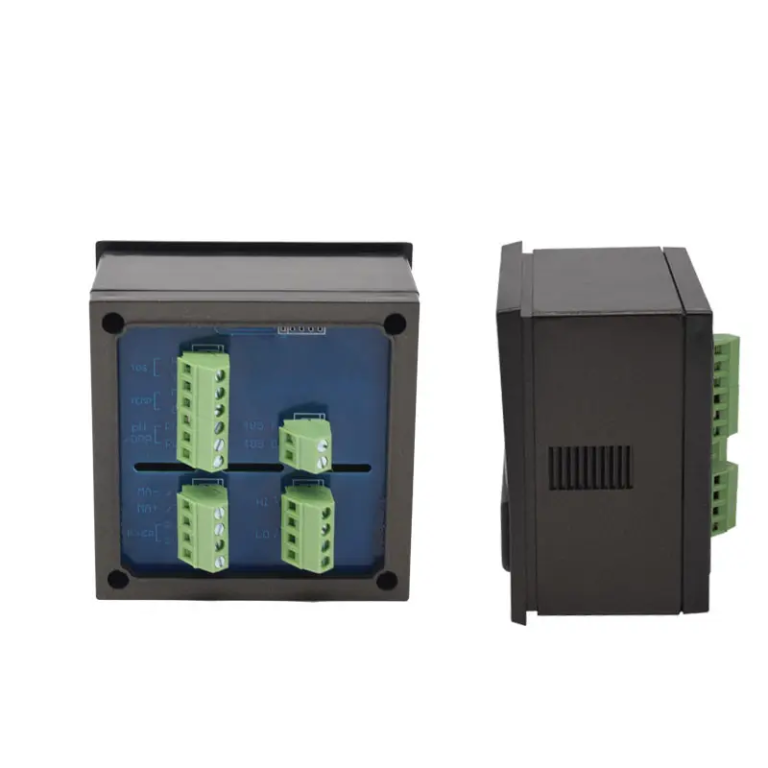
Shanghai ChiMay’s sensor solutions provide the continuous, reliable data that enables effective fouling management. Inline turbidity sensors, conductivity probes, and differential pressure transmitters form an integrated monitoring system designed for marine applications. The sensor data feeds into advanced analytics that identify developing problems before they impact production.
Optimized Chemical Dosing
Antiscalant chemicals prevent crystallization by maintaining scale-forming ions in supersaturated solutions. Dosage requirements depend on feed water ion concentrations, recovery rate, temperature, and specific antiscalant chemistry.
Overdosing wastes money; underdosing invites fouling. Continuous monitoring of scaling indicators—conductivity, pH, LSI calculations—enables precise dosing that balances cost and protection. Dosage optimization based on actual water chemistry can reduce antiscalant consumption by 30-50% compared to conservative worst-case dosing.
Biocide dosing requires similar optimization. Free chlorine effectively controls biological growth but damages polyamide membranes—dosage must be sufficient for disinfection while avoiding membrane attack, typically by maintaining chlorine below 0.1 mg/L or using alternative biocides.
Regular Cleaning Protocols
Even with excellent prevention, periodic cleaning remains necessary. Effective cleaning protocols include acid cleaning (pH 2-4) for dissolving carbonate and iron deposits, alkaline cleaning (pH 10-12) for removing organic fouling and biofilms, biocide treatments for controlling biological growth between cleaning cycles, and low-pH alkaline sequences for addressing combined fouling scenarios.
Cleaning frequency depends on fouling rates—weekly cleaning indicates inadequate pretreatment, while quarterly cleaning suggests well-managed operation. Shanghai ChiMay’s monitoring data helps operators identify optimal cleaning schedules based on actual system performance rather than arbitrary schedules.
Cleaning protocol optimization can significantly impact membrane life and operational costs. Overly aggressive cleaning damages membranes; insufficient cleaning allows fouling to progress. The optimal approach balances cleaning effectiveness against membrane impact.
Advanced Prevention Technologies
Continuous Chlorination Systems
For intake structures and pretreatment basins, continuous low-level chlorination prevents biological growth before water enters the RO system. Dosing systems automatically adjust based on residual chlorine monitoring, maintaining protection while minimizing membrane exposure to chlorine.
Effective chlorination requires monitoring to prevent both underdosing (allowing biofouling) and overdosing (damaging membranes). ORP monitoring provides an effective control parameter, with targets typically maintained above 250 mV for biological control.
UV Disinfection
Ultraviolet radiation provides biological control without chemical addition. UV systems installed upstream of membranes effectively inactivate bacteria and viruses while avoiding chemical residuals that might damage membranes or downstream processes.
UV systems require monitoring to verify effective disinfection. Sensors measuring UV intensity ensure adequate dose delivery, while monitoring of microorganism indicators verifies biological control effectiveness.
Electrochlorination
Onboard electrochlorination systems generate hypochlorite from seawater, providing continuous biocide production without chemical storage or handling. This technology proves particularly valuable for offshore platforms and vessels where chemical logistics prove challenging.
Electrochlorination systems require monitoring to optimize generation rates and ensure adequate biocide production. Automatic control based on residual chlorine or ORP monitoring maintains consistent biological protection.
Conclusion
Membrane fouling remains manageable through comprehensive prevention strategies, continuous monitoring, and appropriate chemical treatments. Success requires understanding fouling mechanisms, investing in adequate pretreatment, and maintaining vigilant operation.
Shanghai ChiMay’s monitoring and sensor solutions support every aspect of fouling prevention—from feed water characterization through product quality verification. By providing the data needed for informed decision-making, these tools enable operators to achieve reliable, cost-effective desalination performance.