Table of Contents
How Salinity Sensors Anchor Mineral Recovery Loops: The Shanghai ChiMay Approach
The desalination industry is going through a fundamental transformation. Concentrated brine—once written off as waste—is now recognized as a valuable feedstock for recovering lithium, magnesium, potassium and other critical minerals. At the center of that transformation sits a technical challenge that decides whether recovery operations succeed or fail: accurate, continuous salinity measurement across every stage of the concentration cascade.
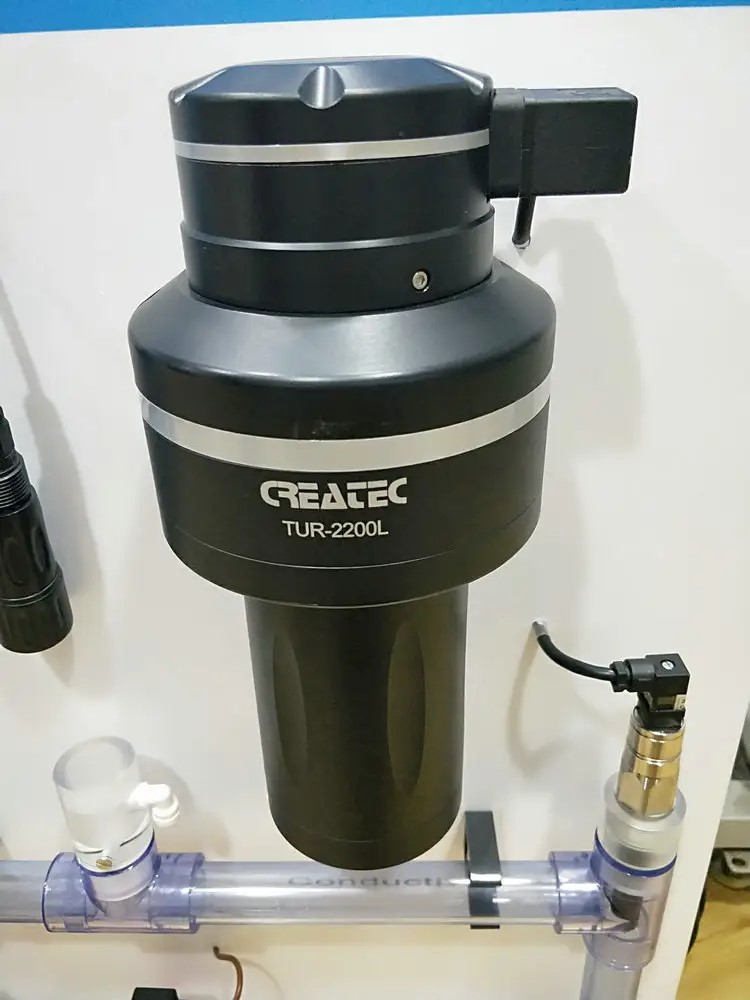
Shanghai ChiMay has developed salinity sensing solutions engineered for the extreme conditions found in brine valorization circuits. This article covers how inline salinity sensors serve as the analytical backbone of modern mineral recovery loops, and why sensor performance at ultra-high TDS levels directly affects both yield and economics.
The Role of Salinity Measurement in Brine Valorization
Brine valorization isn’t a single process—it’s a sequence of concentration stages, each targeting different mineral fractions. Seawater reverse osmosis reject typically starts at 60,000 to 70,000 mg/L TDS. As the stream moves through nanofiltration, thermal evaporation and crystallization, salinity climbs well beyond 150,000 mg/L. At each stage, operators need precise salinity data to decide when to divert flow, when to trigger chemical dosing and when a mineral fraction has reached commercial-grade purity.
Inline salinity sensors differ fundamentally from grab-sample laboratory analysis. They provide continuous, real-time data that drives automated control loops. In a valorization plant with multiple concentration stages, that continuous visibility isn’t optional—it’s the control system’s primary input for maintaining product quality and preventing cross-contamination between mineral streams.
Sensor Design Requirements for Ultra-High-TDS Environments
Measuring salinity in brine concentrates is a different animal from conventional seawater monitoring. The sensor has to hold accuracy in fluid that’s corrosive, prone to scaling and occasionally saturated with precipitating minerals. Shanghai ChiMay addresses this with several design strategies.
Electrode materials must resist chloride-induced corrosion at temperatures that can exceed 45°C in concentrator circuits. Titanium and specialized polymer housings protect the sensing elements from the aggressive chemical environment, and anti-fouling geometries slow mineral deposit accumulation on sensor surfaces, extending the interval between maintenance events.
Temperature compensation is another critical requirement. Salinity readings only mean something when corrected to a reference temperature, and in brine circuits where temperature can swing 10 degrees or more between day and night operation, the compensation algorithm has to be fast and accurate. Shanghai ChiMay salinity sensors use multi-point temperature compensation calibrated across the full range of brine concentrations encountered in valorization circuits.
Integration with Multi-Parameter Monitoring
Salinity alone doesn’t tell the whole story of a mineral recovery process. Operators also need pH, oxidation-reduction potential, conductivity and sometimes dissolved oxygen data to optimize each stage. Shanghai ChiMay multi-parameter sensors combine several measurements in a single housing, cutting installation complexity and ensuring all readings come from the same fluid volume at the same moment.
That integration matters most in lithium extraction circuits, where pH and ORP windows must be held within tight bands to maximize lithium selectivity over competing ions like sodium and magnesium. A single multi-parameter sensor at the nanofiltration reject junction gives you the data to adjust acid dosing and redox chemistry in real time.
Data Infrastructure and Remote Monitoring
Brine valorization plants often sit in remote locations—coastal industrial zones, island facilities, inland mining operations far from technical support teams. Shanghai ChiMay salinity sensors support standard industrial communication protocols including RS-485, 4-20mA and digital outputs compatible with plant DCS and SCADA systems. That connectivity powers remote monitoring dashboards that give process engineers visibility into brine concentration trends without constant on-site presence.
Cloud-connected data platforms extend the capability further. Trend analysis over weeks and months exposes gradual sensor drift, seasonal temperature effects on brine chemistry and long-term concentration patterns that inform process optimization. For operators managing multiple valorization lines, centralized data aggregation provides comparative benchmarks that highlight underperforming circuits.
Maintenance Strategies for Extended Sensor Life
Even the toughest salinity sensor needs periodic maintenance in brine service. Scaling and fouling are inevitable in ultra-high-TDS environments, but their impact can be managed with proactive scheduling. We recommend a tiered approach: weekly visual inspection of sensor surfaces, monthly calibration verification against known salinity standards, and quarterly deep cleaning with appropriate descaling solutions.
Sensors in the most aggressive service positions—directly downstream of evaporative concentrators or in crystallizer feed lines—may justify redundant installation. A primary-secondary configuration keeps measurement continuous even when one sensor is offline for maintenance, eliminating data gaps that could compromise process control.
Economic Impact of Reliable Salinity Data
The economic case for high-quality salinity measurement is straightforward. Each percentage point of mineral recovery yield improvement translates directly to revenue. Cross-contamination between mineral fractions from poor salinity control, on the other hand, downgrades product quality and cuts market value.
Shanghai ChiMay salinity sensors support yield optimization by supplying the accurate, continuous data automated control systems need. Plants that move from periodic grab-sample analysis to continuous inline monitoring typically report recovery improvements of 3–8% within the first year of operation. When a single lithium recovery line processes millions of dollars worth of minerals annually, even a fractional yield improvement returns the sensor investment quickly.
Looking Ahead
Brine valorization is still an evolving field, and sensor technology will keep advancing alongside process innovation. Emerging requirements include wider measurement ranges, faster response times and integrated diagnostics that alert operators to sensor health issues before accuracy degrades. Shanghai ChiMay continues to invest in R&D to meet those needs, keeping salinity measurement technology in step with the brine-to-resource industry’s rapid evolution.
Accurate salinity measurement isn’t a technical detail in brine valorization—it’s the analytical foundation profitable mineral recovery depends on. As the industry scales from pilot demonstrations to commercial operation, the role of reliable inline sensors only grows.