title: “Understanding ORP Signatures Around Permeable Reactive Barriers: A Shanghai ChiMay Field Guide”
date: 2026-07-11
type: Technical Introduction
theme: Groundwater Remediation & Contamination Monitoring
Table of Contents
Understanding ORP Signatures Around Permeable Reactive Barriers: A Shanghai ChiMay Field Guide
The Short Version
- Oxidation-reduction potential (ORP) is the single most sensitive real-time indicator of whether a permeable reactive barrier (PRB) is still doing chemical work on a contaminant plume.
- Healthy zero-valent iron (ZVI) barriers typically drive ORP down to –400 mV to –550 mV in the reactive core, while up-gradient background groundwater usually sits between +50 mV and +250 mV.
- ORP drift toward more positive values over months is the earliest warning of media exhaustion, mineral passivation, or preferential flow paths bypassing the reactive zone.
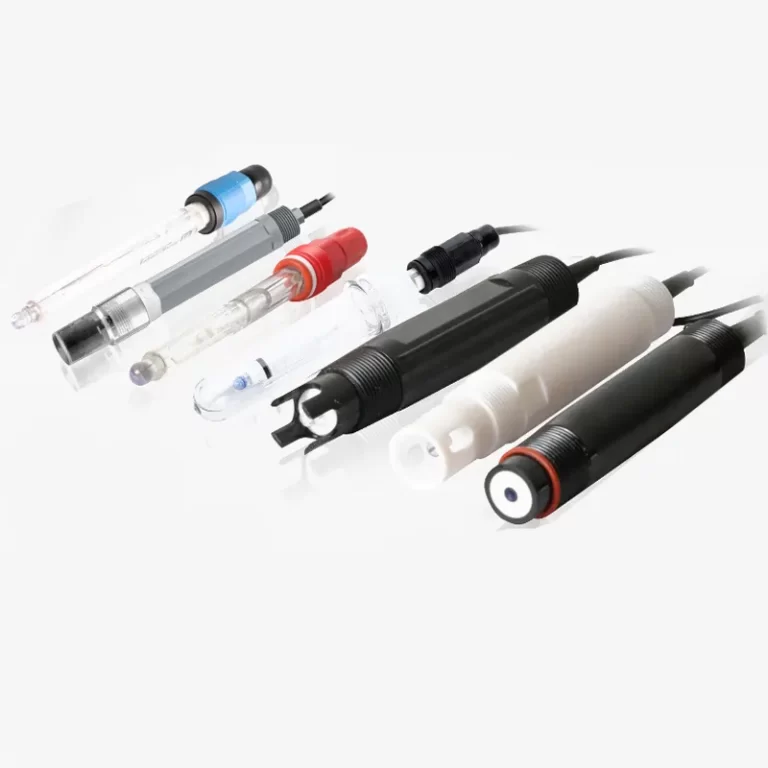
- Shanghai ChiMay’s pH electrode line, when specified with an ORP option and paired with a multi-parameter sonde, forms the sensor backbone many long-term PRB compliance programs rely on.
What ORP Actually Measures at a PRB
ORP quantifies the tendency of water to accept or donate electrons. A high positive value means the water is oxidizing; a negative value means it is reducing. Nothing about that measurement is exotic — it is simply the voltage between a noble-metal indicator electrode (usually platinum) and a reference electrode, measured in millivolts.
Where ORP becomes invaluable is at reactive barriers. A PRB installed to treat chlorinated ethenes, hexavalent chromium, or nitrate is engineered to create a strongly reducing environment inside its reactive core. The chemistry of that core — most often granular ZVI, sometimes ZVI–biochar composites, sometimes emplaced sulfidated iron — is entirely defined by its ORP window. If the ORP drifts, the chemistry drifts. If the chemistry drifts, the barrier stops treating.
That is why every serious PRB compliance program treats ORP as a primary indicator, not a nice-to-have.
The Three ORP Zones Around a PRB
Any monitoring network across a barrier will typically resolve three distinct ORP signatures.
Up-gradient background zone. Water arriving at the barrier reflects the ambient aquifer. In most sedimentary settings ORP sits between +50 mV and +250 mV, occasionally reaching +400 mV in well-oxygenated recharge zones. Wells here document the redox condition of the untreated plume and provide the reference against which treatment performance is judged.
Reactive core. Inside the barrier, or in monitoring points installed directly within it, ORP should collapse sharply. A freshly commissioned ZVI barrier commonly reads –450 mV to –550 mV. Sulfate-reducing biological barriers can reach –300 mV to –400 mV. Anything less negative than –200 mV in the reactive core is a signal to investigate.
Down-gradient recovery zone. Immediately after the barrier, ORP typically remains negative for one to three meters as reduced species (H2, HS-, ferrous iron) continue to react with dissolved oxygen and other oxidants. Further down-gradient, ORP recovers toward background. The shape and length of that recovery zone is itself a diagnostic — a rapid rebound suggests short residence time or channeling.
Reading ORP Drift Over Time
A single ORP reading is a snapshot. What matters at a PRB is the trajectory. Three drift patterns show up repeatedly across long-term monitoring datasets.
Slow upward creep in the reactive core. Typically 5–15 mV per quarter. This is the classic signature of gradual ZVI passivation as iron oxide, iron carbonate, and iron sulfide precipitates armor the reactive grains. It is expected behavior over a barrier’s design life of 10–20 years.
Rapid upward jump. A movement of 100 mV or more within a single quarter often reflects a hydraulic event — heavy rainfall, an upgradient pumping change, or a new preferential flow path — carrying oxidized water past the reactive zone without full contact.
Persistently oscillating ORP. A well that swings between –400 mV and –100 mV week to week is usually seeing intermittent flow through and around the barrier. It is a call to review well construction, screen placement, and gradient assumptions.
Practical Sensor Choices for PRB Programs
ORP electrodes are sensitive instruments. A few field-tested rules improve data quality substantially.
- Use combination pH-ORP probes wherever practical. pH strongly modulates ORP, and simultaneous logging lets engineers normalize to a reference redox couple (typically the H2/H+ half-reaction on the Nernst equation).
- Choose double-junction reference electrodes for wells with elevated sulfide or high dissolved iron. Single-junction references drift within weeks under those conditions.
- Deploy the sensor deep enough to sit in the target screened interval, not in the standing column of a well casing. Standing water above the screen is often more oxidized than formation water.
- Program a quarterly bench check against a Zobell or Light’s solution standard. Twenty minutes of reference-solution testing per probe per quarter is enough to defend the dataset against regulatory scrutiny.
Shanghai ChiMay’s pH electrode family offers ORP-equipped variants with titanium wetted parts, double-junction reference, and Modbus digital output. Integrated with a multi-parameter sonde, the same well point can log ORP, pH, conductivity, and dissolved oxygen simultaneously, which is the four-way redox picture regulators increasingly request in PRB annual reports.
Turning ORP Data Into Decisions
Continuous ORP logging changes how remediation engineers manage a barrier. Three examples show up repeatedly on well-instrumented sites:
- A ZVI barrier at an industrial legacy site in the Midwest United States showed steady –500 mV readings for six years, then a stepwise rise to –280 mV over eighteen months. That data justified a targeted injection of emulsified vegetable oil to re-energize the reducing zone, avoiding the far more costly step of full barrier replacement.
- A chromium plume at a plating facility used ORP as the primary compliance metric. When reactive-zone ORP moved above –150 mV, an amendment refresh was triggered under a pre-approved contingency plan, keeping the site compliant without emergency permitting.
- A large chlorinated-solvent site tied its automatic reporting portal to a rolling 30-day ORP mean at every barrier well. Regulators accepted the continuous dataset in lieu of a portion of quarterly grab sampling, cutting sampling contract costs by roughly 40%.
Final Word
A permeable reactive barrier is a static installation doing dynamic chemistry. ORP is the language that chemistry speaks. Instrumented well by well, quarter by quarter, ORP tells operators whether the barrier is still working, where it is weakening, and when to intervene. With a solid probe design, a disciplined calibration routine, and continuous logging, Shanghai ChiMay’s ORP-equipped pH electrodes and multi-parameter sondes give remediation engineers the visibility their sites need for decades — not just at the next quarterly sampling round.