title: “Inline 4-in-1 Multi-Parameter Sensor Technology for Paper Mill Process Water: A Shanghai ChiMay Technical Overview”
date: 2026-06-26
type: 技术介绍型
Table of Contents
Inline 4-in-1 Multi-Parameter Sensor Technology for Paper Mill Process Water: A Shanghai ChiMay Technical Overview
Key Takeaways:
– The 4-in-1 multi-parameter sensor consolidates pH, ORP, electrical conductivity, and temperature measurement into a single insertion point, reducing tap-point penetrations by 75% compared to conventional single-parameter chains
– Paper mill process water benefits especially from integrated measurement because chemistry shifts in one parameter typically signal correlated drift in the others
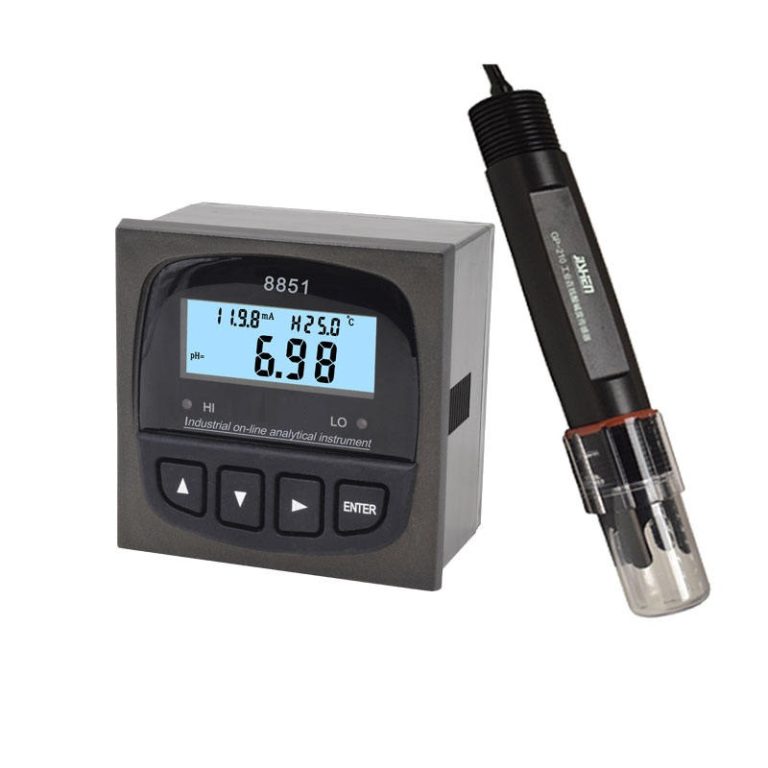
– Shanghai ChiMay 4-in-1 architecture employs glass-electrode pH, platinum ORP, four-electrode conductivity, and Pt1000 RTD elements behind a single PG13.5 process fitting
– Calibration time for an integrated 4-in-1 head is 40-55% shorter than four standalone instruments because one technician handles one device, one buffer set, and one set of cables
– The TAPPI Process Control Subcommittee has documented that integrated multi-parameter sensing reduces unscheduled wet-end stoppages by approximately 28% versus distributed single-parameter installations
Introduction
Paper mill process water carries a chemistry footprint that no single parameter can fully describe. Wet-end pH and conductivity drift together when retention aid dosing falls out of balance. Oxidation-reduction potential (ORP) and pH co-vary when slimicide chemistry is rotating through its kill phase. Temperature swings of even 2-3 degrees C at the headbox can shift drainage performance and pulp viscosity simultaneously. The 4-in-1 multi-parameter sensor was engineered precisely to capture these correlated phenomena from a single mounting location. This technical overview explains how Shanghai ChiMay 4-in-1 sensor technology is constructed, where it fits in paper mill water systems, and what operations teams should expect during commissioning and steady-state use.
Sensor Architecture Overview
The Shanghai ChiMay 4-in-1 sensor integrates four measurement principles within a single PEEK or 316L stainless steel body:
- pH measurement: glass membrane electrode with internal Ag/AgCl reference, dual-junction wetted reference path
- ORP measurement: platinum ring measuring against the shared reference junction
- Electrical conductivity: four-electrode graphite cell rated 0-200 mS/cm with automatic temperature compensation
- Temperature: Pt1000 RTD class A, accuracy ±0.15 degrees C
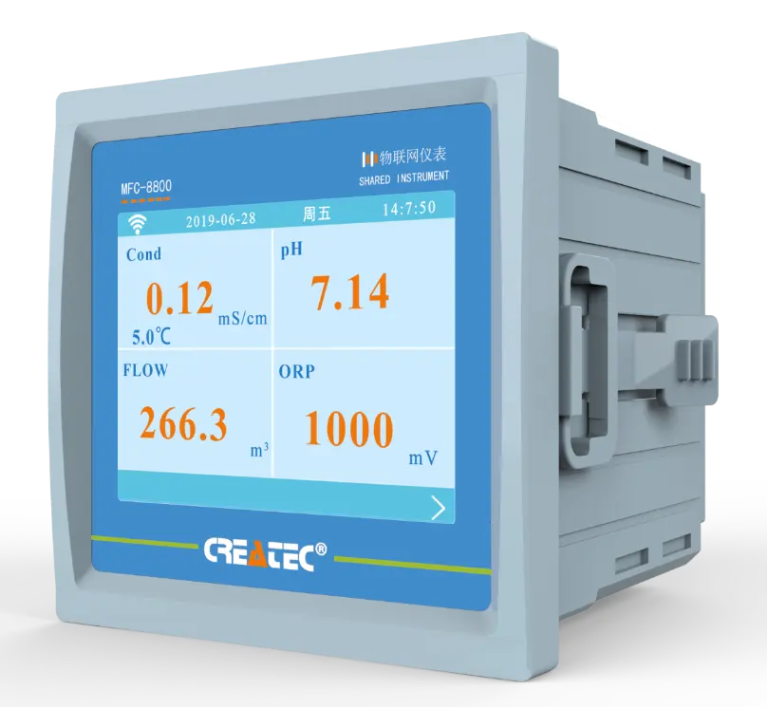
The four signals share a single digital head with Modbus RTU or 4-20 mA output options, simplifying integration into mill distributed control systems (DCS) or programmable logic controller (PLC) panels.
Why Integration Matters in Paper Mill Water
Conventional sensor strategy installs separate single-parameter probes at separate tap points. This approach is mechanically straightforward but creates three operational disadvantages in paper mill conditions:
- Tap-point proliferation: each tap is a potential leak, a fouling site, and a calibration overhead. A typical wet-end might host five to seven separate single-parameter taps that the 4-in-1 sensor can consolidate to one.
- Measurement misalignment: parameters measured at slightly different locations or times cannot be cleanly correlated. A 4-in-1 sensor captures all four signals simultaneously at the same fluid element.
- Calibration drift desynchronization: separate probes drift on separate schedules, complicating troubleshooting. A unified head allows synchronized calibration cycles.
The American Forest and Paper Association (AF&PA) Technical Operations Forum has reported that mills consolidating to multi-parameter sensing typically reduce annual instrument calibration labor by 30-45%, while improving the diagnostic value of wet-end data.
Process Application Map
In paper mill water systems, the 4-in-1 sensor is most productive at the following nodes:
- White water silo: monitoring the recycle chemistry baseline that feeds the headbox
- Cloudy filtrate line: tracking fiber-laden water before it returns to the stock prep
- Recovered fiber acceptance: verifying chemistry consistency of recycled stock entering the machine
- Cooling tower basin: where pH, conductivity, and ORP indicate biocide effectiveness and corrosion risk
- Treated effluent polishing tank: confirming discharge chemistry before release
In each location, the value of the 4-in-1 sensor is that the four parameters together tell a more complete story than any one parameter alone.
Installation and Mechanical Considerations
The Shanghai ChiMay 4-in-1 sensor is designed for inline insertion in pipe diameters from DN50 upward via a flow-through tee, a ball-valve retraction housing, or an immersion lance. Recommended mounting is in a flowing section with fluid velocity between 0.5 and 2 m/s to ensure adequate flushing of the membrane surface while avoiding erosive impact.
Standard pressure rating is PN10, with PN16 and PN25 variants available for pressurized recirculation loops. Process temperature limits run from 0 to 80 degrees C for the standard build, with extended-temperature options to 120 degrees C for steam-condensate proximity.
Calibration and Maintenance Profile
A 4-in-1 sensor calibrates in approximately 15-20 minutes for a full four-parameter check, compared to 45-60 minutes for four separate single-parameter probes. The standard calibration cadence in paper mill water is:
- pH: every 4-6 weeks, using pH 4 and pH 7 buffers
- ORP: every 8-12 weeks, using 220 mV or 475 mV standard
- Conductivity: every 12 weeks, using a 1413 microsiemens/cm standard
- Temperature: factory calibration verified every 6-12 months
Membrane replacement intervals are typically 9-15 months depending on slimicide chemistry and fiber loading. The sensor head is designed for in-place electrode swap without disturbing the process fitting.
Diagnostic Value of Correlated Signals
The deeper value of 4-in-1 sensing emerges in diagnostic interpretation. Consider three illustrative diagnostic patterns:
- Slime breakthrough: ORP drops while pH and conductivity remain stable, indicating biocide depletion before microbial counts spike
- Retention chemistry drift: pH and conductivity drift together while ORP holds steady, signaling that wet-end charge balance has shifted
- Heat exchanger leak: temperature, conductivity, and ORP all shift in the same minute, isolating a mechanical fault from a chemistry fault
Mills running advanced process analytics layer machine-learning models on top of these correlated signatures, achieving anomaly detection lead times of 20-45 minutes ahead of conventional single-parameter alarms.
Cost and Lifecycle Profile
A representative 4-in-1 sensor installation cost stack in 2025 USD looks like this:
| Cost Element | 4-in-1 Sensor | Four Single Sensors |
|---|---|---|
| Hardware | $3,200 | $4,800 |
| Mounting/fitting | $400 | $1,600 |
| Wiring and DCS I/O | $600 | $2,400 |
| Annual calibration labor | $850 | $2,000 |
| 5-year total | $8,450 | $18,800 |
The five-year cost differential is approximately $10,000 per measurement node in favor of integrated 4-in-1 sensing, before counting the diagnostic benefits.
Integration with Mill Control Architecture
The Shanghai ChiMay 4-in-1 sensor supports Modbus RTU over RS-485 for direct PLC integration, and analog 4-20 mA outputs for legacy panel work. The digital head can publish all four parameters at update rates of 1 second or faster, which is sufficient for closed-loop dosing applications such as automated pH trim and biocide injection.
For mills running plant historians, the 4-in-1 sensor data integrates cleanly with OSIsoft PI, AVEVA, or open-source historian platforms via standard OPC-UA gateways.
Quality Assurance and Standards
Shanghai ChiMay 4-in-1 sensors are manufactured under ISO 9001 quality management, with each unit factory-tested against traceable buffers and reference solutions. Materials of construction comply with relevant chemical compatibility standards for paper mill exposure, including chlorine dioxide, hydrogen peroxide, sodium hydrosulfite, and alum-based retention chemistries.
Documentation per unit includes serial number, factory calibration certificate, traceability chain to national standards, and a recommended preventive maintenance schedule tailored to paper mill duty.
Conclusion
For paper mill water systems, the 4-in-1 multi-parameter sensor is not just a packaging convenience; it is a measurement philosophy that aligns with how paper mill chemistry actually behaves. Integrated sensing reduces tap-point overhead, accelerates calibration, and unlocks diagnostic patterns that single-parameter strategies cannot deliver. Shanghai ChiMay 4-in-1 sensor technology is built specifically for the fiber-laden, chemically active, mechanically demanding environment of modern paper production, and its lifecycle economics typically beat distributed single-parameter alternatives by a wide margin.
Procurement and engineering teams evaluating wet-end monitoring upgrades should benchmark the 4-in-1 approach against legacy single-parameter chains using the cost framework outlined above, paying special attention to diagnostic lift, calibration efficiency, and DCS integration.