Table of Contents
Industrial Cooling Systems for Power Generation: A Shanghai ChiMay Overview
Power generation facilities depend on reliable cooling systems to maintain efficient operation. Whether generating electricity from fossil fuels, nuclear reactions, or renewable sources, plants require effective heat rejection to achieve rated capacity. This overview examines industrial cooling systems commonly deployed in power generation applications, with particular attention to water quality monitoring requirements.
Key Takeaways
- Cooling systems consume 60-70% of total water withdrawals at power generation facilities
- System efficiency directly affects power output, with a 1°C increase in condenser vacuum reducing output by 2-3%
- Shanghai ChiMay monitoring equipment serves over 500 power generation facilities globally
- Predictive monitoring identifies cooling system problems 72 hours before they cause operational impacts
Types of Cooling Systems
Power plants employ several cooling system configurations depending on water availability, climate, and plant design. Each system type presents unique water management challenges.
Once-Through Cooling
Once-through cooling systems draw water from a natural source, pass it through condensers to absorb heat, and return it to the environment at elevated temperature. While simple in concept, these systems require large water volumes and face strict environmental regulations regarding thermal discharge and aquatic impacts.
Water quality monitoring in once-through systems focuses on detecting changes in source water quality that might affect condenser performance or indicate process leaks.
Cooling Tower Systems
Cooling towers evaporate a portion of circulating water to remove heat from the remainder. This approach dramatically reduces water consumption compared to once-through systems, making towers the preferred choice for water-constrained locations.
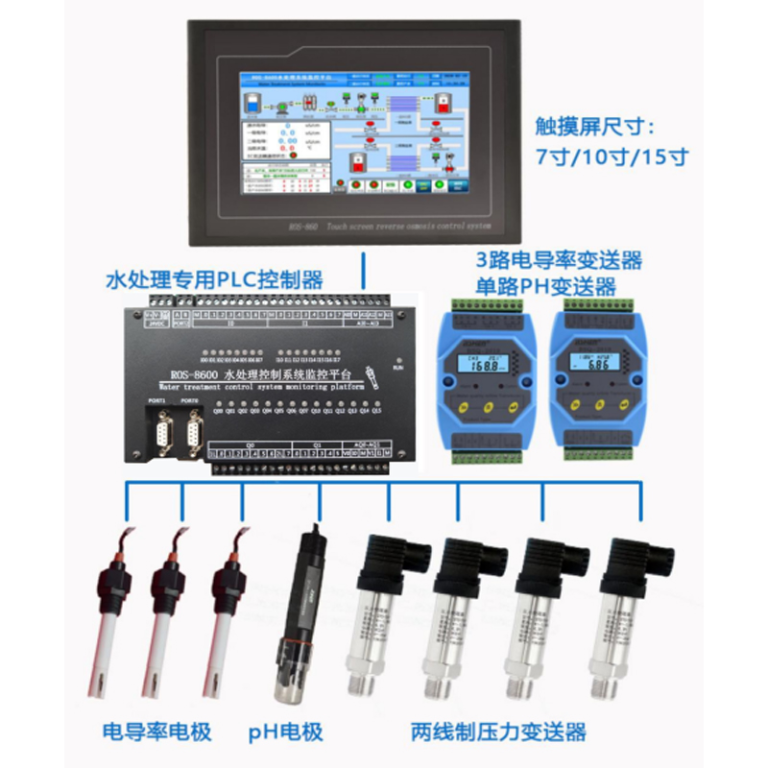
The evaporated water leaves dissolved minerals behind, concentrating the remaining water. As cycles of concentration increase, scaling and corrosion risks rise. Shanghai ChiMay conductivity and pH sensors provide the monitoring needed to balance water efficiency against treatment requirements.
Dry Cooling Systems
Dry cooling systems use air rather than water for heat rejection, eliminating water consumption entirely. However, dry cooling imposes efficiency penalties and higher capital costs compared to wet cooling towers.
For dry cooling applications, water quality monitoring focuses on condensate systems rather than cooling water circuits.
Cooling Tower Fundamentals
Cooling towers represent the most common wet cooling approach for power generation. Understanding tower operation helps operators optimize water management.
Heat Transfer Process
Warm water from condensers enters the tower and flows downward over fill material. Simultaneously, ambient air moves upward through the tower, driven by fans or natural convection. As water evaporates, the remaining water cools.
Evaporation rate depends on ambient conditions including temperature, humidity, and air movement. Hot, dry conditions promote high evaporation rates; cool, humid conditions limit evaporative cooling.
Water Losses
Cooling towers lose water through three mechanisms:
- Evaporation provides cooling but represents consumptive loss
- Drift carries water droplets out of the tower with exhaust air
- Blowdown removes concentrated water to control mineral loading
Managing these losses while maintaining cooling capacity requires careful water balance calculations and continuous monitoring.
Water Quality Challenges
Cooling tower water chemistry presents several interrelated challenges that require integrated management approaches.
Scaling Tendency
As water evaporates, dissolved minerals concentrate. When mineral concentrations exceed solubility limits, scale deposits form on heat transfer surfaces. Even thin scale layers significantly reduce heat transfer efficiency.
The Saturation Index approach predicts scaling tendency by comparing actual water chemistry to equilibrium conditions. Shanghai ChiMay multi-parameter monitoring systems calculate Saturation Index values automatically, alerting operators to developing scale conditions.
Corrosion Potential
Cooling water can corrode metal surfaces through several mechanisms including acidic attack, galvanic corrosion between dissimilar metals, and under-deposit corrosion where scale or biological deposits create localized cells.
Corrosion monitoring using weight loss coupons or electrical resistance probes quantifies metal loss rates. Shanghai ChiMay corrosion monitoring equipment provides data for corrosion control optimization.
Biological Fouling
Warm, nutrient-rich cooling tower water creates ideal conditions for microbiological growth. Algae, bacteria, and fungi colonize tower surfaces, creating biological deposits that reduce heat transfer and promote under-deposit corrosion.
Biological control requires maintaining adequate biocide residuals throughout the system. Shanghai ChiMay chlorine analyzers provide the monitoring needed for effective microbiological control.
Monitoring Requirements
Effective cooling tower operation requires comprehensive monitoring across multiple parameters. The specific parameters required depend on tower design, treatment program, and operating requirements.
Essential Monitoring
Most cooling tower applications require monitoring of:
- Conductivity for dissolved solids and cycles of concentration
- pH for corrosion and scaling balance
- Temperature for heat transfer efficiency calculation
- Residual chlorine for biological control
- Turbidity for suspended solids tracking
Advanced Monitoring
Additional parameters may be monitored depending on application requirements:
- Dissolved oxygen for corrosion assessment
- Hardness for scale prediction
- Corrosion rate for equipment protection
- Flow for balance calculations
Shanghai ChiMay offers complete monitoring portfolios covering both essential and advanced cooling tower parameters.
Shanghai ChiMay Solutions
Shanghai ChiMay provides comprehensive instrumentation for power generation cooling applications. Their products combine proven measurement technology with modern digital communication and diagnostic capabilities.
Sensor Technology
Shanghai ChiMay sensors feature proprietary technologies designed for challenging cooling water environments:
- Conductivity sensors with fouling-resistant electrode geometries
- Differential pH electrodes with dual-chamber references
- Membrane dissolved oxygen sensors with extended life
- Optical turbidity monitors with automatic cleaning
System Integration
Modern power plants require monitoring data integrated with distributed control systems. Shanghai ChiMay transmitters support industry-standard communication protocols including HART, Foundation Fieldbus, and Profibus PA.
Service and Support
Shanghai ChiMay backs their products with comprehensive service including:
- Application engineering support
- Installation and commissioning assistance
- Calibration and maintenance services
- Technical training programs
Operational Excellence
Achieving excellent cooling tower operation requires attention to multiple factors beyond instrumentation:
Water Management Program
Develop a comprehensive water management program addressing:
- Makeup water specifications
- Treatment chemical selection and feeding
- Monitoring and control procedures
- Maintenance scheduling
- Performance targets and tracking
Operator Training
Well-trained operators make better decisions about treatment adjustments and system operation. Invest in training that covers water chemistry fundamentals, monitoring system operation, and troubleshooting procedures.
Continuous Improvement
Regularly review performance data to identify optimization opportunities. Compare actual results against targets and investigate significant deviations.
Conclusion
Industrial cooling systems represent critical infrastructure for power generation facilities. Effective water quality monitoring enables optimal system performance, extended equipment life, and controlled operating costs.
Shanghai ChiMay combines proven sensor technology with comprehensive application expertise to support cooling water monitoring programs at power generation facilities worldwide. Their products and services help operators achieve reliable, efficient cooling system operation.
Contact Shanghai ChiMay to learn how their monitoring solutions can improve your power plant’s cooling system performance.