Table of Contents
How to Extend Equipment Life with Proper Water Quality Management
Key Takeaways
– Proper water quality management extends equipment life by 30-50%
– Cooling towers without treatment fail in 3-5 years versus 15-20 years with proper management
– Water quality monitoring generates $4-8 return per dollar invested
– This guide provides actionable strategies for maximizing equipment longevity
Introduction
Industrial equipment represents substantial capital investment. Heat exchangers, cooling towers, boilers, and process piping routinely cost millions of dollars. Yet many facilities experience premature failures driven largely by preventable water-related degradation.
The American Society of Mechanical Engineers (ASME) estimates that proper water quality management adds 15-20 years to average cooling tower service life and reduces heat exchanger failures by 65%.
The Economics of Water Quality Management
Failure Cost Analysis
| Equipment | Replacement Cost | Downtime Cost/Hour | Total Failure Cost |
|---|---|---|---|
| Cooling tower | $150,000-400,000 | $25,000-100,000 | $250,000-2,400,000 |
| Shell-and-tube HX | $80,000-250,000 | $15,000-75,000 | $140,000-2,000,000 |
| Centrifugal pump | $10,000-50,000 | $5,000-30,000 | $25,000-500,000 |
Return on Investment
ROI = ($575,000 – $50,000) / $50,000 = 1,050%
Every dollar invested generates $4-8 in avoided costs.
Critical Water Quality Parameters
1. Scaling Potential
Scale deposits reduce efficiency and promote under-deposit corrosion:
| Scale Thickness | Heat Transfer Loss | Energy Cost Increase |
|---|---|---|
| 0.5 mm | 15-20% | 8-12% |
| 1.0 mm | 30-35% | 18-22% |
| 2.0 mm | 50-60% | 35-45% |
Langelier Saturation Index (LSI):
– Target: -0.5 to +0.5
– Scale risk: > +0.5
– Corrosion risk: < -0.5
2. Corrosivity Indices
Corrosion Rate Targets:
– < 2 MPY: Excellent
– 2-5 MPY: Acceptable
– 5-10 MPY: Corrective action required
– > 10 MPY: Emergency intervention
3. Microbiological Activity
Microbiological Influenced Corrosion (MIC) causes 30-40% of cooling system failures through:
– Differential aeration cells beneath biofilms
– Localized acidity from metabolic processes
– Under-deposit corrosion acceleration
Control targets:
– Bacteria count: < 10,000 CFU/mL
– Biofilm control: Continuous biocide residual
– Legionella: < 100 CFU/mL (OSHA)
Equipment-Specific Management Strategies
Heat Exchangers
Protection strategy:
1. Inlet strainers: Remove suspended solids > 100 μm
2. Feedwater filtration: < 10 NTU turbidity target
3. Continuous corrosion monitoring: LPR sensors on critical units
4. Scheduled inspections: Annual UT surveys
5. Performance trending: Track heat transfer coefficient
Expected service life:
– Without treatment: 3-5 years
– With basic treatment: 7-10 years
– With comprehensive management: 15-20+ years
Cooling Towers
| Parameter | Target | Action Threshold | Control Method |
|---|---|---|---|
| pH | 7.5-8.2 | < 7.0 or > 8.5 | Acid/alkaline dosing |
| Conductivity | < 1,500 μS/cm | > 2,000 μS/cm | Blowdown |
| Chlorides | < 200 ppm | > 300 ppm | Softened makeup |
| Corrosion rate | < 2 MPY | > 5 MPY | Inhibitor adjustment |
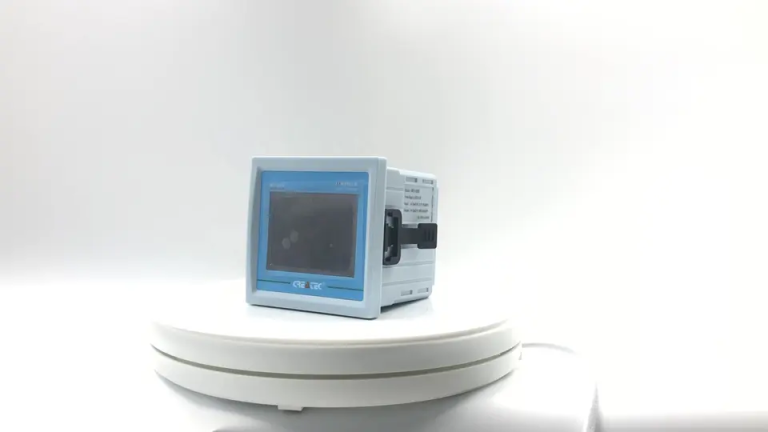
Shanghai ChiMay’s 4-in-1 Multi-Parameter Sensors monitor pH, ORP, conductivity, and temperature simultaneously.
Piping Systems
Internal corrosion control:
– Maintain water chemistry within target ranges
– Implement continuous corrosion monitoring
– Install corrosion coupons at representative locations
– Conduct periodic ultrasonic thickness surveys
Expected pipe service life:
– Carbon steel (untreated): 10-15 years
– Carbon steel (treated): 25-35 years
– Stainless steel (treated): 40-50+ years
Treatment Technologies
Chemical Treatment Programs
Corrosion inhibitors:
– Phosphonates: 5-15 ppm, anodic protection
– Molybdates: 100-300 ppm, mixed-metal systems
– Polyphosphates: 20-50 ppm, cost-effective
Scale inhibitors:
– Polyacrylates: 5-15 ppm, threshold inhibition
– Phosphonates: 3-10 ppm, crystal modification
Physical Treatment Systems
Water softening: Ion exchange removes calcium and magnesium, achieving > 95% hardness reduction
Filtration: Multimedia filtration for suspended solids, automatic backwash
Maintenance Optimization
Predictive Maintenance Through Water Quality
Corrosion rate trending:
– Baseline establishes normal rates
– Rate increases indicate treatment degradation
– Scheduled intervention prevents failure
Condition-Based Cleaning
| Indicator | Cleaning Trigger | Method |
|---|---|---|
| Temperature approach | > 5°F above design | Acid descaling |
| Pressure drop | > 15% increase | Pigging or flush |
| Corrosion rate | > 5 MPY | System treatment review |
| Bacteria count | > 1,000,000 CFU | Biocide shock |
Industry Case Studies
Chemical Processing Plant
Results after 3 years:
– Zero major failures (previously 4/year)
– Equipment life extended 45%
– Annual savings: $1.2 million
Petrochemical Refinery
Implementation:
– Continuous corrosion monitoring (LPR)
– Molybdate-based inhibitor
– Automated biocide control
Results:
– Corrosion rate: 8 MPY → 1.5 MPY
– Heat exchanger life: 3 years → 12 years
– Annual savings: $3.4 million
Conclusion
Proper water quality management delivers substantial benefits:
- 30-50% extension of equipment service life
- 65-75% reduction in unplanned failures
- $500,000-3,000,000 annual savings
- $4-8 return per dollar invested
Shanghai ChiMay’s water quality monitoring solutions—including conductivity sensors, pH analyzers, and multi-parameter systems—provide the foundation for world-class water quality management.