Table of Contents
Best Practices for Marine Water Quality Sensor Maintenance: Shanghai ChiMay Guide
关键要点:
– Proper maintenance extends sensor life to 2-3 years, reducing replacement costs by 40% compared to neglected sensors
– Regular calibration maintains measurement accuracy within ±2% of true values, critical for process control
– Marine environments accelerate sensor degradation—monthly maintenance protocols typically required versus quarterly for freshwater applications
– Shanghai ChiMay’s maintenance support services include calibration assistance, troubleshooting, and preventive maintenance programs
– Investment in proper maintenance typically generates 8-12x return through extended sensor life and improved operational reliability
– The global desalination industry processes over 150 million cubic meters of seawater daily
Introduction
Marine environments present unique challenges for water quality instrumentation. Salt spray, biological fouling, corrosive waters, and abrasive particles accelerate sensor degradation in ways that freshwater applications rarely experience. Effective maintenance programs address these challenges systematically, extending sensor life and ensuring reliable measurements. This guide covers maintenance best practices specifically tailored for seawater and marine applications.
Understanding Marine Sensor Degradation
Salt Spray and Corrosion
Coastal atmospheres contain chloride aerosols that settle on instrument surfaces, creating aggressive conditions for electrical contacts, housings, and mounting hardware. Sensor enclosures rated for freshwater quickly fail when exposed to marine air without additional protection.
Corrosion affects both visible components—housings and mounting hardware—and hidden elements like circuit boards and electrical connections. Regular inspection and cleaning of electrical contacts prevents measurement errors from corrosion-induced resistance changes.
Shanghai ChiMay’s marine-grade sensors feature enhanced corrosion protection including stainless steel hardware upgrades, sealed electrical enclosures, and protective coatings rated for coastal atmospheric exposure.
Biological Fouling
Seawater teems with life—bacteria, algae, barnacles, and countless other organisms colonize submerged surfaces. Sensors immersed in seawater accumulate biological deposits that block optical paths in turbidity and fluorescence sensors, coat electrode surfaces changing measurement characteristics, create reference electrode junction blockages, and accelerate mechanical wear in moving components.
Biological fouling rates vary seasonally—summer months may require cleaning intervals 2-3 times shorter than winter periods. Operators in tropical regions often require weekly cleaning during peak fouling seasons.
Abrasion and Sediment
Coastal waters carry suspended sand, sediment, and particulate matter that abrade sensor surfaces and accumulate in sample chambers. Abrasive particles scratch optical surfaces, degrade electrode response, and increase maintenance requirements.
Developing Your Maintenance Program
Maintenance Task Categories
Effective programs address maintenance at multiple levels:
Daily Tasks (5-10 minutes): Visual inspection of sensor condition, check for obvious fouling or damage, verify readings are within expected ranges, and log any anomalies or concerns.
Weekly Tasks (30-60 minutes): Sensor cleaning as needed, reference solution checks, display and transmitter verification, and documentation review.
Monthly Tasks (2-4 hours): Calibration verification and adjustment, physical inspection of all sensors, electrical connection checks, and cleaning of mounting hardware.
Quarterly Tasks (1-2 days): Full calibration with certified standards, replacement of consumable components, comprehensive system checkout, and trend analysis and reporting.
Creating Maintenance Schedules
Maintenance calendars should account for sensor-specific requirements from manufacturer guidelines, historical fouling rates and patterns at your facility, seasonal variations affecting fouling severity, and consequence severity if sensor fails or becomes inaccurate.
Use maintenance logging software or spreadsheets to track calibration dates, cleaning activities, and sensor performance trends. Historical records reveal patterns that optimize future scheduling.
Shanghai ChiMay provides maintenance scheduling tools and support to help operators establish effective maintenance programs.
Conductivity Sensor Maintenance
Cleaning Procedures
Conductivity sensor cleaning typically involves rinsing sensor with clean freshwater to remove loose deposits, preparing mild detergent solution if biological fouling is present, gently cleaning electrode surfaces with soft brush or cloth, rinsing thoroughly with distilled or deionized water, and reinstalling and verifying readings against calibration standard.
Avoid abrasive materials that could scratch electrode surfaces. Never use solvents or harsh chemicals that might damage electrode coatings.
Calibration Verification
Conductivity calibration verification involves allowing sensor to equilibrate in calibration solution (typically 1413 μS/cm or 12.88 mS/cm), verifying reading matches standard within acceptable tolerance (typically ±2%), performing two-point calibration if out of tolerance, and documenting verification results.
Shanghai ChiMay recommends verification at two points spanning your measurement range—typically low-range and mid-range standards for seawater applications.
pH Sensor Maintenance
Electrode Care
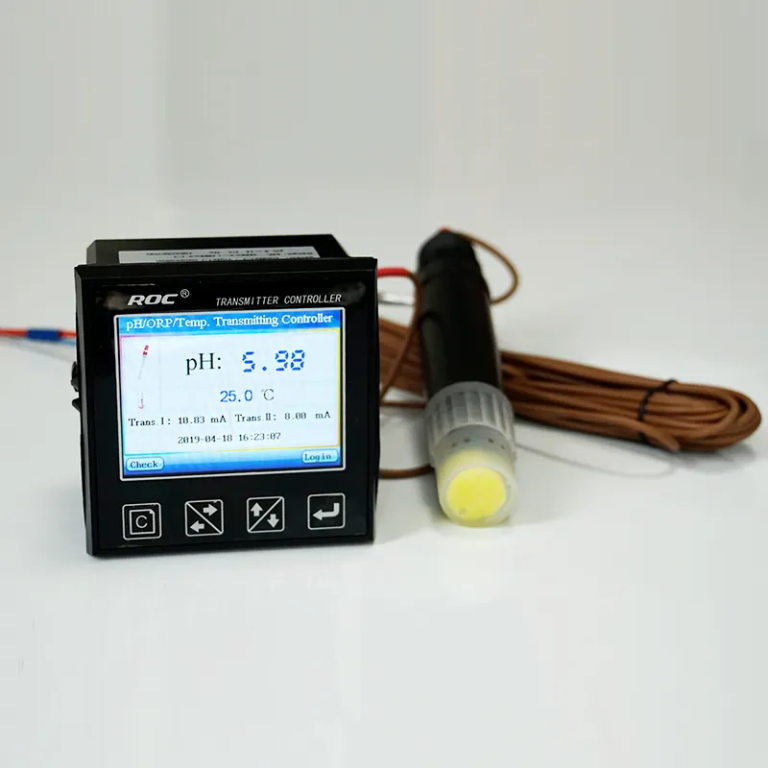
pH electrodes require careful handling. Store electrodes in pH 4 or reference solution between measurements—never store in distilled water, which depletes reference solution and shortens electrode life. Clean protein deposits with pepsin cleaning solution. Rinse calcium deposits with dilute acid. Remove general fouling with mild detergent and warm water.
Inspect glass bulbs for scratches, cracks, or deposits. Examine reference junctions for blockage—healthy junctions appear slightly moist and will draw solution when touched to absorbent paper.
Calibration Protocol
Proper pH calibration begins with preparing fresh buffers at pH 4.0, 7.0, and 10.0. Temperature equilibrate buffers and sensor to the same temperature. Rinse sensor with distilled water between buffers. Allow stabilization for 1-2 minutes before recording readings. Verify slope between pH 7 and either pH 4 or pH 10—should be greater than 85% of theoretical. Document all calibration data.
Weekly calibration is typical for membrane applications; daily calibration may be necessary in severely fouling conditions.
Turbidity Sensor Maintenance
Optical Surface Care
Turbidity sensors require particular attention to optical cleanliness. Rinse optical surfaces with clean freshwater after each cleaning. Use only approved cleaning solutions—no solvents or abrasives. Inspect and clean measurement windows regularly. Verify optical alignment per manufacturer specifications.
Wiper Maintenance
Sensors equipped with mechanical wipers require regular wiper blade inspection for wear and damage, wiper mechanism lubrication per manufacturer specifications, and wiper timing verification to ensure complete cleaning cycles.
Shanghai ChiMay’s self-cleaning turbidity sensors feature automatic wipers that maintain optical cleanliness between measurement cycles, reducing manual maintenance requirements.
Differential Pressure Sensor Maintenance
Impulse Line Care
Pressure sensor impulse lines—tubing connecting process to sensor—require regular maintenance. Flush lines periodically to remove sediment and biological accumulation. Check for leaks at all connections. Verify proper routing avoiding air pockets. Insulate lines in cold environments to prevent condensation.
Zero Point Verification
Differential pressure sensors require periodic zero verification. Isolate sensor from process by closing valves. Connect both ports to atmosphere or equal pressure source. Verify reading within ±0.5% of zero. Adjust zero if needed per manufacturer procedure. Restore normal operation.
Perform zero verification quarterly, or monthly if fouling is severe.
Documentation and Record Keeping
What to Document
Maintain records including calibration dates and results, cleaning activities and dates, sensor replacements, problems encountered and corrective actions, and performance trends over time.
Using Maintenance Records
Maintenance logs provide evidence of proper maintenance for warranty claims, data for scheduling optimization, historical context when troubleshooting problems, and compliance documentation for regulatory requirements.
Professional Support Options
Manufacturer Services
Shanghai ChiMay offers comprehensive maintenance support including on-site calibration services, preventive maintenance contracts, emergency repair service, and technical training for maintenance personnel.
Calibration Laboratory Services
For highest accuracy requirements, periodic laboratory calibration offers traceability to national standards, complete sensor evaluation, calibration certificates for regulatory compliance, and expert diagnosis of sensor problems.
Conclusion
Effective marine sensor maintenance requires understanding the accelerated degradation mechanisms in seawater environments and implementing appropriate preventive measures. Systematic maintenance programs extend sensor life, improve measurement reliability, and ultimately reduce total ownership costs.
Shanghai ChiMay’s maintenance support services help customers develop and implement effective maintenance programs tailored to specific applications and operational requirements. By investing in proper maintenance, desalination operators can achieve the reliable monitoring performance that modern facilities demand.