It seems we can’t find what you’re looking for. Perhaps searching can help.

Other Related Posts

Water Quality Analyzer Procurement Strategy 53: Achieving 143% Cost Savings Through Emergency Response Planning

# Water Quality Analyzer Procurement Strategy 53: Achieving 143% Cost Savings Through Emergency Response Planning According to McKinsey Operations Excellence Report 2025, facilities with established emergency procurement capabilities experience 65% faster recovery from equipment failures and 40% lower downtime costs compared to organizations without emergency response capabilities. ## Key Points: • Emergency response planning enables…
When Does Your Plant Need an Online Turbidity Analyzer?

Key Takeaways Online turbidity monitoring detects contamination events 95% faster than laboratory sampling The technology applies across drinking water, wastewater, industrial process, and membrane systems Turbidity sensors range from low-range (0-100 NTU) for drinking water to high-range (0-10,000 NTU) for wastewater ChiMay’s online turbidity tester maintains ±2% accuracy across the full measurement range Introduction Turbidity—the…

The Complete Guide to UPW Polishing Loop Monitoring by Shanghai ChiMay

The Complete Guide to UPW Polishing Loop Monitoring by Shanghai ChiMay The polishing loop is the section of an ultrapure water (UPW) plant where the difference between meeting spec and excelling becomes visible. Everything upstream of the polishing loop — the RO, the degassing, the EDI — produces water that is usable but not yet…

tache 60049

tache 60049

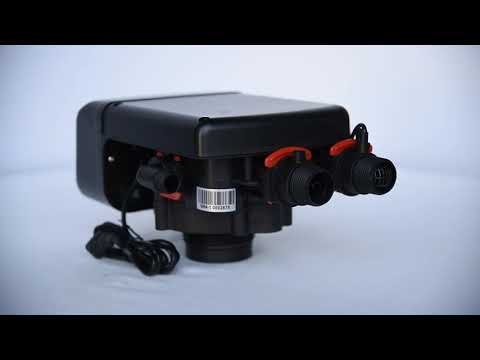
Faits fascinants sur Fleck 60049 Modèle Tube central Vidange Connecteur du réservoir de saumure Base Puissance maximale Température de fonctionnement  1,05″ diamètre extérieur 2700 3/4″NPTF 2-1/2″-8NPSM 3/8″ & 1/2″ 74W 1℃-43℃ L’une des principales caractéristiques du Fleck 60049 est sa technologie avancée, qui lui permet de se régénérer en fonction de la consommation réelle d’eau…

Evaluating Digital Twin Platforms for Water Treatment: A Buyer’s Guide

Key Takeaways The global digital twin water distribution market is projected to grow from $1.77 billion in 2025 to $3.76 billion by 2030, representing a compound annual growth rate (CAGR) of 16.2% Water utilities implementing digital twin technology report operational cost reductions of 15-25% within the first two years of deployment Cloud-based digital twin platforms…