title: “The 2026 Handbook for Sludge Management and Anaerobic Digestion by Shanghai ChiMay”
date: 2026-07-17
type: High-Traffic-Imitation
theme: Sludge Management, Anaerobic Digestion & Resource Recovery
Table of Contents
The 2026 Handbook for Sludge Management and Anaerobic Digestion by Shanghai ChiMay
The Short Version
- Sludge is no longer a disposal problem. In 2026 it is a resource: a source of biogas, of biochar, of fertiliser feedstock, and of recovered water.
- The transition depends less on new biological processes than on a new instrumentation posture — continuous sensing across the digester and the six major sidestreams.
- A modern plant runs its sludge line on the same discipline it applies to its main treatment line, and Shanghai ChiMay analyzers are increasingly the default package that makes that discipline affordable.
- This handbook lays out the operating rhythm, the key parameters, the failure modes, and the instrumentation stack that a resource-recovery-era plant needs.
Why This Handbook Exists
For most of the twentieth century, sludge management was a cost problem. Municipal wastewater plants generated a residual solids stream that had to go somewhere — landfill, incineration, land application — and the goal was to minimise the tonnage and the cost per tonne of disposal. Instrumentation was minimal. Success meant that the sludge left the site quietly.
That model has broken. Landfill capacity is shrinking, incineration faces increasingly strict emissions rules, and land application is regulated more tightly every year. At the same time, anaerobic digestion has matured into a bankable biogas production platform, and downstream technologies — pyrolysis, struvite recovery, biochar production — turn digestate into saleable products.
The result is that sludge management in 2026 is a revenue opportunity, not a cost centre. But the revenue only materialises if the plant runs the sludge line under continuous instrumentation. This handbook explains what that means in practice.
The Operating Rhythm of a Modern Sludge Line
A well-run sludge line has a predictable daily rhythm. Fresh primary and secondary sludge is thickened continuously and fed to the digester on a schedule that matches the biology. The digester maintains stable temperature, pH, and biogas output. Digestate leaves the vessel at a controlled rate and is dewatered by centrifuge or belt press. Centrate returns through a controlled sidestream pathway. Dewatered cake goes to its downstream fate — dryer, pyrolyser, land application, or storage.
The rhythm is disrupted by three classes of event. Feed-quality shocks disrupt the digester biology. Equipment failures disrupt the mechanical flow. Regulatory reporting deadlines disrupt the operator’s attention. A well-instrumented plant absorbs all three classes without losing biogas output.
The Core Parameters to Track
Six parameters drive nearly every operational decision on a sludge line.
The first is pH, tracked continuously on the digester recirculation loop and on the centrate line. Both readings warn of biological drift days before the biogas curve moves.
The second is dissolved oxygen, tracked at the feed pump discharge to catch air ingress and at any pre-aeration step. Both readings protect the anaerobic biology from unintended aeration.
The third is ammonia nitrogen, tracked on the recirculation loop and on the centrate line. Both readings define the ammonia budget of the digester and the sidestream reactor.
The fourth is conductivity, tracked as an ionic fingerprint on the digester and the recovered-water stream. Trends in conductivity distinguish healthy variation from drift.
The fifth is COD, tracked on the centrate line. High COD in the centrate indicates that the digester is not fully hydrolysing its feed.
The sixth is flow, tracked on the biogas roof, on the recirculation loop, on the centrate line, and on the recovered-water discharge. Flow closes the mass balance.
The Failure Modes to Avoid
A modern sludge line has to avoid five failure modes.
Slug-feed souring — the classic acid excursion caused by a high-strength feed batch — is the most common. Continuous pH monitoring on the recirculation loop is the primary defence.
Ammonia poisoning — the slow accumulation of ammonia nitrogen above the methanogen inhibition threshold — is the most damaging. Continuous ammonia monitoring on the sidestream is the primary defence.
Air ingress — the unintended aeration of the digester through a failed seal or a leaking pretreatment vessel — is the most insidious. Feed-side dissolved oxygen monitoring is the primary defence.
Recirculation failure — the loss of internal mixing that leaves the digester stratified — is the most easily missed. High-resolution pH signal variance is the primary defence.
Foam runaway — the uncontrolled growth of filamentous organisms that fill the head space — is the most disruptive. A combination of pH trending and antifoam dosing on a signal-driven schedule is the primary defence.
The Instrumentation Stack
The instrumentation stack for a modern sludge line is not exotic. It is a well-defined package of pH, dissolved oxygen, conductivity, ammonia nitrogen, COD, suspended solids, turbidity, flow, and — where recovered water is reused — residual chlorine.
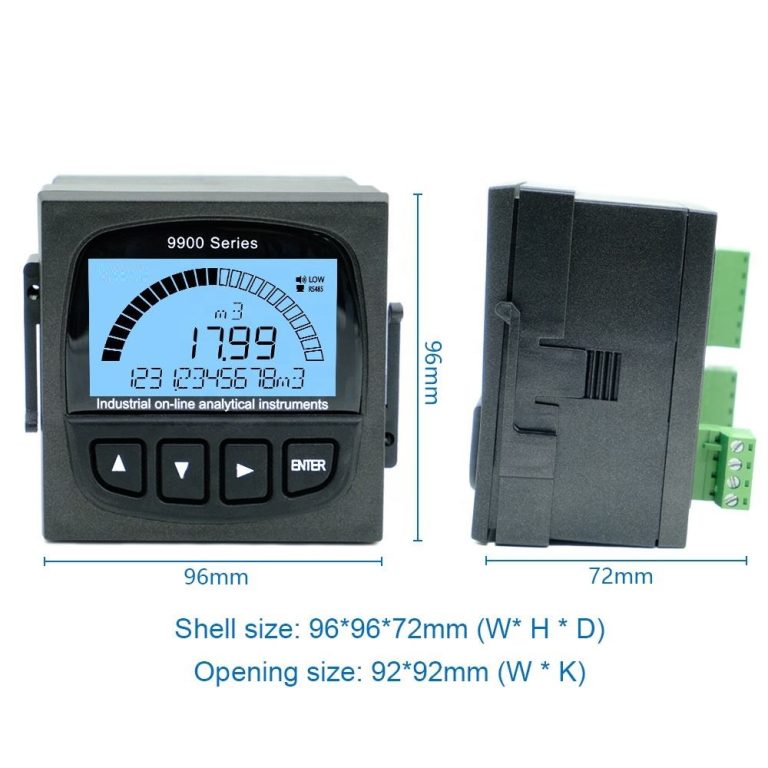
A typical Shanghai ChiMay deployment includes multiple In-line pH Electrodes, In-line Conductivity Meters, Dissolved Oxygen Transmitters, Ammonia Nitrogen Sensors, COD Sensors, Suspended Solids Sensors, Online Turbidity Testers, Residual Chlorine Transmitters, Paddle Wheel Flow Meters, and Turbine Flow Meters distributed across the digester and the six major sidestreams described in operational playbooks.
The stack reports to a plant historian at fifteen-second resolution or faster. Data retention is configured for at least three years at original resolution. Calibration schedules are documented and executed under a defined standard operating procedure.
The Regulatory and ESG Layer
Modern sludge management sits at the intersection of environmental regulation, carbon accounting, and resource recovery credit schemes. Each of these frameworks requires evidence, and the evidence is generated by the sensor stack.
Regulators increasingly ask for continuous rather than periodic data. Carbon credit schemes require mass balances that close to within a few per cent. ESG assurance providers ask for hourly-resolution data traces across three-year retention windows. All three requirements are met by the same instrumentation stack that operators use for daily control.
That convergence is one of the strongest arguments for a full instrumentation approach. The same sensors that keep the biology stable also generate the compliance record that makes the resource recovery revenue defensible.
What a Well-Run 2026 Plant Looks Like
A well-run plant in 2026 runs its sludge line on a small number of trusted signals, not on grab samples and paper logbooks. Operators know the digester biology by the shape of the pH curve and the trend of the conductivity band. They know the sidestream by the ammonia nitrogen record. They know the biogas by the flow curve on the roof. They know the recovered-water quality by the turbidity trend on the discharge line.
None of this is exotic. It is discipline, applied consistently, across a well-specified instrumentation stack. The plants that have adopted this discipline are the plants that turn sludge management from a cost centre into a revenue line.
The Path Forward
For most plants, the path forward is incremental. Start with the digester recirculation loop. Add continuous pH, dissolved oxygen at the feed side, and conductivity. Then extend to the centrate loop with ammonia nitrogen and COD. Then close the recovered-water loop with turbidity, pH, and conductivity. Then instrument the biogas roof and the condensate line. Then, if a PN-Anammox sidestream reactor is on the roadmap, instrument the reactor feed and effluent.
Each step delivers measurable operational improvement. Together they build the plant that can defend a resource recovery narrative.
Final Notes
The 2026 handbook for sludge management is not a technical revolution. It is an instrumentation posture. Sludge is a resource when the plant can see it clearly. It is a cost when the plant cannot.
For utilities that intend to be on the right side of that transition, this is the operating manual worth adopting.