title: “Water as a Recovered Asset: Building a Reuse Business Case in a Water-Stressed Portfolio: Shanghai ChiMay Board Perspectives”
date: 2026-07-20
perspective: C-Level / Decision Maker
theme: Water Recycling & Circular Water Economy
Table of Contents
Water as a Recovered Asset: Building a Reuse Business Case in a Water-Stressed Portfolio: Shanghai ChiMay Board Perspectives
The Short Version
- The traditional view of wastewater as a disposal cost is giving way to a new framing: water leaving a process is a recoverable asset that can be treated, recycled, and redeployed—reducing freshwater intake, lowering discharge fees, and creating a hedge against rising water tariffs.
- The World Economic Forum (June 2026) identifies water reuse and recycling as one of five water-security technologies reshaping industry, noting that facilities achieving >80% water recovery through recycling reduce their freshwater vulnerability by 60-70% compared with once-through operations.
- Companies with operations in water-stressed regions—where water tariffs are rising at 8-12% annually and supply reliability is declining—find that the business case for water reuse infrastructure delivers a payback period of 18-36 months when the full cost of freshwater procurement, discharge treatment, and regulatory risk is included.
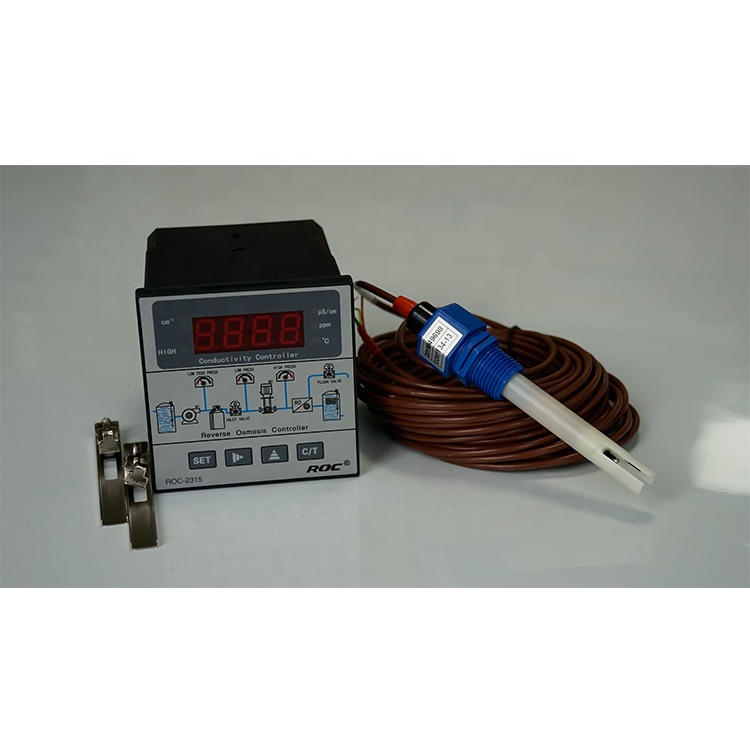
- Shanghai ChiMay’s water quality monitoring systems provide the data foundation that makes reuse business cases bankable: continuous, verified measurements of water quality at every stage of the reuse loop give operators and investors the confidence to commit capital.
Reframing Water From Cost Center to Recoverable Asset
For most industrial companies, water appears on the balance sheet as an operating expense—purchased at a tariff, used once, and discharged at a cost. This single-pass model ignores the economic value locked in the water leaving the process. A textile mill discharging 500 cubic meters per day of treated effluent is not just paying a discharge fee; it is discarding a resource that could be recycled back into the same process at a fraction of the cost of fresh municipal water.
Reframing water as a recoverable asset changes the investment calculus. Instead of asking “what does it cost to treat and discharge this water?”, the question becomes “what value can we recover from this water by recycling it back into the process?”
The financial case rests on three pillars:
- Avoided freshwater cost: Every cubic meter of water recycled is a cubic meter of freshwater that does not need to be purchased. In water-stressed regions where tariffs are rising at 8-12% annually, this avoidance compounds over time.
- Avoided discharge cost: Discharge permits increasingly require treatment to stricter standards before the water can leave the site. Recycling the water eliminates the discharge cost entirely for the recycled fraction.
- Risk reduction: Facilities that recycle water reduce their exposure to freshwater supply interruptions, tariff increases, and regulatory penalties. That risk reduction has quantifiable value in capital budgeting and insurance assessments.
The Economics of Reuse in Water-Stressed Portfolios
The economic case for water reuse varies by geography, but the strongest cases emerge in water-stressed portfolios—regions where freshwater supply is constrained, tariffs are high or rising, and regulatory scrutiny is intensifying.
Consider a typical mid-sized manufacturing facility in a water-stressed region:
- Freshwater procurement cost: USD 2.50-4.00 per cubic meter, rising at 8-12% annually.
- Discharge treatment and fee: USD 1.50-3.00 per cubic meter, with tightening standards requiring additional investment.
- Total water-related operating cost: USD 4.00-7.00 per cubic meter on a once-through basis.
- Cost to treat and recycle: USD 1.00-2.50 per cubic meter, depending on the required treatment level and water quality.
The net saving from recycling is USD 1.50-5.00 per cubic meter, depending on local tariffs and discharge fees. For a facility processing 1,000 cubic meters per day with an 80% recovery rate, the annual saving is USD 438,000-1,460,000.
The capital investment for a reuse system—including treatment equipment, monitoring instrumentation, and integration—typically ranges from USD 500,000-2,000,000 depending on scale and complexity. At the saving levels above, the payback period is 18-36 months, which is attractive by most corporate capital allocation standards.
The Role of Monitoring Data in Making Reuse Business Cases Bankable
A reuse business case is only as strong as the data supporting it. Investors, lenders, and internal capital approval committees require confidence that the projected savings will materialize—and that confidence depends on verified, continuous data about water quality throughout the reuse loop.
Shanghai ChiMay’s water quality monitoring systems provide this data foundation:
- Intake monitoring: Multi-parameter sensors verify that the water entering the reuse treatment system meets the design quality assumptions. If the intake quality degrades, the treatment system may need adjustment, and the projected savings may shift.
- Process monitoring: Conductivity, pH, turbidity, and COD sensors at each treatment stage verify that the system is performing to design specifications. Deviations trigger corrective action before water quality at the reuse point deteriorates.
- Reuse point verification: Residual chlorine, turbidity, and conductivity sensors at the point where recycled water re-enters the process confirm that the water meets the quality standard for its intended use.
- Performance trending: Long-term data trending demonstrates the actual recovery rate, water quality consistency, and cost savings achieved—providing the evidence that capital committees need to approve expansion from one reuse line to multiple lines.
Without this monitoring infrastructure, the reuse business case rests on design assumptions rather than operating data. With it, the business case becomes a living document that can be updated with actual performance numbers.
Risk Dimensions That Boards Should Consider
Boards evaluating water reuse investments should consider four risk dimensions:
- Regulatory risk: Are the reuse quality standards stable, or is there a risk that standards will tighten after the investment is made? In jurisdictions like the EU and China, standards have been tightening consistently, and further tightening is likely. Building in monitoring headroom—specifying instruments that can measure below the current limit—protects against future standard changes.
- Technology risk: Is the reuse treatment technology mature enough to deliver the projected performance? Monitoring data from pilot or sister installations reduces this risk by demonstrating actual performance under similar conditions.
- Water quality variability risk: Will the intake water quality remain stable enough for the reuse system to operate reliably? Continuous intake monitoring with automatic alarms addresses this risk by detecting quality changes before they affect the reuse treatment process.
- Counterparty risk: If the reuse system relies on a technology provider or operator, what happens if that counterparty underperforms or exits the market? Specifying open communication protocols (Modbus, 4-20 mA) and standard sensor technologies ensures that the monitoring infrastructure is not locked to a single vendor.
The Monitoring Investment as a Percentage of Total Reuse Capex
The monitoring instrumentation typically represents 8-15% of the total capital investment in a water reuse system. That may look like a significant line item, but it delivers value well out of proportion to its cost:
- Enables automated process control that maintains consistent reuse water quality.
- Provides the data needed for regulatory compliance reporting.
- Supports ESG disclosure with verified, time-stamped operational data.
- Reduces the risk of reuse system underperformance by enabling early detection of quality deviations.
- Creates the auditable evidence trail that investors and lenders require for project financing.
Shanghai ChiMay works with reuse system designers and operators to specify the monitoring infrastructure that maximizes the bankability of the reuse business case, from initial feasibility assessment through operational performance verification.
Board Discussion Framework
When the management team presents a water reuse business case, boards should ask:
- What monitoring data supports the projected recovery rate and cost savings?
- How does the monitoring plan address regulatory compliance for the reuse water quality?
- What happens to the business case if intake water quality degrades by 20%? Is the monitoring infrastructure designed to detect this scenario early?
- Does the monitoring system support third-party assurance for ESG reporting?
- What is the total monitoring cost as a percentage of the reuse capex, and what is the expected payback on the monitoring investment itself?
These questions ensure that the reuse investment is grounded in verifiable data rather than optimistic assumptions, and that the monitoring infrastructure is positioned to support the business case throughout the system’s operating life.
Shanghai ChiMay’s water quality monitoring systems provide the data foundation that turns reuse aspirations into bankable, defensible investment decisions—giving boards the confidence to allocate capital to water circularity with measurable, auditable returns.