It seems we can’t find what you’re looking for. Perhaps searching can help.

Other Related Posts

How Does Real-Time Conductivity Monitoring Impact RO System Performance?

Key Takeaways: RO systems with continuous conductivity monitoring achieve 99.5% uptime versus 94.2% without Early leak detection prevents membrane damage worth $15,000-$50,000 per incident The global RO controller market reaches $2.4 billion in 2026 Automated conductivity-based diversion saves $8,000-$25,000 annually in membrane replacement Reverse osmosis systems provide essential water treatment for municipal and industrial applications….

Smart Water Management ROI: The Business Case for IoT-Enabled Water Quality Monitoring

Key Takeaways Industrial facilities implementing IoT-enabled water quality monitoring achieve 147% average return on investment within 36 months, with payback periods as short as 11–16 months for water-intensive operations Real-time water quality data reduces unplanned downtime by 35–55% — translating to $120,000–$500,000 in avoided production losses annually for mid-size facilities The global smart water management…

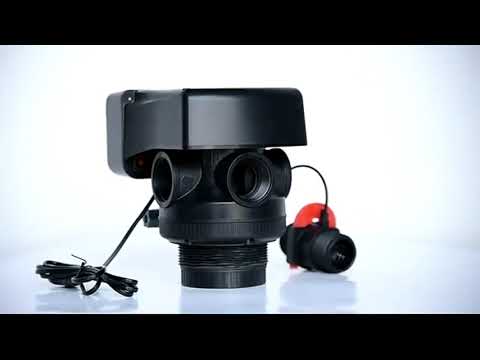
صمام تجاوز منقي الماء المتسرب

صمام تجاوز منقي الماء المتسرب

استكشاف الأخطاء وإصلاحها في صمام تجاوز جهاز تنقية المياه المتسرب نموذج الفئة سعة المياه م3/ساعة شاشات الكريستال السائل ليد رمز الصمام الثنائي ASFU4 صمام الكل في واحد لمرشح التليين التلقائي س 4 س س س ASFU4-Y صمام الكل في واحد لمرشح التليين التلقائي س 4 س س س ASFU2-C صمام الكل في واحد لمرشح التليين…

Why Real-Time Water Quality Monitoring Reduces Chemical Waste Costs

Key Takeaways Industrial facilities spend $2.3 billion annually on water treatment chemicals, with up to 38% wasted due to delayed or inaccurate monitoring Switching from manual sampling to continuous online monitoring reduces chemical consumption by 23–41% within the first year of deployment Real-time data enables predictive dosing, cutting reagent waste and lowering hazardous disposal costs…

Why Are Multi-Parameter Water Quality Sensors Gaining Popularity in Industrial Applications

Why Are Multi-Parameter Water Quality Sensors Gaining Popularity in Industrial Applications Key Takeaways: – Multi-parameter sensor adoption grew 47% between 2020-2025 across industrial sectors – 65% of new monitoring installations now specify multi-parameter sensors as standard – Operational cost reduction averages 38% compared to equivalent single-parameter deployments – Integrated sensors reduce maintenance time by 75%…