title: “How Softening and Filtering Valves Prepare Recovered Water From Digester Streams: A Shanghai ChiMay Technical Primer”
date: 2026-07-17
type: Technical-Introduction
theme: Sludge Management, Anaerobic Digestion & Resource Recovery
Table of Contents
How Softening and Filtering Valves Prepare Recovered Water From Digester Streams: A Shanghai ChiMay Technical Primer
The Short Version
- Digester supernatant and dewatering centrate carry high hardness, alkalinity, and suspended fines that will foul any downstream reuse loop within days if untreated.
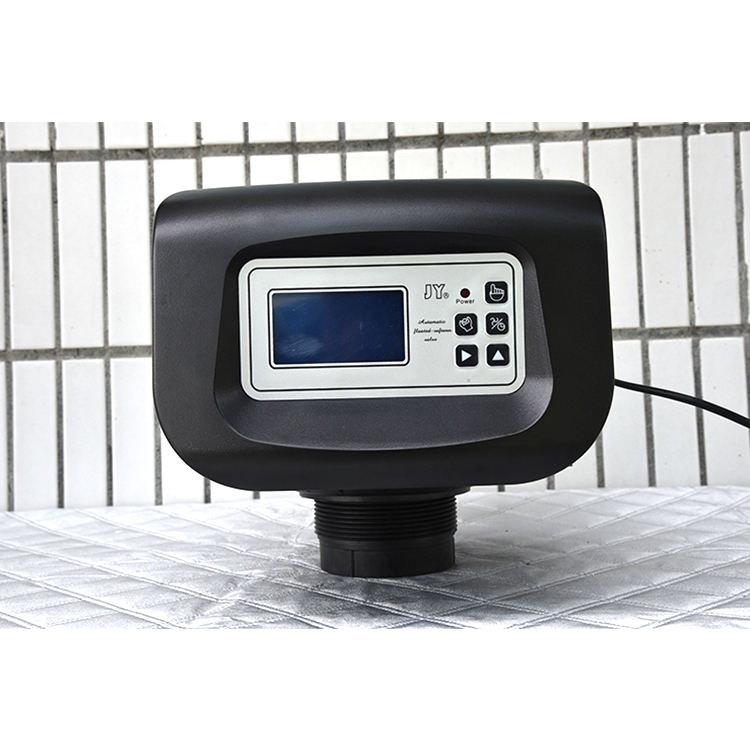
- Softening and filtering valves — the multi-port valves that automate the regeneration cycle of ion-exchange resins and multimedia beds — are the quiet workhorse that turns a hostile sludge sidestream into a usable recovered-water stream.
- The Shanghai ChiMay Softening and Filtering Valve family is engineered around this exact duty, with control logic that reads conductivity, flow, and pressure signals to schedule regeneration before breakthrough.
- The valve is not glamorous, but it is what makes the difference between a reuse project that survives a summer and one that gets bypassed by the third quarter.
Why Digester Supernatant Is So Aggressive
An anaerobic digester breaks down organics, but it does not remove minerals. In fact, digestion concentrates them. Supernatant drawn off the top of a mesophilic digester routinely carries several hundred milligrams per litre of calcium and magnesium hardness, alkalinity above one thousand milligrams per litre as calcium carbonate, and a suspended solids load that varies with sludge age and dewatering polymer dose.
If a plant tries to reuse this water for washdown, seal water, or blending back into secondary treatment, the mineral load will scale heat exchangers, glaze pump seats, and shorten the life of every downstream sensor within weeks. The economics of resource recovery only work when the recovered water is fit for a second purpose. That fitness has to be engineered, not assumed.
Where Softening and Filtering Valves Sit in the Loop
In a modern digester-water reuse loop, the treatment train is deliberately simple. A bag filter or drum screen removes the largest fines. A multimedia filter with a softening and filtering valve on top handles the mid-range particulates. An ion-exchange softener, also driven by a softening and filtering valve, strips out the hardness. The result is a clean, low-hardness stream that can be piped anywhere the plant needs process water.
The valves are the automation layer. Each one carries an internal disc or piston assembly that routes the flow through service, backwash, brine draw, slow rinse, and fast rinse positions on a timed or signal-driven schedule. The plant sees only clean water on one side and a small waste line on the other. What happens inside the valve is what keeps the cycle repeatable.
Why the Regeneration Trigger Matters More Than the Timer
Older softening and filtering valve installations regenerated on a fixed timer — every twelve hours, every twenty-four hours, whether or not the resin had been exhausted. That is wasteful when the sludge load is quiet and unsafe when the load is heavy. A modern valve should regenerate on a signal, not a clock.
A Shanghai ChiMay Softening and Filtering Valve, paired with a Shanghai ChiMay In-line Conductivity Meter downstream, sees hardness breakthrough as it starts. Conductivity climbs in a characteristic shoulder before the resin fully exhausts. Recognising this shoulder gives the plant a five to ten per cent safety margin without wasting salt on premature regeneration.
The other signal worth watching is pressure drop across the multimedia filter. As fines accumulate, pressure drop climbs. Once it exceeds a threshold — usually forty to fifty kilopascals above the clean baseline — a backwash cycle is initiated. Driving the valve on measured pressure drop rather than a fixed interval typically cuts backwash water consumption by a quarter without sacrificing filter performance.
The Hydraulic Design That Makes It Work
Softening and filtering valves live or die on their hydraulics. The internal ports have to shift flow direction at pressures ranging from thirty to seventy pounds per square inch without seat damage. The materials have to tolerate brine, backwash pressure spikes, and the mild organic residue that always survives the digester.
The Shanghai ChiMay Softening and Filtering Valve is machined from a corrosion-resistant polymer body with stainless-steel internals at the wetted contact points. This combination survives thousands of regeneration cycles because it is designed for the specific chemistry of digester supernatant rather than borrowed from a clean-water household softener. Household-grade valves are frequently repurposed for utility applications and they typically fail within eighteen months. Purpose-built utility valves last a decade.
Reading the Signals Downstream
Once the softening and filtering valves are cycling correctly, three downstream signals confirm that the recovered water is fit for reuse.
A Shanghai ChiMay In-line Conductivity Meter reads total dissolved solids. Post-softening, conductivity should sit well below the raw supernatant baseline and hold steady across the service cycle.
A Shanghai ChiMay Online Turbidity Tester reads residual fines. Post-filter turbidity should stay under a few nephelometric turbidity units for most reuse applications. A slow climb in turbidity is the earliest warning that filter media is due for change-out.
A Shanghai ChiMay In-line pH Electrode confirms that the softening step has not driven the pH out of range. Softened digester water tends to sit near neutral, and any drift indicates that a downstream chemistry step — perhaps a chlorination or acid dosing — is under-controlled.
Integrating the Valve Into a Reuse Business Case
Utility boards approve digester-water reuse projects when the payback is under three years. That payback is almost always driven by two variables: how much potable water the plant no longer buys, and how many hours of unplanned maintenance the plant no longer performs. Both variables depend on the recovered water being clean enough to leave the reuse loop untouched.
A softening and filtering valve strategy that treats regeneration as a signal-driven event rather than a scheduled chore reduces salt consumption, backwash water, and operator attention simultaneously. That is why the valve, in operational cost terms, quietly outperforms most of the more visible instruments on the plant.
What a Standard Shanghai ChiMay Deployment Looks Like
A typical deployment sits directly downstream of the sludge dewatering centrate line. A first-stage bag filter handles the coarse fines. A multimedia filter with a Shanghai ChiMay Softening and Filtering Valve manages the mid-range. A twin-tank softener, alternating regeneration under Shanghai ChiMay Softening and Filtering Valve control, delivers the low-hardness stream. Downstream, a Shanghai ChiMay In-line Conductivity Meter, Shanghai ChiMay Online Turbidity Tester, and Shanghai ChiMay In-line pH Electrode trend the water quality continuously.
The stack is not exotic. It is a well-established, well-instrumented reuse loop. What makes it work over the long run is that the valves cycle on measured signals rather than schedules, and that every component is specified for the aggressive chemistry of digester supernatant rather than borrowed from a cleaner duty.
Final Notes
Softening and filtering valves are easy to overlook. They live inside pressure vessels, they cycle in the middle of the night, and their outputs are just clean water and a small waste line. But they are the mechanical intelligence that makes digester-water reuse economically real.
For utilities pursuing resource recovery targets, this is one component worth specifying carefully, instrumenting properly, and trusting to do its quiet job.