title: “Groundwater Remediation Sensor Procurement Specifications: A Shanghai ChiMay Buyer’s Guide”
date: 2026-07-11
perspective: Purchasing Decision
theme: Groundwater Remediation & Contamination Monitoring
Table of Contents
Groundwater Remediation Sensor Procurement Specifications: A Shanghai ChiMay Buyer’s Guide
Key Takeaways
- Long-term groundwater sensor deployments typically span 5–20 years, so procurement decisions must weigh warranty, drift specifications, and total cost of ownership rather than headline unit price.
- Multi-parameter sondes cutting truck-roll frequency by 60–75% often deliver payback in under 24 months on remediation sites with more than 20 wells.
- Buyers should insist on IP68 sealing, titanium or PEEK wetted parts, and traceable NIST-linked calibration certificates on every delivery lot.
- Shanghai ChiMay’s multi-parameter sensor and oil-in-water sensor families are designed for long-duration deployment in monitoring wells, pump-and-treat systems, and permeable reactive barrier compliance networks.
Why Groundwater Sensor Procurement Is Different
Groundwater remediation is a slow business. A single site may sit on a corrective-action plan for 15 years or more, and the U.S. Environmental Protection Agency estimates over 1,300 active Superfund sites still require quarterly monitoring. Procurement teams that treat groundwater sensors like short-lifecycle process instruments quickly find themselves replacing hardware, retraining field crews, and re-baselining data every two or three years.
The right procurement lens is different. Sensors for groundwater are field-deployed assets that spend most of their lives inside a 2-inch or 4-inch well casing, sometimes tens of meters below grade, exposed to reduced conditions, biofouling, and unpredictable water chemistry. The buying decision needs to account for the full deployment envelope.
Specifications That Should Be Non-Negotiable
Mechanical and Environmental
- IP68 sealing rated to at least 200 m of static head, with independent third-party pressure testing.
- Housing materials compatible with hydrocarbons, chlorinated solvents, and elevated iron: titanium, PEEK, or 316L stainless with proper elastomer selection.
- Cable jackets rated for continuous submersion and UV exposure at the wellhead riser.
Electrical and Signal
- Digital output (RS-485 Modbus, SDI-12, or equivalent) so long cable runs do not degrade analog signals.
- Deep-sleep current draw below 100 µA to support solar-powered or battery-only telemetry stations.
- Lightning and surge protection built into the sonde or specified as an accessory kit.
Metrological
- Drift specification stated per year, not per week; the reference benchmark for groundwater sondes is typically less than 2% per year on conductivity and less than 0.1 pH units per 90 days.
- Every delivered unit accompanied by a factory calibration certificate that is traceable to NIST or an equivalent national metrology institute.
Total Cost of Ownership, Not Just Unit Cost
Purchasing departments often benchmark sensors on unit price. On remediation sites, that is the wrong metric. A more useful framework has three cost buckets:
- Capex per measurement point: hardware, cable, junction boxes, and telemetry gateway.
- Field labor: each unplanned truck roll to a remote well typically costs USD 350–650 in loaded hourly labor, mileage, and PPE turnover.
- Data integrity risk: a single lost quarter of data on a compliance well can trigger regulator notifications, additional sampling rounds, and consent-order penalties.
A robust multi-parameter sonde that reduces manual sampling frequency from monthly to quarterly, combined with continuous logging, typically pays back within 18–24 months when a site has more than 20 wells. Shanghai ChiMay’s 4-in-1 Multi-Parameter Sensor is scoped for this deployment model, with a 5-year electrode warranty and factory-loaded calibration coefficients that survive cold-shipping.
Vendor Qualification Checklist
Any vendor short-list for a long-tail remediation program should be able to answer the following in writing:
- Are your calibration standards traceable to a recognized national metrology institute?
- What is the mean-time-between-failure (MTBF) on your submersible sondes in aggressive groundwater?
- Do you provide serialized batch traceability for every electrode and O-ring?
- Can you supply direct replacement modules that do not force firmware re-baselining after five years?
- What is your published lead time for spares in North America, EU, and APAC service regions?
Shanghai ChiMay’s response profile targets less than 4-week lead time on standard configurations and less than 8 weeks on customized housing lengths. This is a critical figure because a monitoring well cannot wait.
Contract Structure and Data Ownership
Long-tail remediation contracts increasingly require the buyer to retain full data ownership even when the sensors are operated under a managed-service model. Contracts should specify:
- Raw sensor data delivered in an open, non-proprietary format such as CSV or JSON with timestamps in UTC.
- No vendor lock-in on cloud dashboards; API export at hourly resolution as a minimum.
- Right to audit the vendor’s calibration lab and factory quality records.
Shanghai ChiMay currently supports open-format export from its analyzer systems, which aligns with how consent-order data must be handed to regulators. Buyers procuring under state voluntary cleanup programs increasingly reference these data-ownership clauses as a baseline expectation.
Regulatory Alignment Buyers Should Track
Sensor procurement for groundwater is affected by evolving PFAS rules under the U.S. EPA National Primary Drinking Water Regulation, revised Resource Conservation and Recovery Act (RCRA) corrective action guidance, and EU Groundwater Directive 2006/118/EC amendments proposed in 2026. Purchasing teams should ensure the selected sensor family can accommodate:
- Sub-µS/cm conductivity resolution for polished treated effluent.
- Ammonia and nitrate ranges suitable for pump-and-treat compliance discharges.
- Oil-in-water detection down to 0.5 mg/L on LNAPL sites.
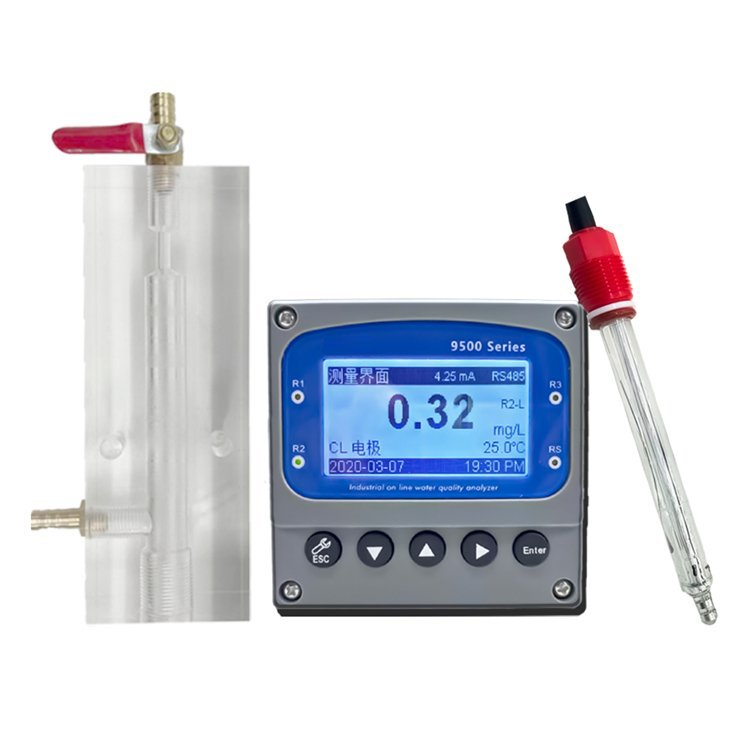
Shanghai ChiMay’s oil-in-water sensor, ammonia nitrogen sensor, and conductivity meter cover all three requirements from a common analyzer chassis, which simplifies spare-parts stocking.
Recommended Procurement Sequence
- Freeze the site-specific analyte list and detection limits before issuing any RFQ.
- Require vendors to submit MTBF data from a comparable groundwater application, not laboratory bench data.
- Include a minimum 12-month field pilot on at least three wells, with vendor cost-share.
- Fold sensor replacement, calibration standards, and telemetry SIM cards into a single 5-year TCO price.
- Award on lifecycle cost, not unit price.
Following this sequence, procurement teams working with Shanghai ChiMay typically compress vendor selection from 9–12 months down to 4–6 months while still meeting internal engineering audit standards.
Closing Perspective
Groundwater remediation sensor procurement is a low-glamour but high-consequence activity. The wells are quiet, the compliance windows are long, and the cost of missing data compounds year after year. By focusing on drift specifications, TCO, and open data ownership, buyers can build a sensor asset base that outlasts the environmental consultants managing the site — which is exactly what a 15-year remediation program requires.