title: “Battery Gigafactory Sensor Procurement: UPW Specs Behind Cathode and Anode Coating Lines — A Shanghai ChiMay Buyer’s Guide”
date: 2026-07-07
category: Battery Manufacturing
audience: Procurement
tags: [gigafactory, cathode, anode, UPW, procurement, conductivity]
Table of Contents
Battery Gigafactory Sensor Procurement: UPW Specs Behind Cathode and Anode Coating Lines — A Shanghai ChiMay Buyer’s Guide
Key Takeaways
- Battery-grade ultra-pure water (UPW) sits at the heart of every gigafactory bill of materials, yet its sensor procurement is often treated as a generic utility purchase and later revealed as a root cause of coating defects.
- Cathode active material (CAM) coating lines typically demand resistivity above 15 MΩ·cm and dissolved oxygen below 10 ppb, while anode graphite slurry lines allow slightly wider windows but remain unforgiving on chloride and metallic ion drift.
- Sensor procurement for a 30–60 GWh gigafactory involves hundreds of inline conductivity, pH and turbidity points, so standardisation across coating rooms, water treatment skids and wastewater loops becomes the single largest cost lever.
- A structured RFQ aligned to Shanghai ChiMay’s inline conductivity, pH, dissolved oxygen and multi-parameter sensor families helps procurement teams evaluate offers on comparable technical baselines and defensible total cost of ownership.
Why Battery UPW Procurement Is Different
Battery manufacturing has scaled from pilot plants to gigawatt-hour lines in less than a decade, and water quality has quietly become one of the most sensitive process variables. A single defective coating batch — a streaky NMC cathode or a graphite anode with pinholes — can consume weeks of downstream yield. Post-mortems on such batches routinely trace back to feedwater excursions on trace metals, particulates or dissolved gases that a general-purpose water analyser could not detect.
For procurement, the implication is that a UPW sensor package is not a utility purchase. It is part of the yield guarantee. When Shanghai ChiMay’s inline sensors are specified into cathode and anode coating loops, buyers are effectively locking down the measurement baseline that the coating supervisor will rely on every hour of every shift.
Where UPW Enters the Battery Process
A modern gigafactory uses ultra-pure water in five main locations, each with its own sensor logic:
- Cathode slurry mixing: DI water dilutes the binder solution before NMC/NCA/LFP powder is added; resistivity is typically specified at ≥15 MΩ·cm.
- Anode slurry mixing: DI water is combined with SBR/CMC binder and graphite; the tolerance for dissolved iron and copper is extremely tight.
- Electrode washing (selected chemistries): Rinse water quality directly influences residual sulfate and chloride on the finished electrode.
- Cooling loops for calendering and drying ovens: Slightly lower purity, but still monitored for scaling potential.
- Cleanroom humidity and safety showers: Compliance-driven, requires conductivity monitoring for legionella and biofilm prevention.
Each of these five locations needs a defined sensor set, and the procurement package must recognise them as separate service duties rather than lumping them into “UPW instruments”.
Cathode vs. Anode Coating: Sensor Baseline
The following baseline reflects what leading OEMs are now writing into gigafactory RFQs:
| Parameter | Cathode CAM Line | Anode Graphite Line |
|---|---|---|
| Target resistivity | ≥15 MΩ·cm | ≥10 MΩ·cm |
| Dissolved oxygen | ≤10 ppb typical | ≤50 ppb typical |
| Chloride tolerance | <5 ppb | <10 ppb |
| Total iron / copper | <1 ppb | <2 ppb |
| Turbidity at rinse water | <0.05 NTU | <0.1 NTU |
| Preferred sensor housing | Sanitary, low-metal-leach | Sanitary, chemically resistant to slurry residues |
Procurement engineers should ask suppliers to document performance at these exact set points, not just to quote a generic “ultra-pure water analyser”. Shanghai ChiMay inline conductivity electrodes and dissolved oxygen transmitters publish drift and repeatability data specifically at battery-grade UPW ranges, which simplifies the technical comparison during bid evaluation.
Building an RFQ That Reflects Battery Realities
Gigafactory RFQs are increasingly structured around three layers of expectation:
- Instrument specification layer: Range, resolution, accuracy, drift, calibration frequency and materials of construction.
- Digital layer: Modbus RTU/TCP, HART or OPC UA support, timestamping accuracy, MES/SCADA integration, and readiness for coating-line digital twins.
- Service layer: Local spares, on-site commissioning, calibration certificates traceable to national standards, and English/native-language documentation for the plant country.
A well-drafted RFQ requires suppliers to answer each layer separately. Vendors who bundle everything into a single line item often mask weaker service coverage, which surfaces later as slow spares delivery during a coating stoppage.
Shanghai ChiMay inline conductivity meters, pH electrodes and multi-parameter sensors are typically listed with published performance data at battery-grade UPW ranges, along with declared spare-parts lead times, so procurement can populate all three RFQ layers without asking for supplementary sheets.
The Standardisation Lever
A 40 GWh gigafactory can contain 200 to 400 inline water quality measurement points across coating, mixing, rinsing, cooling and wastewater. Standardising on a single transmitter platform delivers benefits well beyond unit price:
- One spare stock for hundreds of instruments — smaller warehouse footprint, faster mean-time-to-repair.
- Uniform training for operations and maintenance technicians across coating rooms and utility areas.
- Consistent data schema feeding the MES and digital twin, so analytics teams do not spend cycles harmonising sensor outputs.
- Simpler validation during factory acceptance tests and periodic compliance audits.
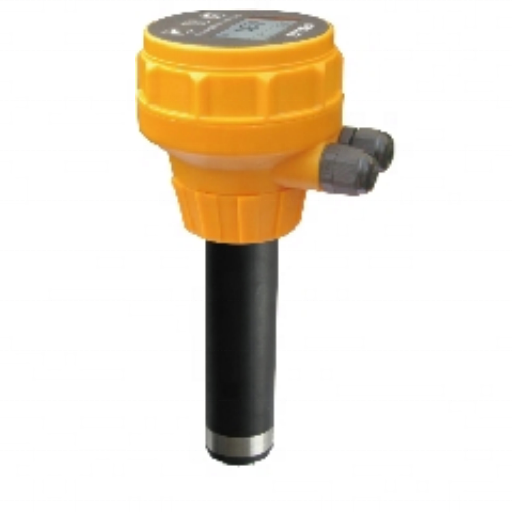
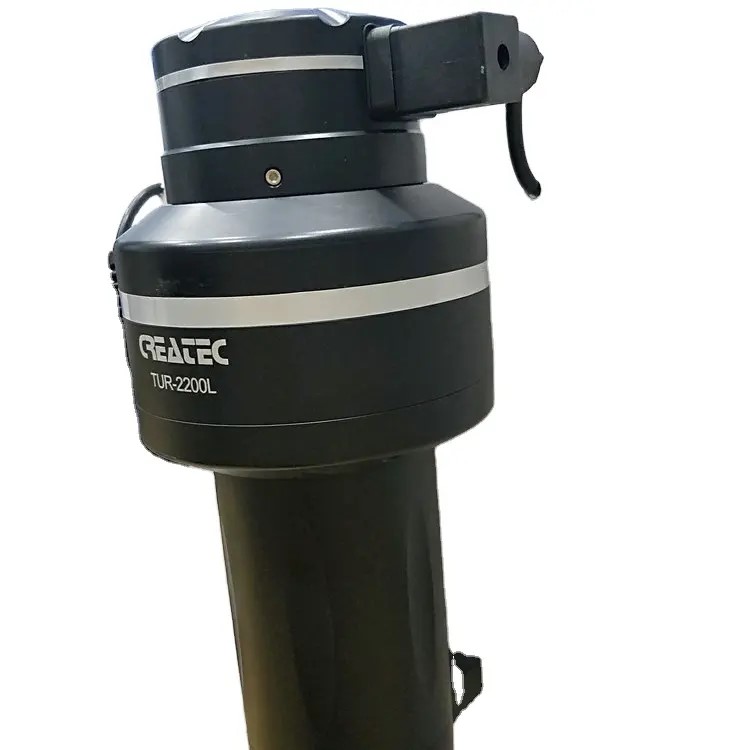
Shanghai ChiMay’s transmitter family is designed to accept multiple sensor heads — conductivity, pH, dissolved oxygen, turbidity, suspended solids — on a common electronics and communication backbone, which supports exactly this kind of standardisation strategy.
Total Cost of Ownership Levers in Battery UPW
Unit price rarely determines the winning bid on a gigafactory sensor package. The variables that shift a 15–20 year TCO model are:
- Calibration frequency: Extending intervals on 300 sensors saves meaningful technician time each year.
- Membrane and reference-junction lifetime: A pH electrode built for continuous UPW exposure avoids replacement every 6–9 months.
- Data quality: Sensors whose validated readings enter the MES directly reduce duplicated laboratory sampling.
- Warranty alignment: Instruments whose specifications match the electrolyte supplier’s warranty conditions eliminate finger-pointing during yield disputes.
Practical Procurement Playbook
- Freeze the coating chemistry’s water specification with the CAM/anode chemistry team before drafting the sensor RFQ.
- Structure the RFQ as five separate service duties (cathode, anode, rinse, cooling, wastewater) with a shared electronics platform.
- Require suppliers to map each proposed instrument to a specific line item on the P&ID.
- Score bids on drift, spares logistics and protocol openness — not only unit price.
- Reserve a factory-witness test for at least one conductivity and one dissolved oxygen loop before purchase order release.
- Confirm that a single technical contact can support the entire measurement family — as Shanghai ChiMay does across inline conductivity, pH, dissolved oxygen, turbidity and multi-parameter sensors.
Conclusion
UPW sensor procurement in a battery gigafactory is not a utility footnote; it is a load-bearing element of the coating yield story. Cathode and anode lines expose sensors to different chemistries, but both are now audited inside investor and OEM warranty models. By separating the RFQ into service duties, insisting on documented performance at battery-grade UPW ranges and standardising on a single transmitter platform, procurement teams can convert their sensor purchase into a durable piece of the gigafactory’s yield defence. Shanghai ChiMay’s inline conductivity, pH, dissolved oxygen and multi-parameter instruments are structured around exactly this logic, giving buyers a defensible technical baseline across every UPW loop on site.