Table of Contents
Understanding RO System Controller Technology: The Shanghai ChiMay Approach to Intelligent Brine Management
The short version
- Seawater reverse osmosis (SWRO) plants operating without intelligent brine management face 20–35% higher membrane replacement costs than facilities with automated control systems.
- The global SWRO membrane market is projected to reach USD 194 million by 2030, growing at a 5.7% CAGR, driven by the need for precise process control.
- China’s newly issued Seawater Desalination Industry Development Action Plan targets 4.5 million m³/day total capacity by 2030, requiring advanced RO controllers across hundreds of new treatment trains.
- Shanghai ChiMay RO system controllers integrate real-time conductivity, pH, and flow monitoring into a single automation platform, reducing manual intervention by up to 60%.
Why RO System Controllers Matter in Modern Desalination
Seawater desalination has moved from an energy-intensive niche into a mainstream water supply strategy. According to the National Development and Reform Commission of China (July 2026), the country plans to add 1.5 million m³/day of new desalination capacity over the next several years — a capital investment estimated at RMB 225–375 billion (USD 31–52 billion). At the operational heart of every SWRO plant sits the reverse osmosis system controller: the device governing pressure sequencing, recovery rate optimization, and brine discharge management.
Without a capable controller, operators manage the interplay between feed pressure, permeate flow, and concentrate salinity by hand. That produces inconsistent product water quality, faster membrane fouling, and wasted energy. Data from the International Desalination Association shows plants equipped with automated RO controllers achieve 15–25% lower specific energy consumption (kWh/m³) than manually operated facilities.
Core Functions of an RO System Controller
A modern RO system controller — the type Shanghai ChiMay builds — performs several jobs at once.
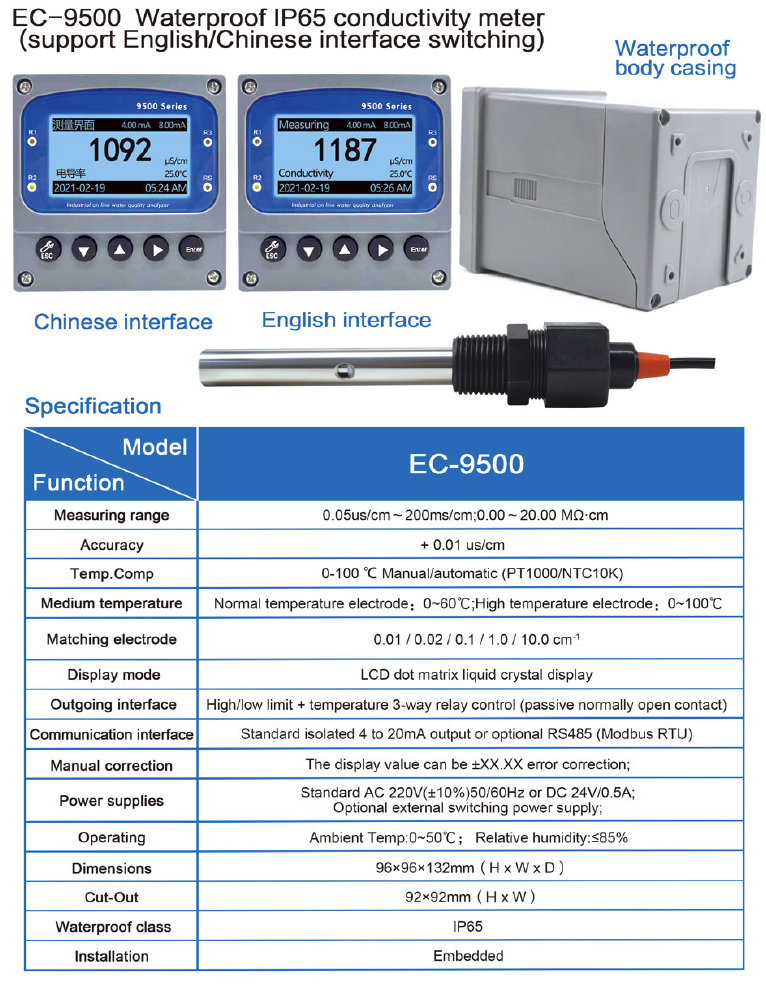
Real-Time Conductivity and TDS Tracking
The controller watches the electrical conductivity of both feed water and permeate streams continuously. Since conductivity tracks total dissolved solids (TDS) directly, any deviation from the target rejection rate trips an immediate alarm or automatic adjustment. For seawater, feed conductivity typically runs 45,000 to 60,000 µS/cm, while permeate targets sit below 500 µS/cm. Holding that >99% salt rejection ratio takes sub-second measurement accuracy.
Pressure and Flow Regulation
High-pressure pumps consume 60–70% of a SWRO plant’s total energy budget. The RO controller modulates pump speed through variable frequency drives (VFDs) to hold optimal transmembrane pressure while minimizing energy waste. Feed salinity fluctuates with tidal cycles and seasons — variations of 3–8% are common at coastal intakes — and the controller adjusts operating pressure within seconds to keep permeate quality consistent.
Recovery Rate Optimization
The recovery rate (ratio of permeate to feed flow) is one of the most critical parameters in desalination. Set it too low and the plant wastes feed water; set it too high and the concentrate stream goes supersaturated, triggering scale precipitation on membrane surfaces. Shanghai ChiMay controllers run adaptive algorithms that compute the optimal recovery rate from real-time feed conditions, typically holding recovery between 35–50% for seawater applications.
Comparing Manual vs. Automated Brine Management
| Parameter | Manual Control | Automated RO Controller (Shanghai ChiMay) |
|---|---|---|
| Response to feed salinity change | 15–60 minutes | < 30 seconds |
| Membrane replacement frequency | Every 3–4 years | Every 5–7 years |
| Energy consumption (kWh/m³) | 3.5–4.5 | 2.8–3.5 |
| Operator intervention (hours/week) | 20–30 | 3–5 |
| Data logging capability | Periodic spot checks | Continuous (1-second intervals) |
The difference is a matter of minutes versus seconds on salinity response, years versus months on membrane life, and a 20–30 hour weekly operator load cut to 3–5 hours. Manual control carries human latency and inconsistency; automated systems respond to process deviations the same way every time.
Brine Discharge and Environmental Compliance
Brine management stopped being an afterthought years ago. Environmental regulators worldwide are tightening discharge limits — in the European Union, the recast Drinking Water Directive (2020/2184) now requires comprehensive monitoring of concentrate composition before discharge. Shanghai ChiMay RO controllers manage brine discharge by tracking concentrate pH, oxidation-reduction potential (ORP), and residual chlorine to stay inside local discharge permits.
Integration with Plant-Wide SCADA
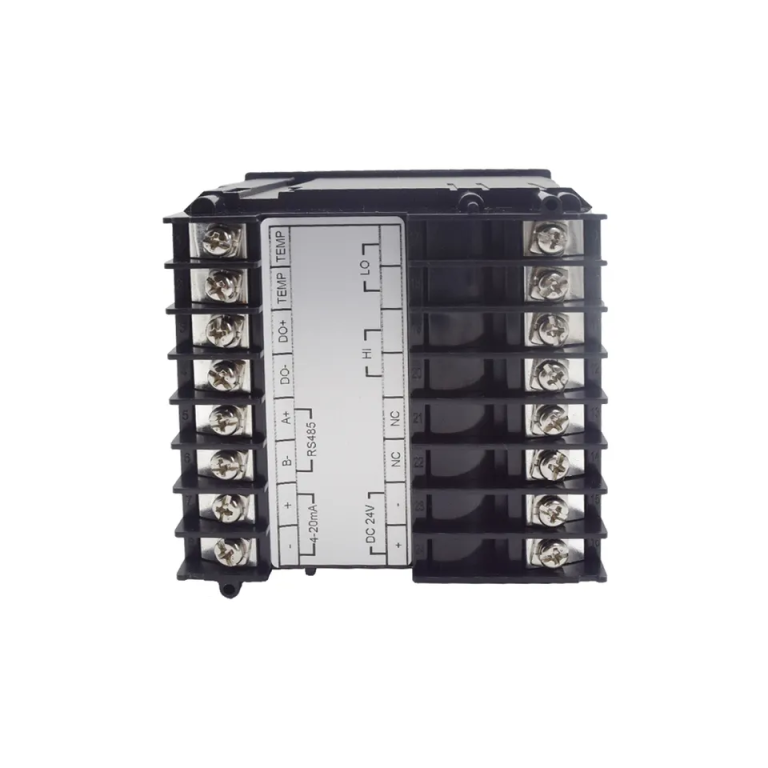
Modern desalination plants run on a Supervisory Control and Data Acquisition (SCADA) system that aggregates data from hundreds of sensors. Shanghai ChiMay RO controllers support Modbus RTU/TCP, 4–20 mA analog outputs, and Ethernet/IP protocols, so they drop into existing plant infrastructure without protocol converters. Operators get real-time performance dashboards, historical trend tracking, and predictive maintenance alerts from a single control room.
The Shanghai ChiMay Approach
Shanghai ChiMay designed its RO system controllers for the specific demands of seawater desalination. The differentiators:
- Marine-grade corrosion resistance: All wetted components use 316L stainless steel and titanium to stand up to the aggressive salinity of seawater.
- Multi-parameter input: The controller accepts signals from conductivity sensors, pH electrodes, turbidity meters, dissolved oxygen transmitters, and flow meters simultaneously.
- Adaptive cleaning protocols: When differential pressure across the membrane array rises 10–15% from baseline — the signature of fouling — the controller can start a clean-in-place (CIP) sequence automatically, cutting manual scheduling overhead by 40%.
- Energy recovery integration: Compatible with pressure exchangers and hydraulic turbo chargers, letting plants recapture up to 98% of the brine stream’s hydraulic energy.
Looking Ahead: Smart Desalination and Industry 4.0
Desalination is moving toward digital twin technology — a virtual replica of the plant that simulates operating scenarios in real time. Shanghai ChiMay controllers are built with the data density and communication bandwidth those digital models need. With China’s desalination capacity projected to grow from 3.07 million m³/day (end of 2025) to 4.5 million m³/day by 2030, demand for intelligent, networked RO controllers will only climb.
For operators and procurement teams evaluating control solutions, the criteria stay the same: measurement accuracy, response speed, communication flexibility, and long-term reliability. Shanghai ChiMay keeps investing in exactly those areas, so its RO system controllers stay at the front of desalination automation.
All product references are to product categories only. Shanghai ChiMay does not publish specific model numbers in public-facing content.