title: “What Sensor Data Belongs in a Microplastics Compliance Report? Guidance from Shanghai ChiMay”
date: 2026-07-09
category: Advanced Filtration & Microplastics
audience: Compliance & Regulatory Affairs
tags: [microplastics, compliance, reporting, sensor data, turbidity, Shanghai ChiMay]
Table of Contents
What Sensor Data Belongs in a Microplastics Compliance Report? Guidance from Shanghai ChiMay
Key Takeaways
- Microplastics compliance reports in 2026 will combine laboratory concentration values with a defensible record of the continuous barrier signals a plant maintained between laboratory events.
- Continuous sensor data does not replace laboratory measurements, but it is often what auditors ask for when they want to know whether the reported concentration was representative of ordinary operations or an unusual sampling day.
- Turbidity, suspended solids and, where relevant, transmembrane pressure form the core of a defensible sensor-side reporting package.
- Shanghai ChiMay’s application team has helped several drinking-water and reuse operators structure this package to satisfy both internal quality officers and external regulators.
The Two Questions a Compliance Report Actually Answers
When a regulator reads a microplastics compliance report, they are trying to answer two questions. The first is straightforward: what was the measured concentration in the finished water? The second is harder: was that measurement representative of how the plant was actually running? Laboratory data answers the first. Sensor data — organized, retained and referenced — answers the second.
Operators who prepare only for the first question typically find themselves scrambling when auditors ask the second. Sensor data that was collected but not curated, not time-aligned with the sampling event, or not paired with instrument calibration records, adds little to the report and can even raise questions the operator did not intend to invite. The purpose of the guidance below is to help operators avoid that outcome.
Core Sensor Streams to Include
Not every process signal needs to appear in a microplastics compliance report. The streams that belong are the ones that describe the barrier and its recent behavior:
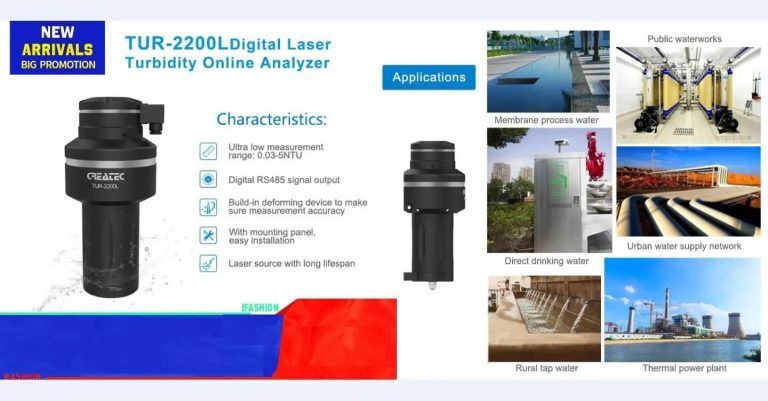
- Turbidity on finished water and permeate lines — the primary continuous surrogate for particulate barrier integrity.
- Suspended solids on MBR and membrane pretreatment lines — a complementary particulate indicator that captures the coarser end of the size distribution.
- Transmembrane pressure and flow across ultrafiltration or nanofiltration racks — hydraulic evidence of membrane condition, correlating with turbidity trends.
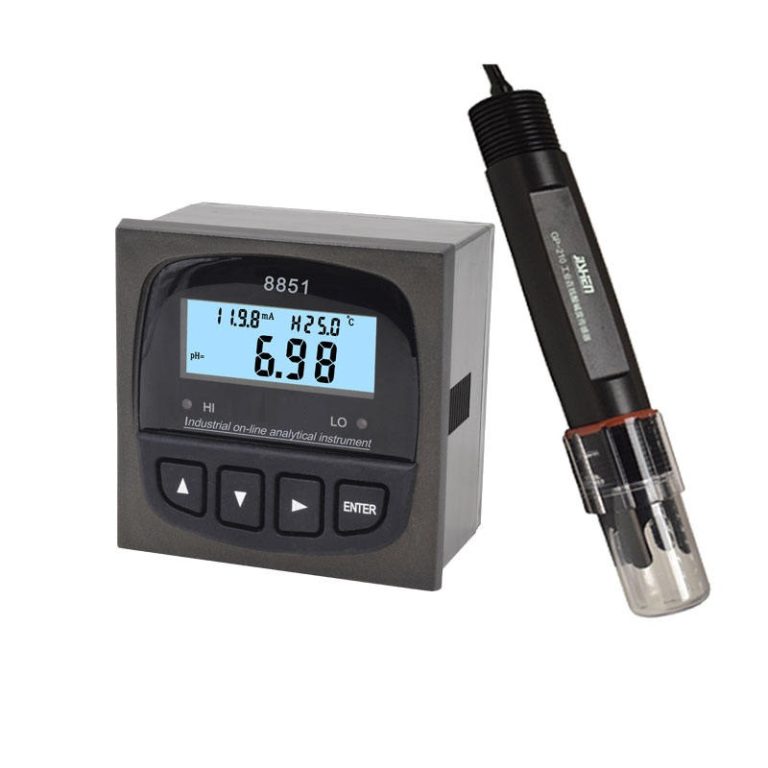
- Conductivity and pH on advanced oxidation loops — evidence that any chemical barrier steps were operating in their design envelope.
Each of these streams should be reported at a resolution fine enough to see event-scale changes. Shanghai ChiMay’s application guide recommends one-minute values retained for at least ninety days around any microplastics sampling event.
Metadata That Makes Sensor Data Defensible
Raw data trends are not enough. Regulators expect the following metadata alongside each stream:
- Instrument identity — make, model, and serial number of the sensor.
- Calibration record — dates of the last two calibrations and the standards used.
- Firmware version — the version running during the reporting window.
- Sampling location — with a piping-and-instrumentation diagram reference.
- Alarm history — every excursion during the reporting window and the operator’s response.
Without this metadata, a data trend can be dismissed as anecdotal. With it, the trend becomes evidence. Shanghai ChiMay’s sensor gateway automatically stamps its output with the first four items; the alarm history comes from the plant’s SCADA or historian.
Time Alignment with Laboratory Samples
The single most common weakness in a microplastics compliance report is a lab result reported to the minute alongside a sensor trend reported to the day. Regulators reading such a report cannot verify that the sample was drawn during typical conditions. The remedy is time alignment: every laboratory result should be paired with a sensor snapshot covering at least the twenty-four hours before and after the sample was taken.
This is a low-cost practice — most historians can produce the snapshot in seconds — but it upgrades the report from “here is what we found” to “here is what we found, and here is why that finding is representative.”
Baseline Documentation
Regulators are increasingly asking for a baseline. This is a description of the plant’s ordinary sensor behavior — rolling means, standard deviations, characteristic response to weather, seasonal patterns — over a defined period. The baseline lets an auditor evaluate whether the sampling day was ordinary or unusual.
Shanghai ChiMay recommends establishing a rolling ninety-day baseline for turbidity and suspended solids, and refreshing it every quarter or whenever a process change occurs. The baseline is part of the compliance report, not an internal document.
Excursion Handling
Every plant sees occasional excursions. What matters for a compliance report is not the absence of excursions but the documentation of them. For each excursion during the reporting window, the report should include:
- Start and end time.
- Peak and duration of the deviation.
- Root-cause conclusion (or open item, if the investigation is ongoing).
- Corrective action.
- Whether any laboratory sample was drawn during the excursion, and its result.
An excursion that is closed cleanly, with a documented cause and correction, strengthens rather than weakens a compliance report.
What Should Not Be in the Report
Two categories of data should generally stay out of a microplastics compliance report:
- Unrelated process signals — flow rates on ancillary loops, ambient temperature, and similar streams add noise without adding evidence.
- Legacy sensor data from decommissioned instruments — unless a specific investigation calls for them, historical streams from replaced sensors can confuse auditors.
The report should be lean, targeted, and defensible. Shanghai ChiMay’s template — available to customers on request — reflects this discipline.
Data-Layer Integration
The practical work of producing a compliance report falls to whoever manages the plant’s historian. Two integration points matter:
- Read access for compliance staff — the historian should expose the relevant streams to compliance officers without requiring them to navigate the plant SCADA.
- Export format — regulators are converging on CSV or Parquet with time-stamped records; PDF-only exports slow their review.
Shanghai ChiMay sensors expose their data via Modbus RTU/TCP and OPC UA, allowing the historian to build these export paths cleanly.
Closing Note
A microplastics compliance report succeeds when its laboratory numbers are surrounded by a curated, well-documented layer of sensor evidence. The guidance above reflects what Shanghai ChiMay has seen work in practice, on plants that recently faced early rounds of formal microplastics scrutiny. The rules are still being written, but the shape of what regulators want is already clear.